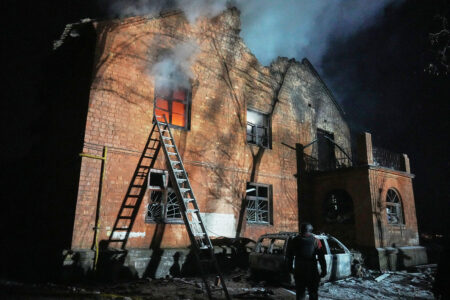
No sign of new protests in Iran
Hard-line cleric threatens Trump
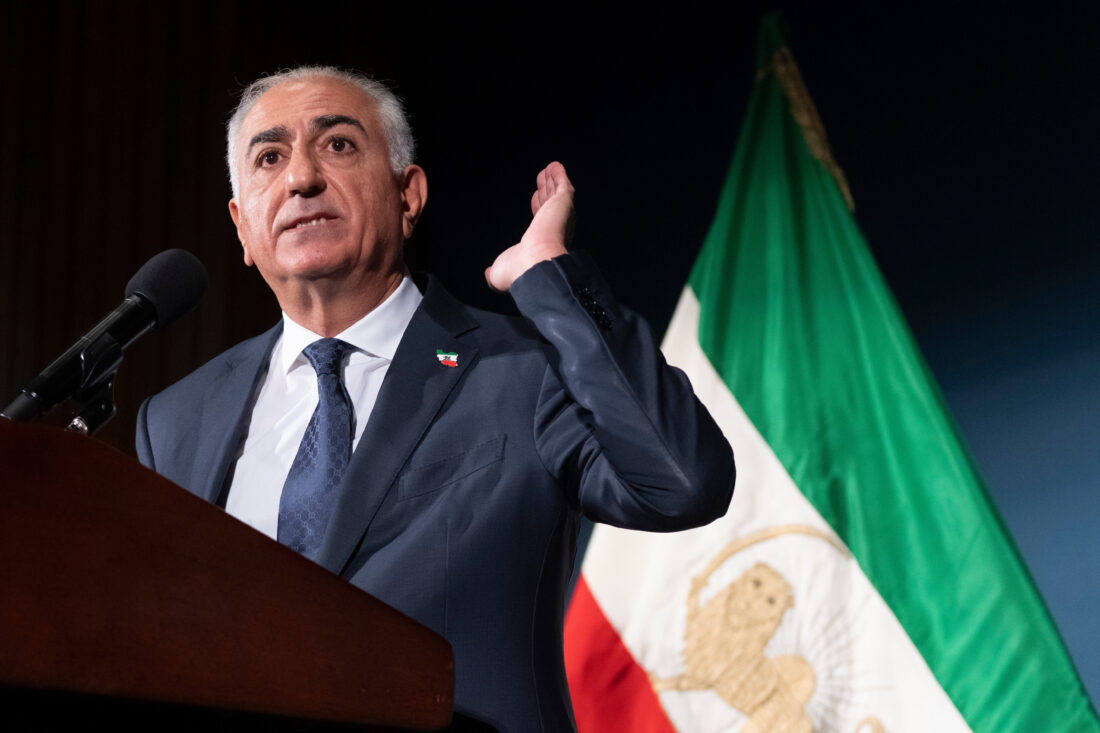
Iranian opposition leader Reza Pahlavi speaks during a news conference on Friday in Washington. (AP Photo/Mark Schiefelbein)
DUBAI, United Arab Emirates (AP) — As Iran returned to uneasy calm after a wave of protests that drew a bloody crackdown, a senior hard-line cleric called Friday for the death penalty for detained demonstrators and directly threatened U.S. President Donald Trump — evidence of the rage gripping authorities in the Islamic Republic.
Trump, though, struck a conciliatory note, thanking Iran’s leaders for not executing hundreds of detained protesters, in a further sign he may be backing away from a military strike. Executions, as well as the killing of peaceful protesters, are two of the red lines laid down by Trump for possible action against Iran.
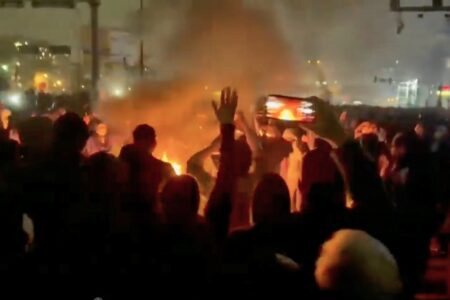
Harsh repression that has left several thousand people dead appears to have succeeded in stifling demonstrations that began Dec. 28 over Iran’s ailing economy and morphed into protests directly challenging the country’s theocracy.
There have been no signs of protests for days in Tehran, where shopping and street life have returned to outward normality, though a week-old internet blackout continued. Authorities have not reported any unrest elsewhere in the country.
“Iran canceled the hanging of over 800 people,” Trump told reporters in Washington, adding that “I greatly respect the fact that they canceled.”
Trump did not clarify who he spoke to in Iran to confirm the state of any planned executions.
The U.S.-based Human Rights Activists News Agency on Friday put the death toll at 3,090. The number, which exceeds that of any other round of protest or unrest in Iran in decades and recalls the chaos surrounding the 1979 revolution, continues to rise. The agency has been accurate throughout the years of demonstrations, relying on a network of activists inside Iran that confirms all reported fatalities.
The AP has been unable to independently confirm the toll. Iran’s government has not provided casualty figures.
In contrast, the sermon by Ayatollah Ahmad Khatami carried by Iranian state radio sparked chants from those gathered for prayers, including: “Armed hypocrites should be put to death!”
Khatami, a member of Iran’s Assembly of Experts and Guardian Council long known for his hard-line views, described the protesters as the “butlers” of Israeli Prime Minister Benjamin Netanyahu and “Trump’s soldiers.” He said Netanyahu and Trump should await “hard revenge from the system.”
“Americans and Zionists should not expect peace,” the cleric said.
His fiery speech came as allies of Iran and the United States alike sought to defuse tensions. Russian President Vladimir Putin spoke Friday to both Iranian President Masoud Pezeshkian and Israel’s Netanyahu, Kremlin spokesman Dmitry Peskov said.
Russia had previously kept largely quiet about the protests. Moscow has watched several key allies suffer blows as its resources and focus are consumed by its 4-year-old war against Ukraine, including the downfall of Syria’s former President Bashar Assad in 2024, last year’s U.S. and Israeli attacks on Iran and the U.S. seizure of Venezuelan leader Nicolas Maduro this month.
Exiled Iranian royal
Days after Trump pledged “help is on its way” for the protesters, both the demonstrations and the prospect of imminent U.S. retaliation appeared to have receded. One diplomat told The Associated Press that top officials from Egypt, Oman, Saudi Arabia and Qatar had raised concerns with Trump that a U.S. military intervention would shake the global economy and destabilize an already volatile region.
Iran’s exiled Crown Prince Reza Pahlavi urged the U.S. to make good on its pledge to intervene. Pahlavi, whose father was overthrown by Iran’s 1979 Islamic Revolution, said he still believes the president’s promise of assistance.
“I believe the president is a man of his word,” Pahlavi told reporters in Washington. He added that “regardless of whether action is taken or not, we as Iranians have no choice to carry on the fight.”
“I will return to Iran,” he vowed. Hours later, he urged protesters to take to the streets again from Saturday to Monday.
Despite support by diehard monarchists in the diaspora, Pahlavi has struggled to gain wider appeal within Iran. But that has not stopped him from presenting himself as the transitional leader of Iran if the regime were to fall.
Protest damage
Khatami, the hard-line cleric, also provided the first overall statistics on damage from the protests, claiming 350 mosques, 126 prayer halls and 20 other holy places had sustained damage. Another 80 homes of Friday prayer leaders — an important position within Iran’s theocracy — were also damaged, likely underlining the anger demonstrators felt toward symbols of the government.
He said 400 hospitals, 106 ambulances, 71 fire department vehicles, and another 50 emergency vehicles also sustained damage.
Even as protests appeared to have been smothered inside Iran, thousands of exiled Iranians and their supporters have taken to the streets in cities across Europe to shout out their rage at the government of the Islamic Republic.
International News
No sign of new protests in Iran
Iran signals plans for fast trials and executions
DUBAI, United Arab Emirates (AP) — Iranian officials signaled Wednesday that fast trials and executions lay ...
Denmark, Greenland leaders stand united against island takeover
Death toll soars in crackdown on protests in Iran
Trump promises oil executives ‘total safety’ if they invest in Venezuela