
Administration to stand by Biden-era mandates to replace lead pipes
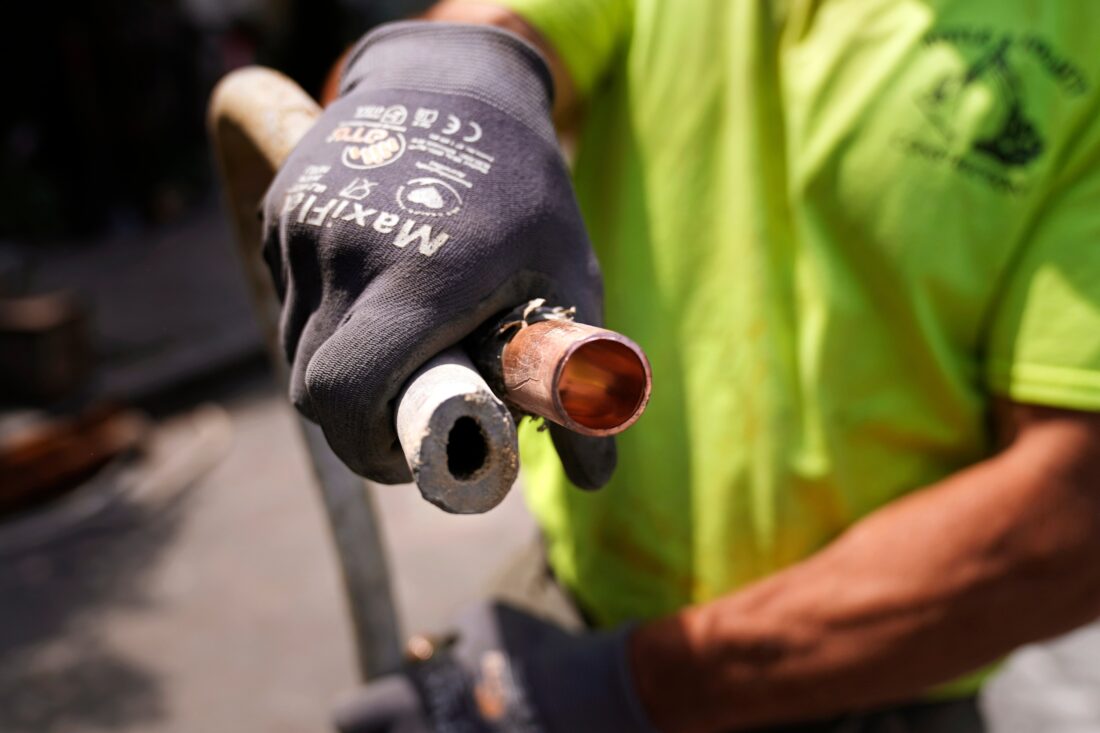
Richie Nero, of Boyle & Fogarty Construction, shows the the cross section of an original lead, residential water service line, at left, and the replacement copper line, at right, outside a home where service was getting upgraded June 29, 2023, in Providence, R.I. (AP Photo/Charles Krupa, file)
WASHINGTON (AP) — The Trump administration said Friday it backs a 10-year deadline for most cities and towns to replace their harmful lead pipes, giving notice that it will support a tough rule approved under the Biden administration to reduce lead in drinking water.
The Environmental Protection Agency told a federal appeals court in Washington that it would defend the strongest overhaul of lead-in-water standards in three decades against a court challenge by a utility industry association.
The Trump administration has typically favored rapid deregulation, including reducing or killing rules on air and water pollution. On Friday, for example, it repealed tight limits on mercury and other toxic emissions from coal plants. But the agency has taken a different approach to drinking water.
“After intensive stakeholder involvement, EPA concluded that the only way to comply with the Safe Drinking Water Act’s mandate to prevent anticipated adverse health effects ‘to the extent feasible’ is to require replacement of lead service lines,” the agency’s court filing said.
Doing so by a 10-year deadline is feasible, the agency added, supporting a rule that was based in part of the finding that old rules that relied on chemical treatment and monitoring to reduce lead “failed to prevent system-wide lead contamination and widespread adverse health effects.”
The EPA said in August it planned to defend the Biden administration’s aggressive rule, but added that it would also “develop new tools and information to support practical implementation flexibilities and regulatory clarity.” Some environmental activists worried that that meant the EPA was looking to create loopholes.
Lead, a heavy metal once common in products like pipes and paints, is a neurotoxin that can stunt children’s development, lower IQ scores and increase blood pressure in adults. Lead pipes can corrode and contaminate drinking water. The previous Trump administration’s rule had looser standards and did not mandate the replacement of all pipes.
The Biden administration finalized its lead-in-water overhaul in 2024. It mandated that utilities act to combat lead in water at lower concentrations, with just 10 parts per billion as a trigger, down from 15. If higher levels were found, water systems had to inform their consumers, take immediate action to reduce lead and work to replace lead pipes that are commonly the main source of lead in drinking water.
The Biden administration at the time estimated the stricter standards would protect up to 900,000 infants from having low birth weight and avoid up to 1,500 premature deaths a year from heart disease.
“People power and years of lead-contaminated communities fighting to clean up tap water have made it a third rail to oppose rules to protect our health from the scourge of toxic lead. Maybe only a hidebound water utility trade group is willing to attack this basic public health measure,” said Erik Olson, senior director at the Natural Resource Defense Council, an environmental nonprofit.
The American Water Works Association, a utility industry association, had challenged the rule in court, arguing the EPA lacks authority to regulate the portion of the pipe that’s on private property and therefore cannot require water systems to replace them.
The agency countered on Friday that utilities can be required to replace the entire lead pipe because they have sufficient control over them.
The AWWA also said the 10-year deadline wasn’t feasible, noting it’s hard to find enough labor to do the work and water utilities face other significant infrastructure challenges simultaneously. Water utilities were given three years to prepare before the 10-year timeframe starts and some cities with a lot of lead were given longer.
The agency said they looked closely at data from dozens of water utilities and concluded that the vast majority could replace their lead pipes in 10 years or less.
The original lead and copper rule for drinking water was enacted by the EPA more than 30 years ago. The rules have significantly reduced lead in water but have been criticized for letting cities move too slowly when levels rose too high.
Lead pipes are most commonly found in older, industrial parts of the country, including major cities such as Chicago, Cleveland, Detroit and Milwaukee. The rule also revises the way lead amounts are measured, which could significantly expand the number of communities found violating the rules.
National News
Administration to stand by Biden-era mandates to replace lead pipes
EPA eases limits on coal plants for emitting toxins

2020 election deniers take on Trump assignments

Truckers, bus drivers must now take tests in English

US Supreme Court strikes down Trump’s sweeping tariffs
News briefs
Arts panel OKs ballroom WASHINGTON (AP) — A federal panel made up of President Donald Trump's appointees ...