College student dies after trying to charge phone in car
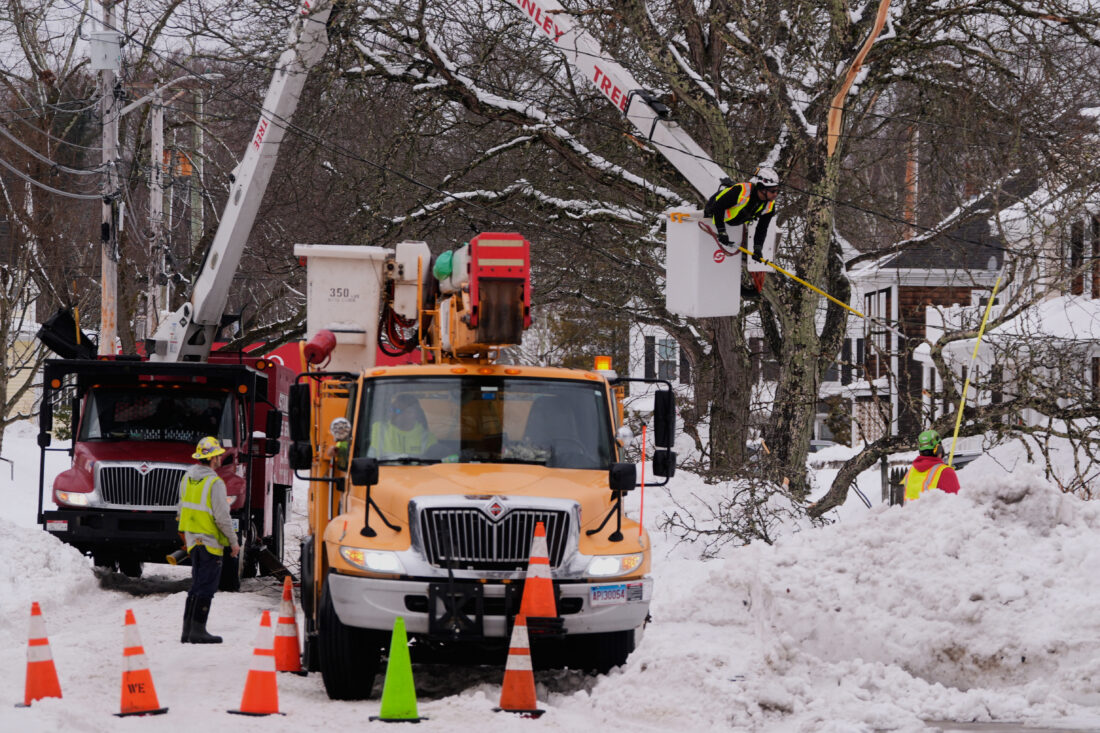
A electrical line crew from Connecticut and a tree clearing crew from Rhode Island work to restore power after a winter storm dumped more than two feet of snow across the region on Wednesday in Plymouth, Mass. (AP Photo/Charles Krupa)
A Rhode Island college football player died from carbon monoxide poisoning after he tried to charge his phone in his car during a massive snow storm in a power outage.
The storm knocked out power for hundreds of thousands of people across the Northeast.
First responders found 21-year-old Salve Regina University student Joseph Boutros unresponsive in his car on Monday in Newport, Rhode Island, where he was parked outside of a university building. Police said the vehicle’s exhaust pipe was obstructed by snow and that his death from carbon monoxide poisoning was accidental.
The area didn’t have power at the time and Boutros told a fellow student that he was using his car to charge his phone, Newport Police Captain Joseph Carroll said. The university’s football team said they were “heartbroken” about Boutros’ death, which they announced in an Instagram post.
Many Rhode Island residents faced a third straight morning stuck in their homes on Wednesday as some residential streets remain unplowed.
Blizzards present a host of hazards, ranging from slippery ice to severe cold. But one of the most lethal risks posed by heavy snowfall is completely undetectable to humans.
The risk of carbon monoxide poisoning is higher in the winter and after heavy snowfall, according to the Centers for Disease Control. During cold weather, people are more likely to use furnaces and heaters that emit the lethal gas.
A number of malfunctions can obstruct proper ventilation, including snowfall that can block exhaust pipes or vents.
Carbon monoxide is often referred to as the “silent killer” because it is odorless, colorless and tasteless. Prolonged exposure to carbon monoxide reduces the ability of blood to carry oxygen to the body’s organs.
It can cause throbbing headaches, disorientation and drowsiness, followed by unconsciousness, convulsions and eventually death.
When people use heating systems without proper air flow or ventilation — such as running their car in a closed garage, bringing grills inside or using gas stoves for personal heat — carbon monoxide can build up and become dangerous.
Sitting in an idling car for a long time is usually safe, according to Jake Fisher, the senior director of auto testing at Consumer Reports. But drivers should keep an eye out for warning signs and have them inspected annually. Vehicles are more prone to exhaust leaks after a crash and should be inspected before they are put back on the road.
National News

Surgeon general nominee faces sharp questions
College student dies after trying to charge phone in car

Vance says administration is pausing some Medicaid funding to Minnesota

Trump uses longest-ever State of the Union to claim US ‘winning so much’
News briefs
Family holds on to hope (AP) — "Today" show host Savannah Guthrie says her family is now offering a $1 million ...