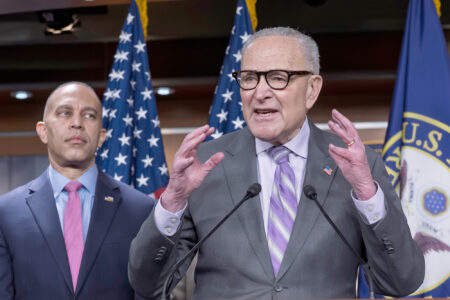
ICE chief defends his officers’ actions before Congress
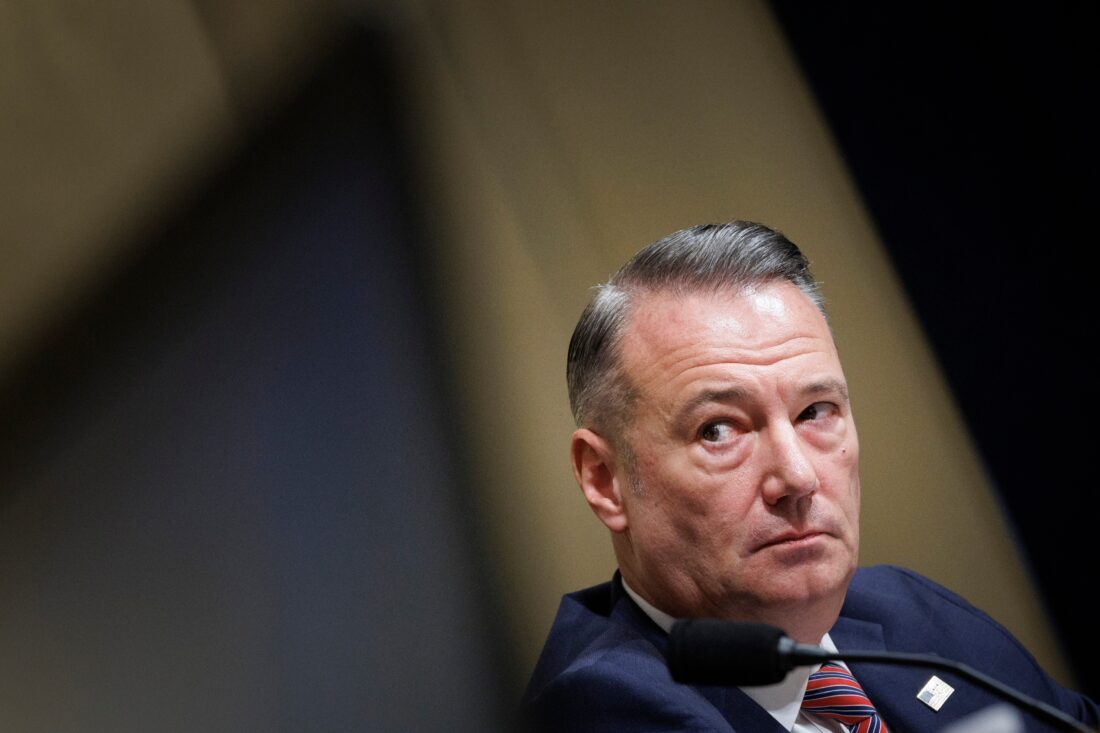
Todd Lyons, acting director of the U.S. Immigration and Customs Enforcement testifies during a House Committee on Homeland Security oversight hearing of the Department of Homeland Security: ICE CBP and USCIS, on Capitol Hill, Tuesday, in Washington. (AP Photo/Tom Brenner)
WASHINGTON (AP) — Todd Lyons, the acting head of Immigration and Customs Enforcement, defended his agency’s officers before Congress on Tuesday, standing behind their tactics and saying they would not be intimidated as they carry out the president’s mass deportation plans.
Lyons was one of the three heads of agencies implementing President Donald Trump’s immigration agenda to testify in a hearing called after the shooting deaths of two Americans at the hands of federal officers. They faced fierce questioning from Democrats, and support from most Republicans, over how they are prosecuting immigration enforcement inside American cities.
“Let me send a message to anyone who thinks they can intimidate us. You will fail,” said Lyons, who blamed elected officials and protesters for escalating rhetoric that he said endangered his officers. Lyons, who at various points declined to comment directly on the killings of the two U.S. citizens, said his officers would not be deterred.
“We are only getting started,” he said in opening remarks.
Trump’s immigration campaign has been heavily scrutinized in recent weeks, especially after the shooting deaths in Minneapolis. The agencies have also faced criticism for a wave of policies that detractors say trample on the rights of both immigrants facing arrest and Americans protesting the enforcement actions. Tuesday’s testimony is unlikely to quell simmering tensions over the centerpiece policy of Trump’s second term.
Lyons, the acting ICE director, Rodney Scott, who heads U.S. Customs and Border Protection, and Joseph Edlow, who is the director of U.S. Citizenship and Immigration Services, spoke in front of the House Committee on Homeland Security in a hearing that lasted roughly three and a half hours.
Agency leaders testify as DHS faces a funding lapse
This is the first time all three have appeared in Congress since the department received a huge infusion of money from Congress last summer and since immigration enforcement operations intensified across the country.
Under Lyons’ leadership, ICE has undergone a massive hiring boom and immigration officers have deployed in beefed-up enforcement operations designed to increase arrests and deportations.
The officials spoke at a time of falling public support for how their agencies are carrying out Trump’s immigration vision. Their testimony comes as Democratic lawmakers in Congress are demanding restraints on immigration officers before agreeing to fund the Department of Homeland Security. The agency heads warned the country would be less safe if federal funds expire at the end of the week.
Tuesday’s hearing was called after federal officers shot and killed Alex Pretti and Renee Good, which sparked outrage across the country and demands for accountability and reform. Lyons and Scott said standard operating procedures were being followed in investigations into the January shootings.
Tensions flared and the hearing sparked heated exchanges — the Democrats comparing the enforcement operations to Nazi Germany and questioning how the administration officials will be judged — the chairman at times gaveling the lawmakers back to order.
The ranking Democratic member of the committee, Rep. Bennie Thompson of Mississippi, called the hearing the “start of a reckoning” and said Homeland Security Secretary Kristi Noem should be held accountable. Thompson said the department has blocked lawmakers from visiting detention facilities and needs to be more responsive to questions.
“Every American should be outraged,” Thompson said.
Republicans shifted attention back to Biden-era policies, which allowed countless migrants to enter the country, and said the Trump administration has sealed the U.S.-Mexico border and is ending a “lawlessness” in the nation’s immigration system.
National News
Lutnick acknowledges meetings with Epstein, denies ‘any relationship’
News briefs
Moderna's vaccine nixed WASHINGTON (AP) — The U.S. Food and Drug Administration is refusing to consider ...
ICE chief defends his officers’ actions before Congress

FBI offers images of masked person on Guthrie’s porch

Trial starts accusing social media of addicting children