Trump plans to extend negotiations with Iran
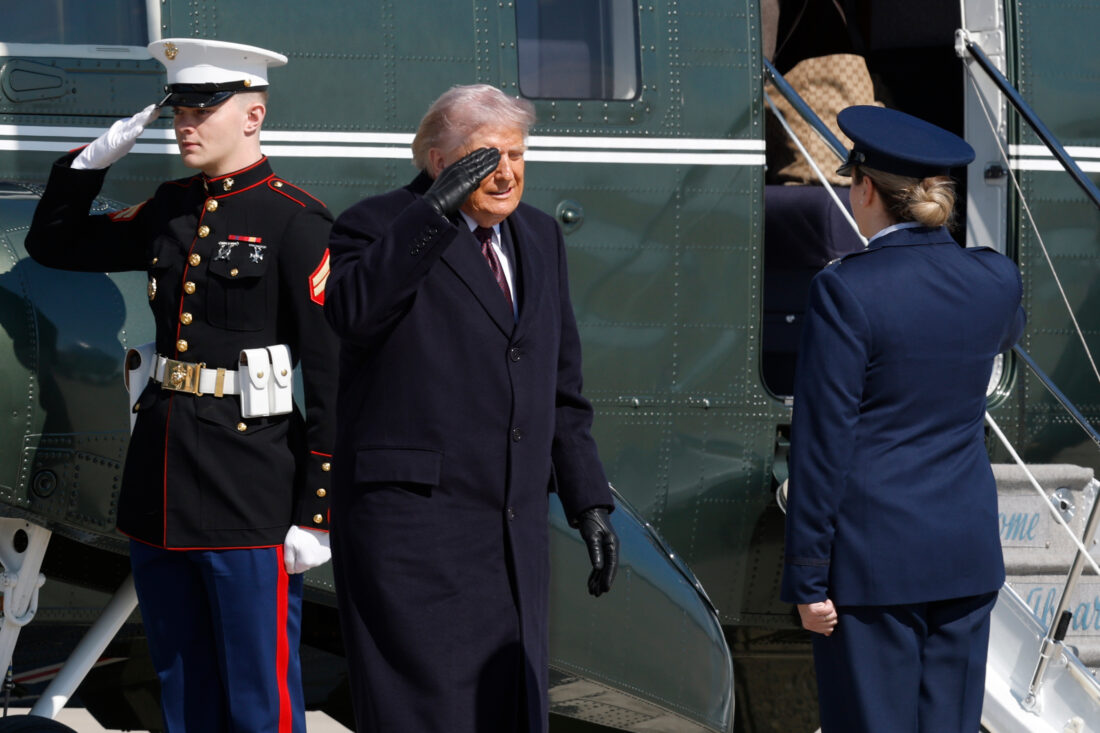
President Donald Trump, center, is greeted by Air Force 89th Air Wing Deputy Commander Melissa Dombrock, right, as he exits Marine One before boarding Air Force One on Friday at Joint Base Andrews, Md. (AP Photo/Luis M. Alvarez)
TEL AVIV, Israel (AP) — U.S. President Donald Trump said Friday he’s “not happy” with the latest talks over Iran’s nuclear program but indicated he would give negotiators more time to reach a deal to avert another war in the Middle East.
He spoke a day after U.S. envoys held another inconclusive round of indirect talks with Iran in Geneva. As American forces gather in the region, Trump has threatened military action if Iran does not agree to a far-reaching deal on its nuclear program, while Iran insists it has the right to enrich uranium for peaceful purposes and denies seeking a nuclear weapon.
“I’m not happy with the fact that they’re not willing to give us what we have to have. I’m not thrilled with that. We’ll see what happens. We’re talking later,” Trump told reporters as he left the White House on Friday. “We’re not exactly happy with the way they’re negotiating. They cannot have nuclear weapons.”
Despite Trump’s negative assessment, one of the mediators of the talks later Friday appeared to issue a public plea to let the negotiations continue. Oman’s Foreign Minister Badr al-Busaidi, who has been mediating the talks, said on CBS’s Face the Nation that he felt a deal was within reach if the process could play out.
“If I was Preisdent Trump, my only advice is just to give those negotiators enough room, enough space to really close these remaining areas that we need to discuss and agree upon,” he said.
Trump sounded more pessimistic, telling reporters as he visited Texas on Friday that Iranian negotiators “don’t want to quite go far enough. It’s too bad.”
He reiterated that he did not want to see Iran allowed to enrich any amount of uranium and said the oil-rich nation should not need to enrich uranium for an energy program.
When asked by a reporter how close he was to deciding on whether to launch a military strike, he said, “I’d rather not tell you.”
Earlier in the day, he was asked at the White House about the risks of the U.S. getting involved in a drawn-out conflict if it strikes Iran.
“I guess you could say there’s always a risk,” Trump replied. “You know, when there’s war, there’s a risk of anything, both good and bad.”
U.S.Secretary of State Marco Rubio plans to make a quick trip to Israel early next week, the State Department said. The U.S. Embassy in Israel had earlier urged staff who want to leave to depart, joining other nations in encouraging people to leave the region and signaling that U.S. military action might be imminent.
The announcement of Rubio’s visit and Trump’s latest remarks could indicate a longer timeline for any potential strike.
The State Department said Rubio would visit Israel on Monday and Tuesday to “discuss a range of regional priorities, including Iran, Lebanon, and ongoing efforts to implement President Trump’s 20-Point Peace Plan for Gaza.” It offered no other details.
Israeli Prime Minister Benjamin Netanyahu has long urged tougher U.S. action against Iran, and has warned that Israel will respond to any Iranian attack.
International News
Trump plans to extend negotiations with Iran

Risk of war looms as US and Iran fail to reach deal

Zelenskyy says Putin has ‘not broken’ Ukrainians

Iranians worry over American military buildup

Security forces keep up fight with cartel gunmen