Iran to allow some shipments through Hormuz
Israel attacks nuclear facilities
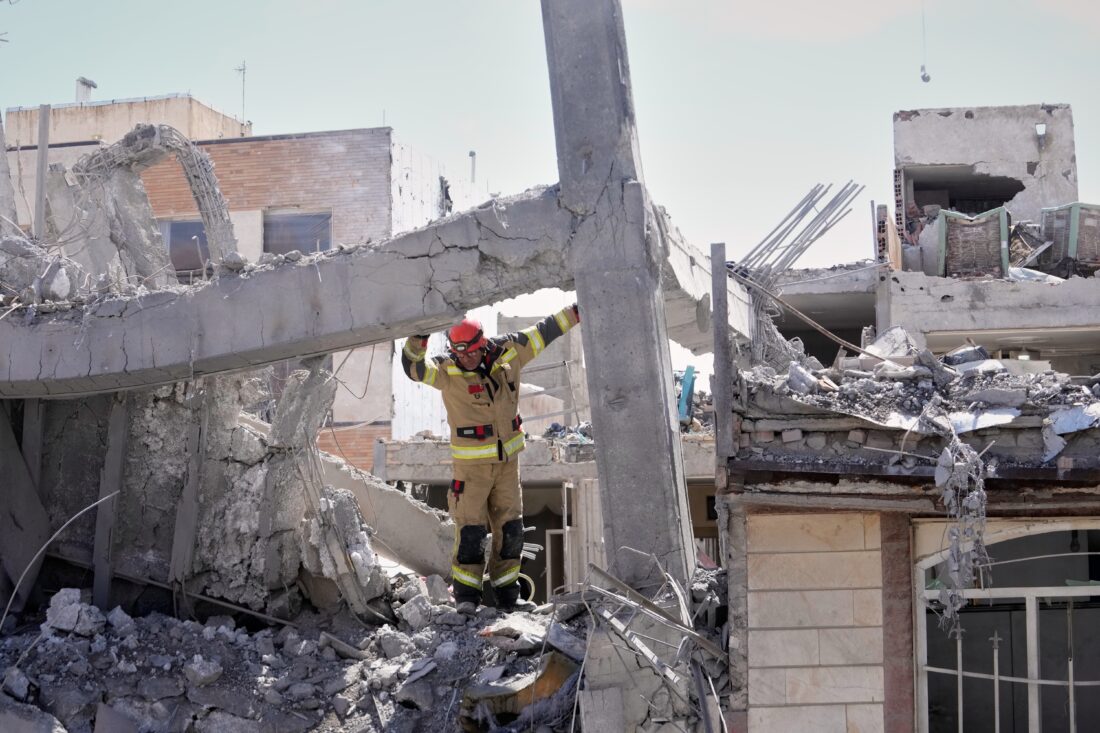
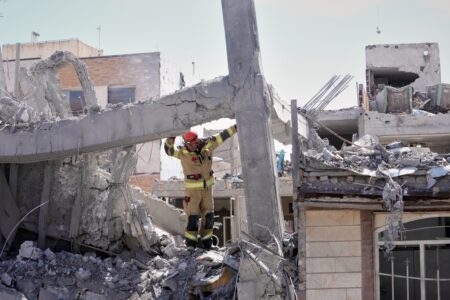
A first responder inspects the damaged structure of a residential building hit in an earlier U.S.-Israeli strike in Tehran, Friday, (AP Photo/Vahid Salemi)
DUBAI, United Arab Emirates (AP) — Tehran has agreed to “facilitate and expedite” humanitarian aid through the Strait of Hormuz, the Iranian ambassador to the United Nations in Geneva said Friday, even as it endures strikes on its nuclear facilities.
Ali Bahreini said Tehran has accepted a request from the U.N to let humanitarian aid and agricultural shipments move through the vital waterway, which usually handles a fifth of the world’s oil shipments and nearly a third of the world’s fertilizer trade.
The aid plan would be the first breakthrough at the shipping chokepoint after a month of war. While markets and governments have largely focused on blocked supplies of oil and natural gas, the restriction of fertilizer ingredients and trade threatens farming and food security around the world.
“This measure reflects Iran’s continued commitment to supporting humanitarian efforts and ensuring that essential aid reaches those in need without delay,” Bahreini said in a post on X. The U.N. earlier announced a task force to address the ripple effects the Iran war has had on aid delivery.
The announcement came just hours after Iranian state media said two nuclear facilities had come under attack. Israel, which had threatened to “escalate and expand” its campaign against Tehran, claimed responsibility, and Iran quickly threatened to retaliate.
“Attack contradicts POTUS extended deadline for diplomacy,” Iranian Foreign Minister Abbas Araghchi wrote on X, referring to U.S. President Donald Trump. “Iran will exact HEAVY price for Israeli crimes.”
Iran’s Atomic Energy Organization said the Shahid Khondab Heavy Water Complex in Arak and the Ardakan yellowcake production plant in Yazd Province were targeted, IRNA reported. The strikes did not cause any casualties and there was no risk of contamination, it said. The Arak plant has not been operational since Israel attacked it last June.
Yellowcake is a concentrated form of uranium after impurities are removed from the raw ore. Heavy water is used as a moderator in nuclear reactors.
The Israeli military later said raw materials are processed for enrichment at the Yazd plant and that the strike was a major blow to Iran’s nuclear program.
The Islamic Revolutionary Guard Corps warned Iran would retaliate, IRNA reported. Seyed Majid Moosavi, IRGC’s Aerospace Force commander, posted on X that employees of companies tied to the U.S. and Israel should abandon their workplaces.
“This time, the equation will no longer be ‘an eye for an eye,’ just wait,” he said.
Late Friday, Israel’s military said Iran had launched missiles at the country. Sirens alerted people to seek shelter in and around the city of Beer Sheba and areas near Israel’s main nuclear research center, which were targeted by Iranian strikes that injured dozens last weekend.
Word of the attacks on Iran came after Trump claimed talks on ending the war were going “very well” and that he had given Tehran more time to reopen the Strait of Hormuz. Iran maintains it has not engaged in any negotiations.
With stock markets reeling and economic fallout from the war extending far beyond the Middle East, Trump is under growing pressure to end Iran’s chokehold on the strategic waterway.
A Gulf Arab bloc said Thursday that Iran has been exacting tolls from ships to ensure safe passage.
Trump envoy Steve Witkoff said Washington delivered a 15-point “action list” to Iran for a possible ceasefire, using Pakistan as an intermediary. It proposes restricting Iran’s nuclear program and reopening the Strait of Hormuz.
Iran rejected the U.S. offer and presented its own five-point proposal that included reparations and recognition of its sovereignty over the vital strait.
Trump has said if Iran doesn’t reopen the strait to all traffic by April 6, he will order the destruction of Iran’s energy plants.
Uncertainty surrounding the conflict prompted a further drop in U.S. stocks Friday. The S&P 500 sank 1.7% to close out its worst week since the Iran war started and its 5th losing week in a row. The Dow Jones Industrial Average dropped 1.7%, and the Nasdaq composite sank 2.1%. Meanwhile, crude oil prices continued to soar.
With U.S. gas prices approaching $4 a gallon, members of Congress have been pushing to suspend the federal gasoline tax, set at 18.4 cents per gallon on gasoline and 24.4 cents per gallon on diesel fuel. Trump said he has “thought about” suspending it but suggested states should look at suspending their taxes on fuel.