
Facing skepticism, Blanche tries to lock down GOP support
Trending
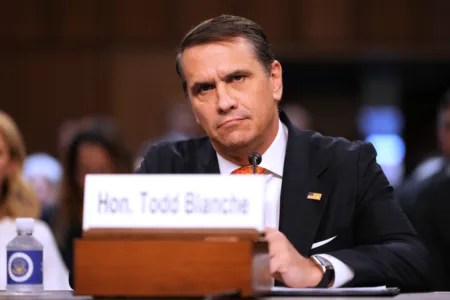
WASHINGTON (AP) -- Acting Attorney General Todd Blanche confronted skeptical questions at a Senate confirmation hearing Wednesday about the creation of a fund to compensate President Donald Trump’s allies and a tax immunity deal for the president as he aimed to lock down the Republican support needed to advance his nomination.
Blanche insisted that the $1.776 billion “Anti-Weaponization Fund,” which was scrapped after fierce bipartisan backlash, was “not moving forward.” But lawmakers, including Republican Sen. John Cornyn, conveyed concerns that the Trump administration has yet to commit in writing that the fund is dead and could therefore conceivably be resurrected.
“Just to be clear, the president of the United States, who’s a plaintiff in this lawsuit, has not agreed in writing to delete the weaponization fund and there’s no guarantee that he or one of the other plaintiffs” won’t raise the issue in the future, Cornyn asked. Blanche replied that Trump has no power over the fund, which was to have been administered by the Justice Department but was never launched.
Cornyn’s questions were closely watched since Blanche requires the backing of all Republicans on the Judiciary Committee and the Texas senator has not committed his support.
The hearing arrived at a tumultuous time for the Justice Department, with mass firings and resignations having hollowed out the workforce and Democrats and other critics raising alarms that Blanche is still functioning as Trump’s personal lawyer. He has led the department on an interim basis since April, functioning as the public face of the maligned fund and accelerating investigations into perceived Trump adversaries. Even as he said the fund was shelved, he made clear that immunity from tax audits afforded to Trump this year remained in place despite a congressional outcry.
Those actions, plus the flawed release of files from the Jeffrey Epstein sex-trafficking investigation, received fresh scrutiny Wednesday.
“You’re in charge of a Department of Justice I don’t recognize, prosecuting the president’s political enemies, firing rank and file prosecutors and FBI agents,” Democratic Sen. Chris Coons of Delaware told Blanche. “These are some actions that in your previous confirmation hearing before us, you said you would not take.”
Blanche, for his part, pointed to investigations into Trump during the Biden administration to argue that he had inherited a politicized Justice Department.
“In recent years, we watched the Justice Department turned against many of you and a former president, and it damaged the public’s faith in justice,” Blanche argued. “We are fixing that.”
Key to Blanche’s confirmation are Cornyn of Texas, who in May lost his primary, and Sen. Thom Tillis, a North Carolina Republican who has opted not to seek reelection. In the final stretches of their Senate career, both are seen as more likely than before to split from Trump and both have been outspoken critics of the fund the Trump administration created to compensate people who feel unjustly persecuted by the criminal justice system.
After questioning Blanche, Cornyn told CNN he continues “to have some concerns” and is not “going to make any decisions at this point.” Tillis, meanwhile, indicated during questioning that he is likely to support Blanche, even as he said he wanted “to stick a fork in this turkey of a 1776 fund.”
The death of South Carolina Republican Sen. Lindsey Graham, who was a member of the committee, left 11 Republicans and 10 Democrats on the panel. With Democrats united in solidarity against Blanche, a no-vote by even a single Republican on the panel would scuttle Blanche’s nomination.
The fund emerged from a settlement of Trump’s $10 billion lawsuit against the Internal Revenue Service over his leaked tax returns. Blanche had initially defended the initiative only to later reveal that it was being scrapped amid fierce bipartisan backlash.
The judge handling the case said in a scathing ruling Monday that Trump had effectively engaged in self-dealing through the lawsuit. She said she was troubled Blanche had signed the settlement given his prior representation of Trump and was concerned the acting attorney general had given misleading testimony. Blanche said Wednesday that he disagreed “with the judge’s insinuations about me.”
Blanche also defended a separate element of the settlement that afforded Trump and members of his family protection from tax audits and that, he has said, remains on track. He said the deal covers any existing audits but does not protect the president from examination of future tax filings.
“Nobody is above the law,” Blanche said. Such a settlement “doesn’t make any of those individuals above the law.”
Blanche was also pressed on the department’s staggered release of the Epstein files, a process beset by problems, including redaction errors that left exposed nude photos showing the faces of potential victims.
“I want to make sure that the American people know that this administration, when it comes to Jeffrey Epstein, has been more transparent than any administration,” he said. The Justice Department only released additional files after Trump bowed to bipartisan pressure to sign a law forcing the department to do so.