
Drills cut by Trump are central to alliance, observers say
Trending
SEOUL, South Korea (AP) -- For decades, the United States and South Korea have regularly staged military drills to prepare their soldiers to work together smoothly in the event of a crisis or conflict with North Korea.
But this year’s Ulchi Freedom Shield exercise, one of two main drills conducted by the allies annually, could be disrupted after U.S. President Donald Trump ordered his Pentagon chief to “substantially” scale it back just before its start Monday.
He cited what he said was a good relationship with North Korean leader Kim Jong Un and South Korea’s refusal to join the U.S. war against Iran. It was unclear what parts of the 11-day exercise were being cut and to what extent, but many experts say Trump’s move threatens to hurt combined U.S.-South Korean readiness and eventually weaken their decades-long alliance.
The exercise is central to the US-South Korea alliance
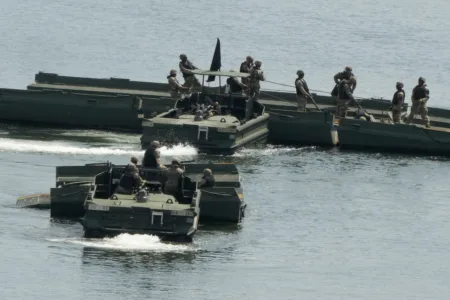
The Ulchi Freedom Shield, or UFS, is largely a computer-simulated command post exercise meant to hone the allies’ ability to deal with potential regional security threats like North Korean aggression. The two countries usually hold field training exercises during the command post exercise period.
South Korea’s military had earlier said this year’s exercise would be similar in scale to previous years, with the participation of about 18,000 South Korean soldiers. The U.S. military said it would incorporate lessons from recent conflicts such as North Korea’s battlefield experiences on the Russia-Ukraine front. Local media reported South Korea and the U.S. had planned 14 field training exercises.
The UFS, along with a similar joint war game in the spring, is a central pillar of the U.S. -South Korea alliance, which dates back to the 1950-53 Korean War. But it’s also a long-running source of tensions with North Korea, which has denounced the exercises as a rehearsal for war and responded with provocative missile tests.
On Friday, North Korea’s Foreign Ministry accused the U.S. and South Korea of plotting more provocative drills this year and vowed to respond with “a new level of a deterrent.” The U.S. and South Korea have said their regular drills are defensive in nature.