
Israel rejects Trump’s Gaza plan
Trending
(AP) -- Israel on Sunday rejected a deal announced by U.S. President Donald Trump for Gaza.
Details emerged, meanwhile, on the potential deal between Iran and Oman on managing the Strait of Hormuz as Tehran suggested that vessels linked to “hostile countries” would be barred.
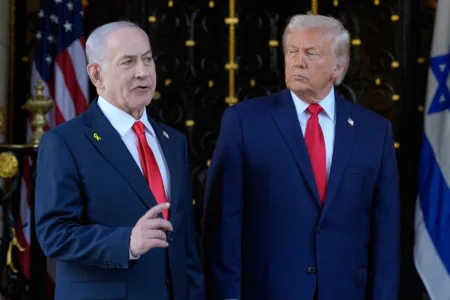
Israeli Prime Minister Benjamin Netanyahu dismissed the deal on Gaza announced by Trump last month, saying Israel’s military “will not carry out any withdrawal until Hamas is genuinely disarmed.”
Netanyahu told a Cabinet meeting that “Israel rejects the 15-point document” but is still discussing plans for Gaza with Washington, after making similar comments last week. Trump had said Israeli forces would withdraw as the Hamas militant group’s disarmament is completed. Israeli forces control over half the Palestinian enclave of about 2 million people that’s been largely destroyed.
There was no immediate White House comment on Netanyahu’s statement.
“We remain committed to the road map,” said a member of the Hamas political bureau, Bassem Naim, adding that the group expects mediators and the U.S. to pressure Netanyahu -- who also faces domestic tensions as he struggles to hold onto power ahead of the next elections scheduled for Oct. 27.
The Hamas-led attack on Israel on Oct. 7, 2023, sparked the war in Gaza. A fragile ceasefire continues.
Iran’s Foreign Minister Abbas Araghchi told reporters that negotiations with Oman about “new maritime routes” on the Strait of Hormuz were in the final stages but “this, however, does not mean that the Strait of Hormuz will reopen.” That step requires conditions that “have been conveyed through intermediaries.”
The Supreme National Security Council on Saturday said the strait will not reopen until the U.S. “corrects its behavior.” It demanded that the U.S. never threaten Iran again, a permanent end to the war with Iran and its armed allies, a lifting of the naval blockade of Iranian ports and a withdrawal of the U.S. military from the area. The U.S. also must “completely compensate” Iran for war damage, lift sanctions and “unconditionally” release frozen assets.
The United States did not comment on the demands. Trump on Sunday asserted to Axios that “we are only semi-negotiating” with Iran and letting economic pressures take their toll.
Araghchi said an “exchange of messages through intermediaries” continues with the U.S. but that doesn’t constitute negotiations, which he said can’t resume until violations of the interim deal end and the U.S. “has remedied” provisions it violated.
Iran and Oman, located on the other side of the Strait of Hormuz, are working to finalize a temporary deal that would reopen it, with ships entering near Iran and exiting near Oman, according to two people familiar with the talks who spoke on condition of anonymity because they were not authorized to speak publicly. Ships would transit without paying fees or tolls during the interim period.
The agreement is designed to restore the separate interim deal between the U.S. and Iran. The two people said the agreement is endorsed by Gulf Cooperation Council members and is expected to be jointly announced by Iran, Oman, the U.S. and the U.N.’s International Maritime Organization. But they stressed the terms still could change.