
Floods bring relief to US Southwest reservoirs
Trending
PHOENIX (AP) -- Recent flooding across the U.S. Southwest is providing rare relief to thirsty reservoirs that had fallen to record lows amid a yearslong megadrought.
Storms in late October and early November sent torrents of water through normally small or dry creeks that overflowed their banks and flooded local communities.
Hundreds of people were told to evacuate, and the flooding cut off access to some areas. Yet most of that water will end up feeding depleted lakes and underground aquifers, said Martin Hoerling, a climate scientist and hydrologist at the University of Colorado, Boulder.
“That’s somewhat of an unexpected boost from Mother Nature,” Hoerling said.
Last winter’s lackluster snowfall did little to recharge water bodies when it melted in the spring and summer, when they typically get their biggest bump of the year.
Then came the chaotic climate phenomenon, El Niño, that has intensified heavy rain and floods. Experts say its impacts will last several more months, potentially further boosting water supplies across the West where water primarily is stored in lakes, aquifers and snowpack.
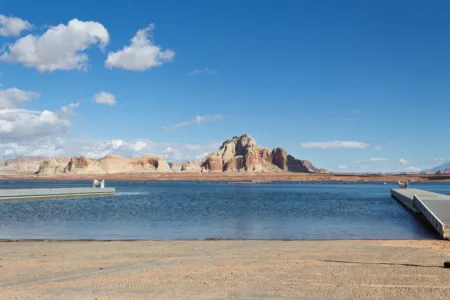
Lake Powell, the second-largest reservoir in the U.S., rose more than 20 feet from its mid-September low -- dwarfing its gains from this year’s snowmelt, Hoerling said. Still, the lake remained just over a quarter full, and 15 of its 17 boat launches remained unusable as of Friday.
The floodwaters and additional rain could raise the lake along the Arizona-Utah border further, for a total of over 1.2 million acre-feet -- enough to support around 4 million average families for a year, Hoerling estimated.
Cities in the region reported some of their wettest weather in decades.
Before storms began dumping about 7 inches of rain around Pagosa Springs, Colorado, in October, more than 10,000 people in the town and surrounding communities were under water restrictions. Restaurants were encouraged to serve water only on request, town manager David Harris said. Those restrictions are now lifted.
“While the storm was destructive, I think there is a silver lining,” Harris said. “You’re getting a good start to the winter snowpack in the higher elevations.”
Upper Lake Mary, which captures spring snowmelt in Northern Arizona and supplies Flagstaff, Arizona, with up to 40% of its water, received more than 3 billion gallons of water since early October, said Flagstaff water production manager Brian Huntzinger.
Storms last weekend dumped the equivalent of more than two years of water into the town’s surface water supply and provided a buffer for an operation that depends heavily on underground aquifers, Huntzinger said.
“It’s just a great, great thing to see,” Huntzinger said. “We might be overflowing at this rate before we see any snow fly.”
In central Arizona, heavy floodwaters that trapped people in their homes gushed into streams that feed the Verde River. That prompted water officials to release water from two nearly full dams into the Verde’s normally dry stretch in metro Phoenix, said Bo Svoma, the principal meteorologist at the Salt River Project that manages reservoirs on the Salt and Verde rivers.