
Senate blocks cryptocurrency regulation
Trending
WASHINGTON (AP) -- Senate Democrats on Tuesday blocked legislation to create a new regulatory framework for cryptocurrency, stalling an industry-backed effort to place new guardrails around digital assets after demanding more limits on President Donald Trump’s investments.
The 49-50 vote on whether to move forward with the legislation was a pivotal election-year test for the $2.3 trillion cryptocurrency market as the industry has pushed aggressively for a uniform set of rules. The Senate debate came as cryptocurrency companies have become a major political force, and as Trump has amassed significant wealth in crypto while in office.
While some Democrats are friendly toward the industry and support the idea of regulation, they have been adamant that the bill include strong ethics safeguards to prevent the president and his family from enriching themselves while he’s in office. The opposition appears to have only solidified two months before the midterm elections, despite significant donations that crypto groups have given to some Democrats in recent years. In the end, no Democrats supported it.
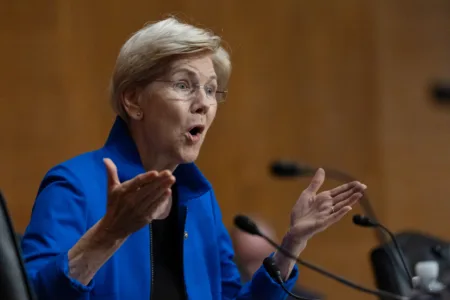
“Let’s make sure that we do not pass a crypto bill that will let Donald Trump continue to rake in billions of dollars in crypto profits while working families across this country struggle to deal with higher prices and an economy that gets worse by the day,” said Massachusetts Sen. Elizabeth Warren, the top Democrat on the Senate Banking Committee.
Several Democrats who have been supportive of the bill aside from the ethics concerns said they were still open to negotiating.
Virginia Sen. Mark Warner said he still wants regulation of the crypto industry, but “we cannot pass landmark legislation governing this industry while allowing the president of the United States to personally profit from it.”
The White House indicated Tuesday that it would now turn to agencies to implement parts of their crypto agenda and warned that the failed vote would continue to stifle financial innovation domestically while it flourishes abroad.
“The full cost of today’s result may not be known for years to come, but this much is clear: It increases the risk that the standards that global financial markets adhere to in the future will be those of Brussels or Beijing, rather than Washington and New York,” Patrick Witt, the White House’s crypto adviser, said.