
Some choose to donate government stimulus money
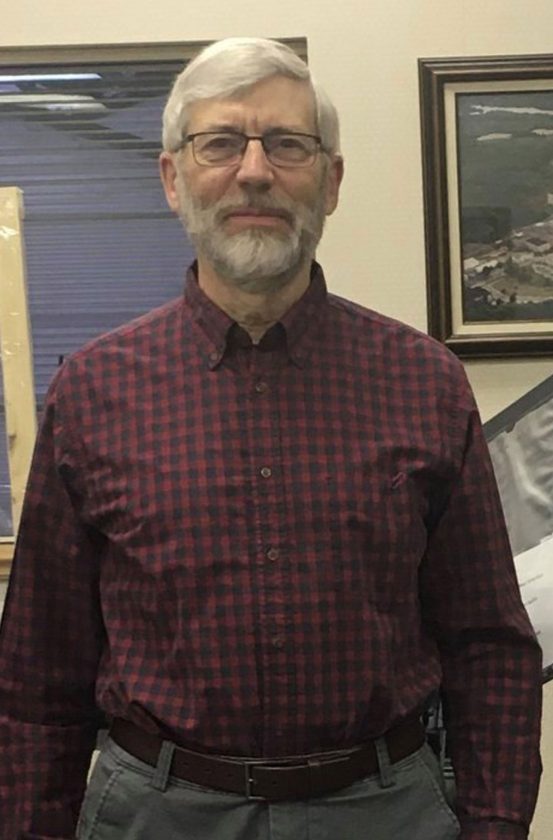
THE REV. EDWARD LAARMAN, shown while working the polls in Niagara, Wis., during the Wisconsin elections April 7, is part of the Iron Mountain Area Clergy Association, which is encouraging those who can afford it donate some or all of their federal stimulus money to those more in need.
While some people desperately need the federal stimulus check to pay bills, others are spending it locally to stimulate their local economy. Then there are those who choose to donate to people in need.
When the coronavirus outbreak hit, the Rev. Edward Laarman of Niagara, Wis., wanted to help however he could. But the retired pastor realized that as part of the vulnerable population, staying home would be best. So he’s helping in a different way — by donating his federal stimulus check and encouraging others to do the same.
“I thought, ‘How can I help from home?'” he said. “And then I thought about the stimulus check. Obviously, a lot of people need it, and some desperately need it, but my income, my wife and I, our income is Social Security and a couple small pensions. Our income is not affected at all.”
He added that their savings did take a hit due to the stock market slump, but he hopes that will come back around. So with that in mind, sharing their stimulus checks was the best way he could think of to help out.
Laarman is the secretary/treasurer of the Iron Mountain Area Clergy Association, which includes a group of pastors and ministry leaders in and around Iron Mountain, Michigan, and into Wisconsin.
“Then I floated the idea past our clergy association and they were all enthusiastically in favor of it,” Laarman said. “So I kind of undertook this campaign, where we’re calling it ‘2020 Neighbor Aid Response.'”
The campaign is based on the biblical command to “Love your neighbor as yourself,” he said.
He said the association normally hosts services and collects charitable donations during Holy Week, but it had to cancel those events this year because of COVID-19. So he got creative in trying to make sure organizations that serve those in need were getting the funding they need in order to reach as many people as possible.
Laarman then sent out a press release to news outlets throughout the country to encourage the public to consider donating their federal stimulus checks if they do not need the money themselves.
“It’s just an idea,” he noted. “We’re not collecting for ourselves or any particular organization. We’re just encouraging people to think about, if they don’t need their stimulus check, or need all of it, to share it with maybe a family member, a friend, or neighbor in need.”
He and his wife are distributing their donations to several organizations and small businesses. Supporting organizations that provide food, clothing and financial help to people, as well as the country’s health care system would be a vital use of donations, he said.
“For example, buy gift cards from a local restaurant and give them away,” Laarman suggested. “Just whatever creative ideas people can come up with.”
Distribution of the federal stimulus checks for those who qualify based on income started April 15, with funds directly deposited for those who had e-filed their taxes the previous year.
“I would just remind people that it’s not only the help, but the hope that it represents,” Laarman said of giving to those in need. “Even a small gift can really encourage people. … We’re just encouraging everybody, Christians or not, to love your neighbor as yourself.”
Still, not everyone can afford to donate their stimulus checks, as many have experienced job loss or a reduction in work hours during the pandemic. Some, like Kalie Barnett, are barely getting by.
“A lot of other people, including me, are two to three months behind on bills because we’ve either been laid off or our hours have been cut,” said Barnett, of Greenwich, Ohio, a town which she described as being in the middle of nowhere. “Don’t get me wrong — the stimulus check helped. It helped catch up the bills that needed to be caught up. But now this month’s bills are late … quite frankly, $1,200 doesn’t go very far nowadays.”
Barnett, who worked as a dog groomer, was laid off so she picked up a second job working as a delivery driver and sales clerk for an auto parts store. She works as much as she can, but the money coming in doesn’t even cover her grocery bill right now.
“I’m living on, like $200 every two weeks, which you and I both know, that’s impossible,” Barnett said.
She said because of her work schedule and living in such a rural area, she is not always able to get to the food banks during their distribution times. She and her husband, who is still working, do not have any kids, but they have two dogs with special veterinary needs, which can be expensive.
Barnett was due to go back to her regular job this past Monday.
Globally, this past week had Giving Tuesday Now, a push for charity to help those who have lost their jobs or are in financial need during this unprecedented time. Mirroring the original Giving Tuesday, which occurs annually on the Tuesday after Thanksgiving, the May 5 event was organized as an emergency response to the needs caused by the COVID-19 pandemic.
On the last Giving Tuesday on Dec. 3, $2 billion in donations came in throughout the U.S., according to a press release from the United Way Worldwide.
In late March, the United Way of Northeast Michigan Emergency Relief Fund was established to serve individuals affected by the economic consequences of the COVID-19 outbreak.
“The purpose of our fund was to get money, and get it out, because we knew where the need was,” said Joe Gentry, executive director of the United Way of Northeast Michigan, headquartered in Alpena. “From our food pantries to medical providers, they have very limited revenue streams right now, and they’re trying to provide PPEs. And so, we’ve been able to distribute over $25,000 to the agencies in our three-county region.”
The United Way of Northeast Michigan has 15 community partners in Alpena, Alcona and Montmorency counties.
Gentry said donors have been incredibly generous during this time of need.
“We have seen a significant increase of people that want to give to the emergency fund because they know that the money’s going out immediately to where it’s needed,” he said. “Our board has been outstanding at electronically approving the grant applications as they come in.”
The donations are making a difference, Gentry said, and “the need is huge.”
The United Way has even helped pay for individuals’ copays for prescriptions and doctor visits, he added.
Reaching out to those in need is imperative right now, noted Patrick Heraghty, executive director of the Community Foundation for Northeast Michigan. He explained that the effort isn’t only for the families and individuals who have lost their jobs but also in support of the workers on the front lines in health care, food distribution and essential services.
“There are lots of options for people to give right now,” Heraghty said. “We want to provide the public with a safe place to make donations and assure that 100 percent of the funds that they give are used locally in response to this crisis.”
In mid-April, the Community Foundation established an Urgent Needs Fund with an initial $40,000 of CFNEM’s unrestricted funding and an additional $40,000 commitment from DTE Foundation, bringing the fund’s starting total to $80,000. The first round of grants distributed $25,000 into local communities.
“We created our fund to give added support to those on the front lines of caring for and assisting vulnerable populations,” Heraghty said.
He said emergent needs is a new territory for the foundation, which covers nine counties.
“The outbreak, even though we’ve been under quarantine for four-plus weeks now, it’s really still in its early stages, and there’s a tremendous uncertainty with how it’s going to impact our community in the weeks and months to come,” Heraghty said. “The key here is getting money to where it’s needed, if people have the ability and the means. And we want to be able to help with that however we can, whether it’s through our fund or through connections that we can help them make.”
It may take months and years to recover from this crisis, Heraghty said, but he believes that working together is the key to a brighter future.
“Like our community and our donors, we’re in it for the long haul,” he added. “We know that no one organization, no one entity, has the resources to meet the demands of this time. And it’s really going to take everybody doing their part, their small part, and collectively, hopefully, we can move forward.”
Ogden Newspapers, parent company of The Daily News, has created a COVID-19 Reporting Team to help tell the story of what’s happening in our communities and our regions on a broader level. Darby Hinkley of The Alpena News, Alpena, Mich., can be reached at localnewsmatters@ogdennews.com.
Local News
Local judicial race on ballot in Florence, Forest counties
Forest County's district attorney and a longtime Crandon attorney with past experience as both a DA and judge will ...

Looking back on the Calumet Mine in Felch Township
Winter storm watch to begin late tonight
A winter storm watch will be in effect from late tonight through Thursday afternoon in Dickinson and Menominee ...

Gas prices eclipse $4 a gallon in US, the highest since 2022
Winter storm watch to begin late Wednesday
A winter storm watch will be in effect from late Wednesday night through Thursday afternoon in Dickinson and ...
Lunchtime Live special edition hints at spring
ESCANABA — Bay College has hosted Lunchtime Live, a midday music-and-food event that takes place weekly on campus ...