La Nina suggests a warmer fall, snowier winter for UP, region
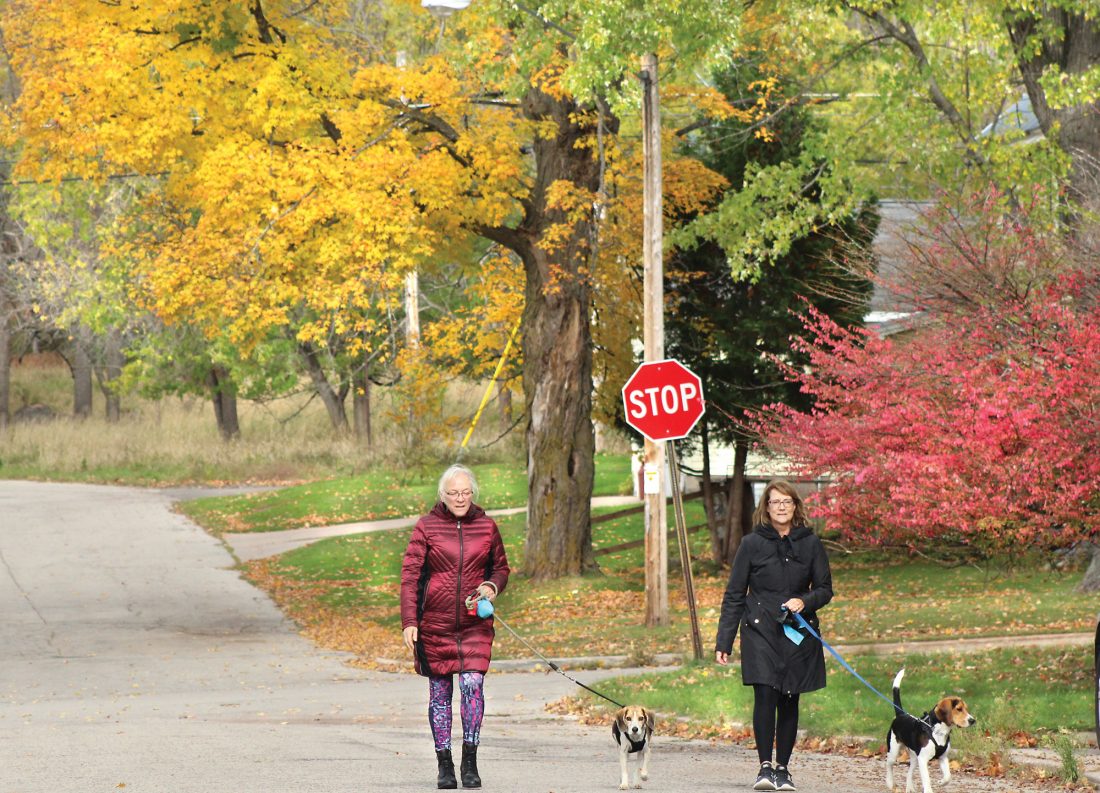
DEBBIE FANNERY, LEFT, and Susan Strang of Iron Mountain walk beagle buddies Itchie and Charlie down Van Buren Street in Iron Mountain on Wednesday afternoon. (Theresa Proudfit/Daily News photo)
IRON MOUNTAIN — La Nina conditions have developed but there’s no clear outlook on the weather implications for the Upper Peninsula.
La Nina, the flip side of El Nino, is the periodic cooling of sea-surface temperatures in the central Pacific Ocean. Historically, La Nina favors a warmer fall in the northern Midwest, while winter may be colder and snowier.
The National Weather Service, in its long-range forecast, calls for a 38% chance of above-normal temperatures at Iron Mountain-Kingsford through the end of December and a 28% chance of below normal. Precipitation over the same period is expected to be near average.
According to the Climate Prediction Center, La Nina officially developed by early September and is forecast to continue through the winter months.
“Much of the Lower 48 is warmer than average in October and November during La Nina years, but December is often colder than average, especially in parts of the northern and eastern U.S.,” said Linda Lam, a meteorologist at weather.com.
Further ahead, the Upper Midwest could pick up above-normal snowfall this winter, said AccuWeather meteorologist Paul Pastelok. The course of the winter may depend on the strength and positioning of the polar vortex, he added.
A strong polar vortex keeps cold Arctic air locked in place over the North Pole region, potentially leading to milder weather in the northern U.S.
“We expect the polar vortex to strengthen in the middle of the (winter) season this year,” Pastelok said. There may also be a favorable storm track mid-season for the Midwest and Great Lakes, leading to a few heavy snowfalls, he said.
The Climate Prediction Center calls for a slightly elevated chance of above-normal precipitation from January through March.
September featured a wide range of weather at Iron Mountain-Kingsford. Temperatures climbed to highs of 82 degrees on Sept. 23 and 24 after a monthly low of 30 degrees Sept. 18. The average temperature for the month was 56.2 degrees, which was 1.2 degrees below normal.
It was the coolest September since 2012, when temperatures averaged 56 degrees.
Total rainfall at the Iron Mountain-Kingsford Wastewater Treatment Plant observation site was 4.2 inches in September, which was 0.8 inches above normal. Precipitation so far this year has been above average every month except February and May.
The U.S. Drought Monitor shows no areas of concern in the Upper Peninsula.
Total water-equivalent precipitation through September this year at Iron Mountain-Kingsford is 31.61 inches, which compares with a typical average of 30 inches for the entire year.
Local News

Scouts tour Aurora EMS
DIDHD offers free vision, hearing screenings for kids
KINGSFORD — The Dickinson-Iron District Health Department will provide free hearing and vision screenings for ...
IM residents are on their own when nature’s water intrudes
Six candidates vie for Mr. Niagara, First Lady
NIAGARA, Wis. — The Niagara Women’s Civic Club has announced the candidates for its annual Mr. Niagara and ...
Remember when?