
Nice to have ice at home
Pandemic restrictions spur more make-your-own rinks
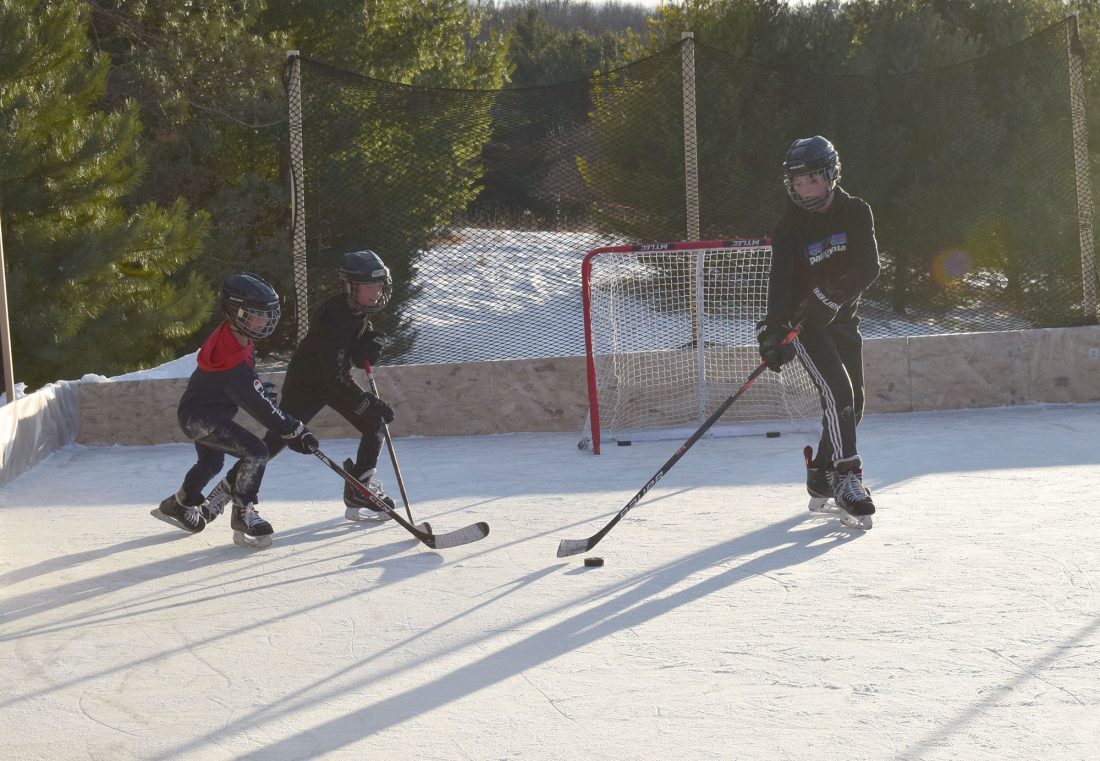
FROM LEFT, 8-YEAR-OLD twins Joseph and James Powell practice hockey with 13-year-old brother Jacob on the 24-by-54-foot ice rink their parents, Jeff and Shannon, installed at their home in Breitung Township this winter. With access to indoor ice venues limited due to the pandemic, they decided to set up a rink at home for the first time. (Brian Christensen/Daily News photo)
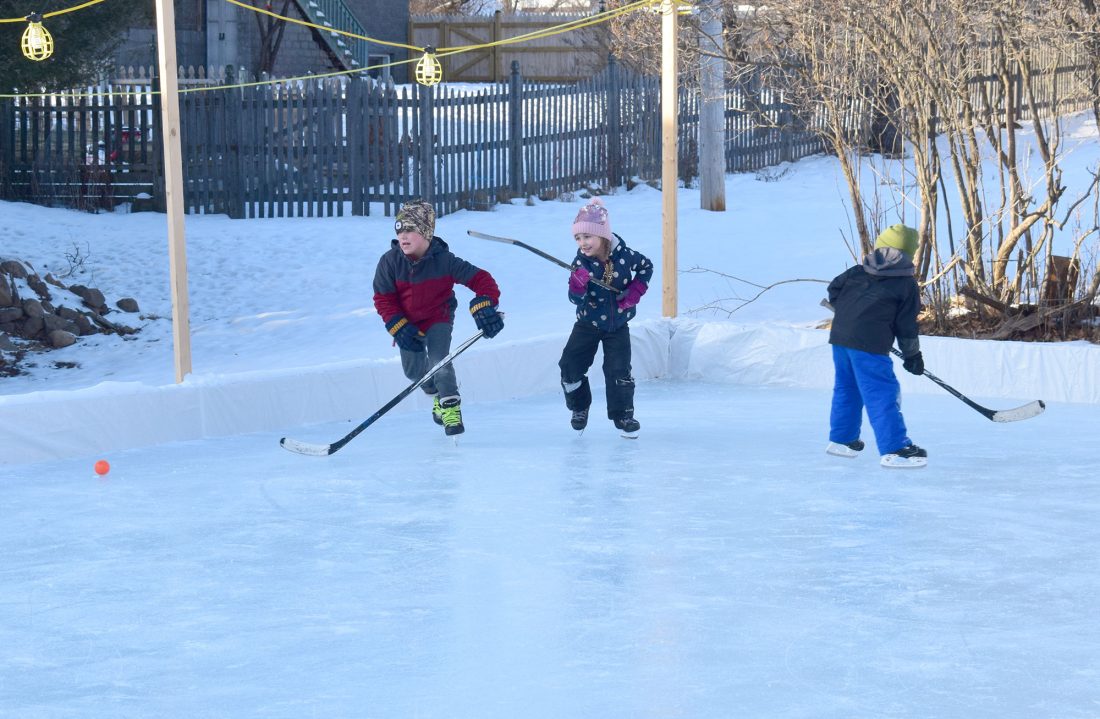
FROM LEFT, TANNER HELMINAN, Brooklyn Helminan and Braden Helminan play on the 30-by-50-foot ice rink at their Iron Mountain home. (Brian Christensen/Daily News photo)
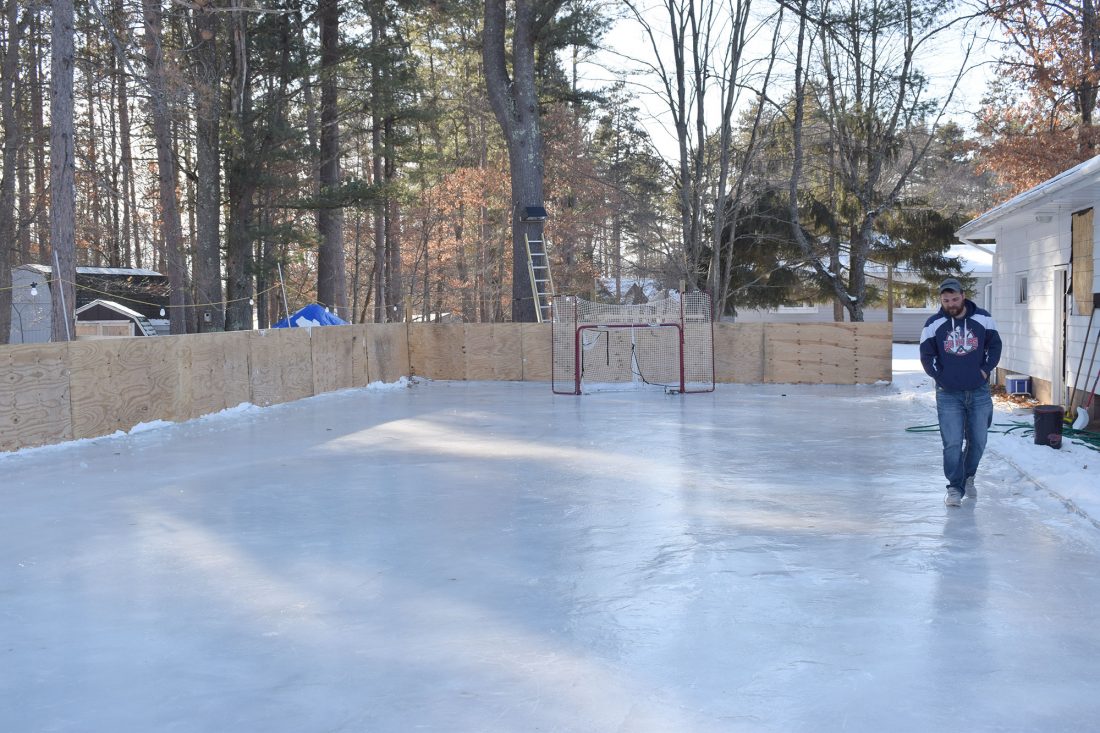
Kiel Ross, 33, steps out onto the ice behind his Norway home. The rink, which Ross has built for his children for a number of years, measures 50 by 80 feet. (Brian Christensen/Daily News photo)
FROM LEFT, 8-YEAR-OLD twins Joseph and James Powell practice hockey with 13-year-old brother Jacob on the 24-by-54-foot ice rink their parents, Jeff and Shannon, installed at their home in Breitung Township this winter. With access to indoor ice venues limited due to the pandemic, they decided to set up a rink at home for the first time. (Brian Christensen/Daily News photo)
FROM LEFT, TANNER HELMINAN, Brooklyn Helminan and Braden Helminan play on the 30-by-50-foot ice rink at their Iron Mountain home. (Brian Christensen/Daily News photo)
Kiel Ross, 33, steps out onto the ice behind his Norway home. The rink, which Ross has built for his children for a number of years, measures 50 by 80 feet. (Brian Christensen/Daily News photo)
Trending
With the pandemic shutting down indoor ice venues for much of the winter, some area families have made do by setting up backyard rinks to give their kids a chance to skate at home.
In Breitung Township, Jeff and Shannon Powell build a rink for their four children: 15-year-old Ellison, 13-year-old Jacob and 8-year-old twins James and Joseph.
"(The boys) have been playing hockey forever. Usually, during normal years, they get enough ice time that we haven't had an outdoor ice rink," Jeff said.
But virus restrictions reduced their access at the Mountain View Ice Arena in Iron Mountain, where Jacob is in the Dickinson Amateur Hockey Association's 14U program and the twins play in 8U.
Jeff guessed if not for the pandemic, Jacob's team would have competed in about 20 games and the twins would have played 10.
"To give them something to do, we figured we'd build our own outdoor rink," Jeff said.
In preparation, Jeff -- a 44-year-old operations manager at MJ Electric -- searched the internet for the best approach.
"You can find just about anything online, right?" Jeff said.
But their first attempt at building their rink was unsuccessful. Jeff had planned it for the back yard, but the land was too uneven -- one end measured 3 feet lower than the other.
"It doesn't look like that, it looks flat." said his wife, Shannon, 43, an audiologist at the Oscar G. Johnson VA Medical Center. "You can't have a three-foot difference."
Instead, Jeff built the rink near his driveway. With lumber, he framed a 24-by-54 feet rectangle, lined the box with plastic and filled it with enough water to freeze the plastic in place. When that was set, Jeff then filled the rink with about 3,000 to 4,000 gallons of water, he estimated.
"It took awhile for it to freeze," Jeff said, adding two to three weeks passed before the ice was solid.
The ice measures about 3 inches thick on one end and 14 inches on the other.
To maintain the smooth surface, the family shovels the rink after each use and snowfall.
"If it has snow on it and it gets warm out and that snow melts, it makes the ice really, really rough," Jeff said.
Once a week, Jeff will flood the rink with water for a new top coat.
Including lumber, plastic, hardware and lighting, Jeff believes he spent about $800 to $1,000 building the rink -- a worthwhile investment, he said, considering how often the children are on the ice.
"We probably skate three or four times a week," Jacob said.
"We'll go out in the morning, middle of the day and at night" on weekends, Joseph added.
"With the lights on at night, that's probably the best part about it," Jacob said.
"It's really been a blessing for our kids to be able to have that outlet, to go out there and get some fresh air and skate," Jeff said. "Growing up here, every kid should, by the time they become an adult, know how to ice skate. You don't have to play hockey to enjoy skating."
In Iron Mountain, Scott and Lynette Helminan also have their own backyard ice rink. While the Powells built their rink in response to the pandemic, the Helminans have set up home ice every winter for the past four years.
"It was just something to put in the back yard to get the kids outside in the wintertime," Scott Helminan said, later adding the tools needed to level a spot in his yard and build the 30-by-50-foot rink are readily available to him as a construction worker with Gundlach Champion Inc.
The 34-year-old has five children with his wife, a 32-year-old nurse with Dickinson County Healthcare System. Tanner is 8; Brooklyn, 6; Braden, 4; Sawyer, 2; and Levi is 8 months.
Tanner plays hockey in DAHA's 8U program with James and Joseph Powell.
Every year, Helminan clears his yard, frames the rink, lines the box with plastic and fills it with water. The plastic costs about $150, and the water adds about $100 to the family's utility bill.
"You try to time it where you can fill (the rink) on cold nights with no snow," Helminan said. "If the snow gets on it, it pushes the ice down and water comes up over the sides and creates slush."
Like Jeff Powell, Helminan stressed the importance of keeping snow off the rink throughout the season to avoid ice chunks forming.
It needs to be kept free of debris as well, he added.
"If you get a leaf or a pine needle or anything on it, the sun will warm it up and it will actually melt it into the ice," Helminan said.
In Norway, 33-year-old Kiel Ross, an electrician with MJ Electric, built an 50-by-80-foot rink.
Like the Helminans, Ross and his wife Miranda, a 44-year-old nurse with the Dickinson Pediatric Clinic, have built a rink in their backyard every winter for a number of years for their three children -- Landon, 12; Devynn, 10; and Ashtynn, 8.
"I thought, rather than drive over to the city rinks, round them up for open skate, I'll just build one in the backyard," Ross said. "This way they can come and go if they're cold."
Landon has been skating since he was 2 years old and plays on the same DAHA team as Jacob Powell.
While Devynn and Ashtynn enjoy skating, Landon is on the ice to hone his hockey skills.
"Raising a hockey player, the most important thing to them, the biggest focus, is ice time," Ross said.
With a home rink, Landon is able to skate an extra 10 hours a week, sometimes as many as six hours a day on the weekend, Ross said.
When skating alone, Landon will take 1,000 to 2,000 shots a week, Ross said. When skating with his sisters, Landon focuses on footwork.
To maintain a smooth surface after his children skate, Ross will sweep up ice shavings, water the ice and use a squeegee to fill in grooves and chips.
Upkeep for the rink costs about $100 annually, Ross said.
In Faithorn, Andre and Kristin Hanna built their first rink this winter for their three children, Oliver, 9; Cooper, 7; and Ethan, 4.
Oliver and Cooper are both in their second year of DAHA hockey, Andre said. Oliver is in the 10U program and Cooper is in 8U with the Powell twins and Tanner Helminan.
An engineer at the VA Medical Center, Andre built the 32-by-72-foot rink after searching through Facebook groups dedicated to backyard rinks throughout the Upper Midwest and Canada.
After building the frame, Andre installed a plastic rink liner he bought directly from a company in Chicago, Ill., for $300. He then contacted the Faithorn Township Fire Department and asked if volunteers would fill the rink with water.
"They were willing to come here and fill it from their fire trucks," Andre said, giving thanks to Fire Chief William DeVoe and his wife, Susan. "It was very appreciated. It would have taken me two days, at least, to fill it."
With lumber, plastic, lights and equipment, the Hannas estimate they spent about $1,600 in all. But the Hanna children are on the rink almost every day, Andre and Kristin said.
"The kids can go out any time they want, they can work on whatever skills they want," Kristin said, adding her children were on the ice five to six hours a day.
When the ice becomes rough, Andre will use a rink rake made out of PVC pipe and a towel. The rake attaches to a garden hose and is dragged across the ice, leaving a smooth surface.
Andre plans on expanding the rink next year, adding walls around the rink and netting on both ends.
"So I don't have to keep searching for pucks in the snow," Andre said.