
Tree sale does wildlife a favor
Northwoods Notebook
Trending
I admit I invest a lot of money and effort each winter into convincing local wildlife to make an appearance in the yard.
The scene when successful can be akin to a Disney movie, with deer, rabbits, squirrels and multiple types of birds sharing space at the feeders. Suet draws in an array of woodpeckers, along with other birds -- even last year a bobcat that developed a taste for manufactured logs of rendered beef fat it would pull down and lick like an ice cream pop.
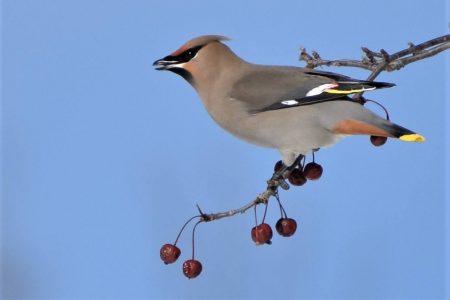
What's lacking in the yard at this point is natural feeding opportunities -- trees and shrubs that provide fruit, berries or nuts for winter forage. While we do have some chokecherries, crabapples and one oak tree, the output of fruit and acorns was scant this year.
This is known as mast, the food items native vegetation produces that may convince visiting birds conditions are good to stick around at least part of the winter.
These mast producers can occur naturally depending on where you live. But it certainly can help to plant trees or shrubs that bear fruit or nuts attractive to wildlife.
Enter the Dickinson Conservation District's 68th annual tree sale, now taking orders.
As I'm much more confident talking about fauna than flora, I turned to Ryan Brady, Natural Heritage Conservation biologist with the Wisconsin Department of Natural Resources, for some guidance on what might be best to order with wildlife in mind.
He endorsed much of what the district is offering in the sale, especially the native species that may otherwise be difficult to find at other outlets.
Among the list of large trees, he singled out the oaks as being the "single-best kind of wildlife tree in our area." Not just because it produces acorns, but it can play host to 530 Lepidoptera -- butterflies and moths -- species, he explained.
Of the top five Lepidoptera host species, four -- the oaks, cherry/plum, birch and poplars -- are available in the DCD sale.
Brady also touted the poplar family, which includes aspen, for having a soft wood when older that is ideal for woodpeckers to excavate nesting cavities. Younger aspen tend to be good habitat for game.
Birch are a good seed source, he said. The conifers provide shelter and roosting sites as well as seed-laden cones.
Among the small trees and shrubs, Brady gave virtually the entire list a thumbs up, further recommending choosing several to extend the fruit-bearing season.
Serviceberry also is known as "juneberry" because it has fruit in the early summer. Elderberries ripen in late summer. Viburnum has fall fruit that can hold into winter, even early spring.
Dogwoods provide great low cover, Brady said, and white berries that "are a big hit with the birds." The pagoda dogwood -- so named because it seems to have tiers of branches and foliage -- can reach 20 feet and is "really beautiful." It, too, is on the DCD sale list.
Even the American plum, not considered that attractive to birds as a food source, "smell wonderful; they're tremendous to pollinators," Brady said.
As someone who has long advocated planting native species, "this sort of thing," Brady said, "is a fantastic opportunity, close to home, to 'feed the birds.'"
His last bit of advice: check the best soils for the species you choose, plant a number and diversity with the idea that some might not thrive, and devise a way to protect the young plants from being munched by deer or rabbits.
The annual tree sale is the main fundraiser for the Dickinson Conservation District.
The sale has "evolved," organizers say, to adjust to a number of factors from the COVID-19 pandemic. It's been affected by limited supply from its usual nursery sources.
And, yes, they admit prices have risen this year due to inflation -- they're paying almost double the wholesale cost.
Along with the native species, the sale offers some of the most popular apples now on the market -- Honeycrisp and Zestar -- along with some long-time favorites such as McIntosh, Haralson and Wolf River. Apricots -- yes, they can be grown here -- pears, plums and cherries can be ordered as well.
The sale offers other treasures as well -- asparagus, raspberries, Concord grapes, strawberries, blueberries, shiitake mushroom logs.
To see what's available, along with prices, go online to https://www.dickinsoncd.org/shop. A paper order form or more information can be obtained by calling 906-774-1550, ext. 180.
Deadline for ordering is April 8, but supplies of some varieties are limited and might not last that long. The DCD advises calling on availability or possible discounts for larger quantities of a single species. Pickup days will be April 29-30 at Dickinson County Fairgrounds in Norway and April 30 at Coleman High School in Coleman, Wis.
Betsy Bloom can be reached at 906-774-2772, ext. 240, or bbloom@ironmountaindailynews.com.