Enbridge pipeline tunnel option ‘rushed’ and unsafe, opponents say
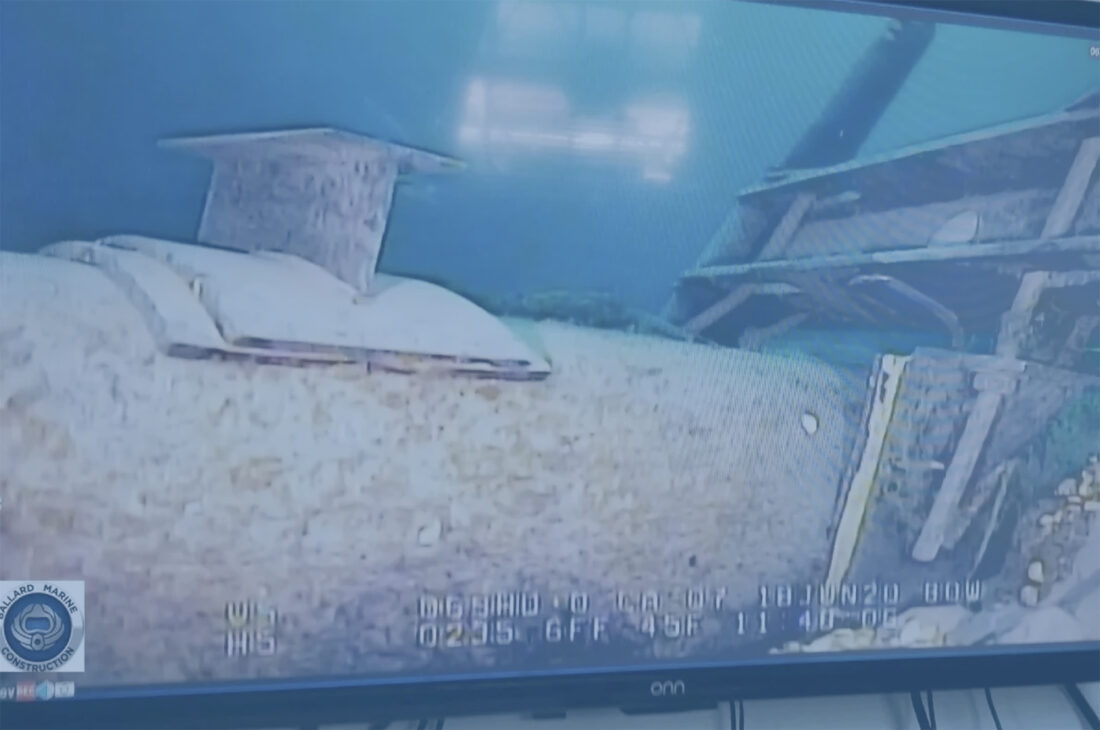
A portion of the Enbridge Inc. Line 5 pipeline under the Straits of Mackinac. (Michigan Department of Environment, Great Lakes and Energy, via the Associated Press and Bridge Michigan)
(This story was originally published by Bridge Michigan, a nonprofit and nonpartisan news organization. Visit the newsroom online: bridgemi.com.)
Federal officials heard an earful Wednesday from Line 5 pipeline opponents who expressed skepticism about the latest option to keep oil flowing through the pipeline while reducing the odds of a spill in the Great Lakes.
The outcry, expressed during an online public comment session hosted by the U.S. Army Corps of Engineers, comes as the Corps considers permits for Canadian oil giant Enbridge Energy’s plan to replace a 4-mile segment of the pipeline that rests in the Straits of Mackinac with a segment buried in a concrete tunnel beneath the lakebed.
Last month, years into its review of that plan, the Corps opened debate on a new alternative: Rather than digging a 21-foot-wide tunnel, Enbridge could use “horizontal directional drilling” to snake the pipeline through a narrow borehole hundreds of feet underground.
According to a written review of the new option, Corps officials began to study horizontal drilling after Enbridge indicated that the technique, once considered impossible, is now feasible.
That irked environmentalists, who accused the Corps of a last-minute “bait and switch” that left pipeline opponents scrambling to understand the implications amid a short three-week public comment period.
“This feels rushed and a complete 180 from the tunnel narrative we’ve all heard for years,” commenter Julie Geisinger said during Wednesday’s hearing. “The bottom line is that neither a tunnel, nor a new pipeline installed using (horizontal drilling) is safe.”
The 72-year-old pipeline carries crude oil and natural gas from Wisconsin to Sarnia, Ontario, including across the Upper Peninsula. Opponents say the risk of a spill into the Great Lakes is so great the pipeline should be shut down.
“It’s really unimaginable why we would take the risks for a Canadian company that transports Canadian oil to Canadian refineries in Sarnia,” said Nancy Broadwell.
A handful of commenters expressed support for the tunnel plan, hailing the potential for jobs tied to construction and environmental benefits from getting the existing pipes out of the water.
“The studies done have been extensive, detailed and very comprehensive,” said Sandra Buchan, who described herself as the wife of a pipeliner. “They clearly indicate that this project will create long term benefits with a small amount of disruption and impact during the construction period.”
Corps officials have not answered questions from Bridge Michigan seeking details about how the new option emerged, although a spokesperson for Enbridge has said it was not the company’s idea.
Rather than encasing the pipeline in a tunnel, the process would involve drilling a 42-inch borehole. The 30-inch-wide pipeline would be assembled on land, requiring a 4-mile-long by 80-foot-wide assembly area either north or south of the Straits, and then pulled through the hole. Construction would take about two years.
On Wednesday, Corps regional technical specialist Sarah Workman said the decision to study horizontal drilling does not mean Enbridge’s tunnel plan has changed.
“The Corps of Engineers continues to evaluate Enbride’s proposal to construct a tunnel,” Workman said.
Beyond the federal permit, Enbridge is awaiting water resources permits from the Michigan Department of Environment, Great Lakes and Energy for the tunnel project. Meanwhile, the Michigan Supreme Court has taken up a lawsuit challenging the legality of a tunnel permit issued by the Michigan Public Service Commission.
The company is also locked in legal battle with the state of Michigan over Gov. Gretchen Whitmer and Attorney General Dana Nessel’s attempts to shut down the existing lakebottom pipes.
A final decision is expected next spring.

Local News
Groeneveld remains mayor in Kingsford
KINGSFORD — Kingsford City Council has reelected Joe Groeneveld as mayor and Daniel Freeman as mayor pro ...

20 days until Christmas
Enbridge pipeline tunnel option ‘rushed’ and unsafe, opponents say

Marinette Marine lays off almost 100 after Navy cancels ship orders
Michigan high court eyes limits on courthouse immigration arrests