Outdoors report: UP deer harvest dips; caution urged on ice
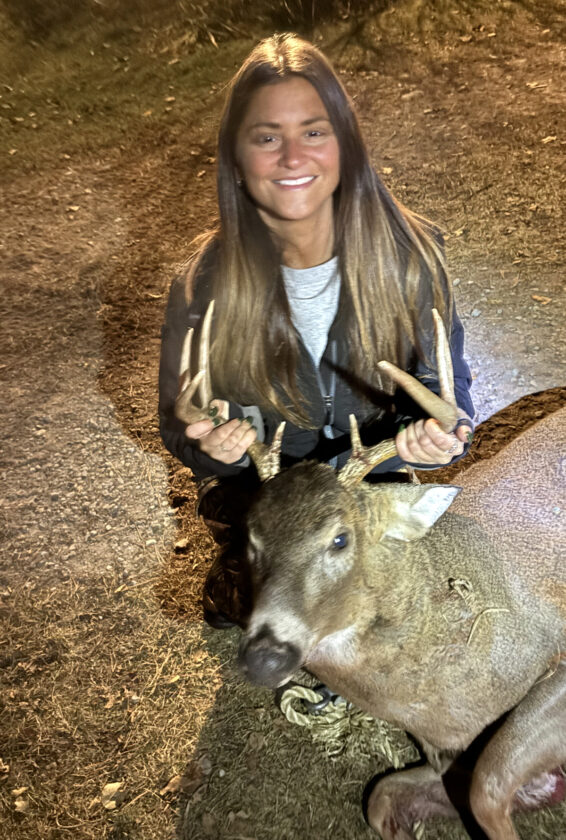
Molly Pavlat of Lansing shows an eight-point buck — one of two she took during this year’s Michigan firearm deer season in Menominee County. (Courtesy photo)
IRON MOUNTAIN — Michigan’s statewide firearm deer harvest is down about 5% from a year ago with local counties dropping more than that.
In Dickinson County, the total reported harvest of 1,038 represents an 18% drop. Iron County, with a harvest of 1,070, was down nearly 10%.
Menominee County’s harvest total of 3,161, the highest in the U.P., was down nearly 12%. Delta County’s total of 2,015 represents a 12% drop as well. Marquette County showed a 22% drop with a harvest total of 946.
Those numbers are preliminary, as some hunters may be late in registering a harvest through the Michigan Department of Natural Resources’ online system.
The antlered portion of the deer harvest in Dickinson County numbered 812, down from 951 in 2024. Iron County’s antlered total was 742 — 100 fewer than a year ago.
Menominee County’s antlered harvest of 2,217 was down from 2,426 in 2024, while Delta County’s antlered total of 1,459 was down from 1,738. Marquette County’s antlered harvest dropped from 1,167 to 889.
Reports from the Michigan Department of Natural Resources indicate that deer movement during the firearm season was likely affected by off-and-on strong winds. The deer that were harvested were healthy, officials said.
Wisconsin hunters, meanwhile, took fewer bucks but more antlerless deer than a year ago during the state’s nine-day gun season. The season’s total was down 0.8% statewide, with the antlered harvest down 2.6% but the antlerless harvest up 0.9%, the Wisconsin DNR said.
***
Anyone venturing onto waterbodies is advised to be aware of rapidly changing ice conditions in the early parts of winter.
“Early in the season especially, ice conditions are unpredictable and can change quickly on Wisconsin’s rivers and lakes,” said said Lt. Jacob Holsclaw, Wisconsin DNR off-highway vehicle administrator. “The ice covers hide the currents, debris and underground springs still feeding lakes and rivers, thinning the ice in spots. No matter if you’re on foot, on a snowmobile or in UTV, it’s important to remember that ice is never 100 percent safe.”
Every waterbody has its own characteristics. Check if the lake has inlets, outlets or narrows, is spring-fed or has currents, all of which can thin the ice.
Some smaller lakes can have aerators that are run throughout the winter either covering a large area towards the center of the lake or may have smaller aerators placed by private property landowners adjacent to their shore and/or piers.
Equally as important is to stay alert for pressure ridges or ice heaves. These can be dangerous due to thin ice and open water and often are created, move or grow with changes in temperatures and high winds.
Also, remember that UTVs are heavy, often being close to 3,000 pounds. This is similar to a car or truck.
***
Applications for Wisconsin’s 2026 black bear and spring turkey hunting seasons are due by 11:59 p.m. on Wednesday. Hunters can apply for harvest authorizations or purchase preference points toward future drawings, or edit an existing application, through Go Wild or an authorized license agent up until the deadline.
The drawing for 2026 black bear harvest authorizations will occur in February. Applicants selected in the drawing will be notified by email or postcard, depending on their notification preferences selected in the application process, and may purchase their 2026 Class A bear license beginning in March.
State law requires bear permit applicants to apply at least once during any period of three consecutive years to retain their accumulated preference points; otherwise, all accumulated preference points will be lost. When an applicant is selected in the drawing, their preference points will be reset to zero, even if they do not purchase the bear license.
This year, over 32,000 people applied for one of the 13,110 bear licenses available. Nearly 114,000 more people opted to purchase a preference point to improve their chances of drawing a license in a future lottery. With over 146,000 people applying for a license or purchasing a preference point, it represented a record high for bear hunting applications.
Turkey harvest authorizations are issued through a preference-based drawing system. The spring harvest authorization drawing takes place in late December.
Any harvest authorizations not awarded in the drawing will be available for purchase as bonus harvest authorizations. Bonus harvest authorizations will cost $10 for residents and $15 for nonresidents.
All turkey hunters must possess a valid spring turkey license and a wild turkey stamp when they acquire their spring turkey harvest authorization. A 2026 spring turkey license is $15 for Wisconsin residents and $65 for nonresidents. The 2026 wild turkey stamp is $5.25.
***
The Wisconsin DNR is seeking public input as it revises the state’s Turkey Management Plan.
The current plan, adopted in 2015, was designed to guide statewide turkey management priorities for a period of 10 years.
The DNR has now convened a Turkey Management Plan Committee comprised of stakeholder representatives from tribal agencies, hunting organizations, conservation partners and Conservation Congress members, as well as technical staff from the DNR and federal agencies. The new plan will guide the management of turkey in Wisconsin for the next 10 years.
An online public comment tool and more information is available on the DNR’s Turkey Management webpage at https://dnr.wisconsin.gov/topic/WildlifeHabitat/turkeymanagement. Anyone interested in Wisconsin’s turkey management is encouraged to participate.
Individuals may also submit comments via email to Taylor Finger, DNR Game Bird Specialist, at Taylor.Finger@wisconsin.gov. Comments will be accepted through 11:59 p.m. on Thursday, Dec. 18.
After the public input period, the Turkey Management Plan Committee will convene to review the feedback and initiate work on developing a first draft.
Local News

Michigan DHHS quietly kills effort to restructure mental health care system
UP, Dickinson, Iron jobless rates rise in December
IRON MOUNTAIN — The Upper Peninsula's not seasonally adjusted unemployment rate climbed to 6.2% in December as ...
Checking out the birds
Senate bill would create septic system regulations in state
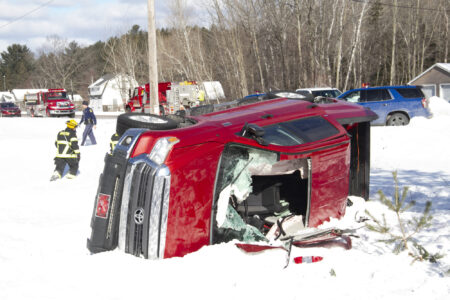
Pickup truck and train collide in Delta County