Study challenges assumption about Great Lakes ice cover and evaporation
-
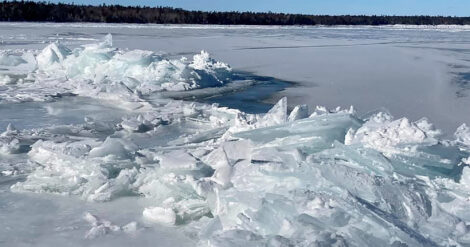
- Ice builds on Lake Michigan along the shore at Newport State Park in Wisconsin in February 2021. (Roger Schneider/AP Photo, file, via Wisconsin Public Radio)
-
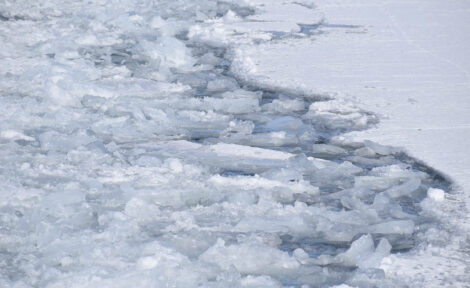
- Ice on Lake Superior near Bayfield, Wis., in February 2023. (Danielle Kaeding/Wisconsin Public Radio)
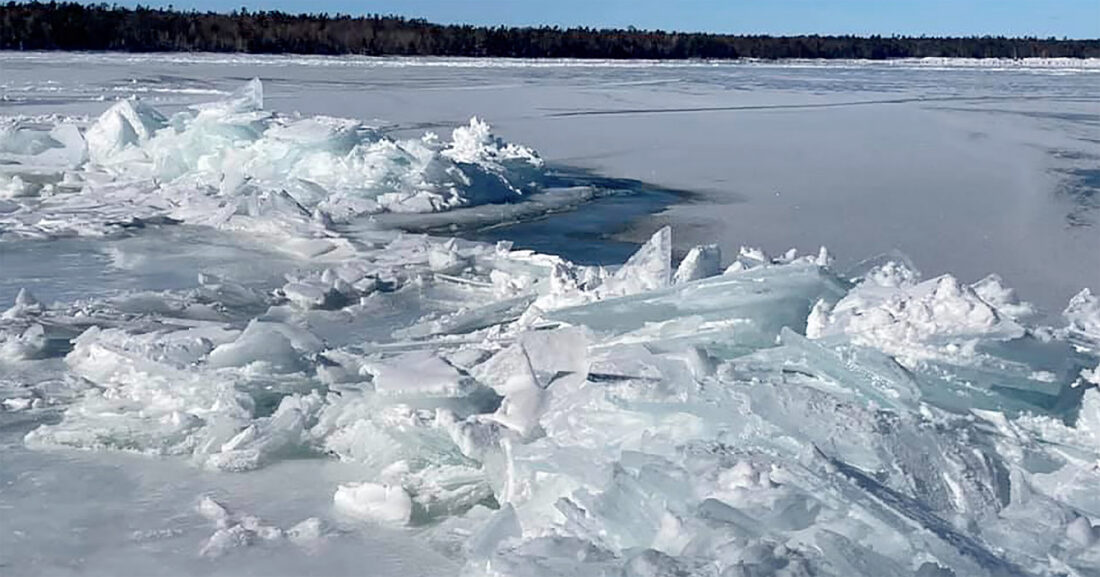
Ice builds on Lake Michigan along the shore at Newport State Park in Wisconsin in February 2021. (Roger Schneider/AP Photo, file, via Wisconsin Public Radio)
Ice cover on the Great Lakes has often been thought to cap evaporation that can influence water levels and regional weather. But a new study finds ice doesn’t play as big a role in blocking evaporation as once thought — which could prove vital for predicting future climate conditions and lake levels.
The study was published this fall by the American Geophysical Union’s peer-reviewed journal Geophysical Research Letters. As climate change drives warmer winters and less ice, researchers said understanding how ice affects evaporation is critical for predicting how the planet’s supply of fresh water will be affected by future conditions.
Evaporation, along with precipitation, heavily influences the balance of water coming in and out of the lakes. High evaporation rates can contribute to lower lake levels and low evaporation can lead to higher water levels. That in turn can affect the shipping industry, infrastructure and shorelines.
The study’s authors examined 50 years of data on the Great Lakes to better understand the relationship between ice cover and evaporation during the winter months from 1973 through 2022. They found other factors such as wind speed, humidity and temperature played a larger role in water evaporation.
“What we found here is that it’s less of an ice story and more about the overlying weather conditions or atmospheric conditions above the lakes,” said lead author Eric Anderson, an environmental engineering professor with the Colorado School of Mines.
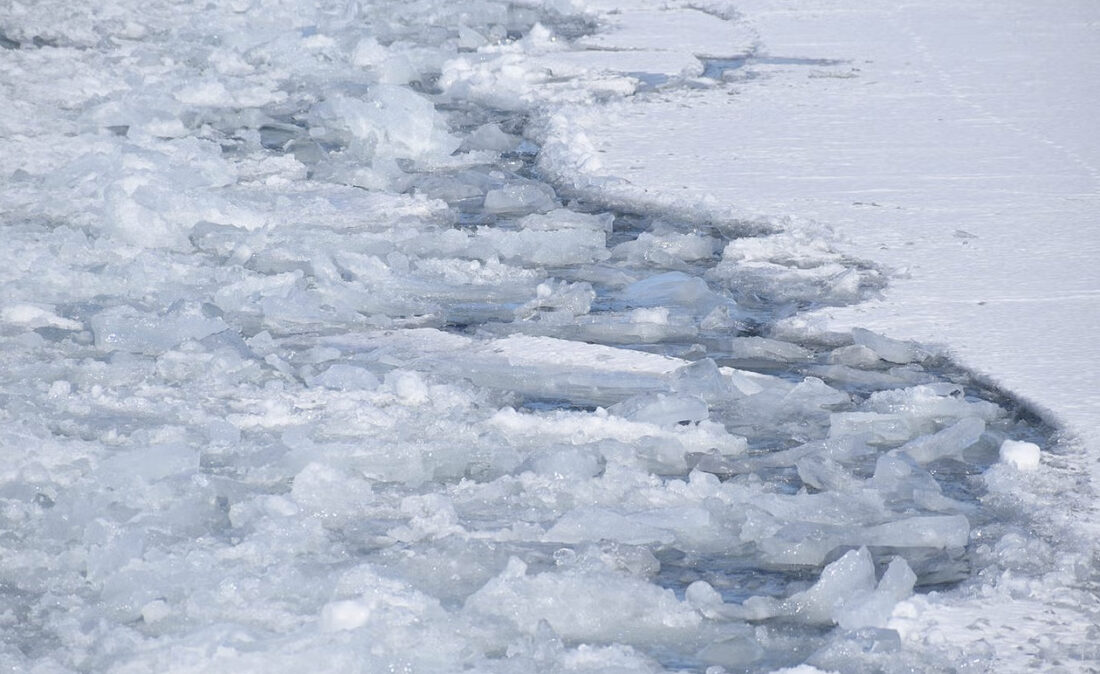
Ice on Lake Superior near Bayfield, Wis., in February 2023. (Danielle Kaeding/Wisconsin Public Radio)
Researchers examined ice cover and evaporation during January, February and March because those months have the highest ice concentrations. They account for between 26% and 35% of annual evaporation on the Great Lakes, with the exception of Lake Erie. Late fall and early winter generally see the greatest evaporation on the Great Lakes.
Traditionally, scientists have assumed that ice forms a cap on the lakes that reduces evaporation by sealing the water in. Anderson likened it to putting a lid on a cup of water.
“In the Great Lakes, we’re almost never in that situation,” he said, noting it’s rare for the lakes to freeze over completely during winter months. “It’s always like we have a bunch of holes poked in our lid.”
The study found that a complex relationship between ice and evaporation. Ice cover doesn’t necessarily lead to significantly lower evaporation. Researchers also found a sudden loss of ice would only significantly increase evaporation in extreme cases when more than 90% of a lake is frozen.
While ice does play some role, Anderson said the results show the air over the lakes has a much more dominant effect on how much water is sucked out of the lakes into the atmosphere.
“You could have a mild winter, meaning not a lot of ice out there, but if it’s humid, moist air, it doesn’t have a lot of capacity to suck up water from the lakes,” Anderson said. “But if you get some very dry air blast from Canada coming down that way, like we often do, then that air is prime to just suck up a bunch of moisture.”
Under those dry conditions, the lakes are likely to see high evaporation and possibly lower lake levels and more lake-effect snow. The opposite is true under more humid conditions.
But with climate change, Anderson said warmer air we may see in the future could hold more water vapor in the atmosphere.
“So you might have a lot more evaporation,” he said. “Then, when it does fall out, it falls out (as) these big rain or snow dumps. We’re seeing the extremes.”
Anderson said it’s important to understand how the Great Lakes affect the weather and atmosphere in order to predict future conditions. The study’s findings could help scientists create better climate models toward that end.
Local News

6 days to the ski jumps

Marinette woman found dead after being reported missing

Menominee man gets up to 20 years in prison for criminal sexual conduct
No Daily News on Monday
IRON MOUNTAIN — With no mail delivery due to the federal Presidents’ Day holiday, The Daily News will not ...

Leonard would create UP ‘ambassador’ as governor