Michigan House opens year by approving school cell phone ban

State Rep. Mark Tisdel, R-Rochester Hills, encourages members of the Michigan House of Representatives to support his bill to bar K-12 students from using their phone during instruction time in school. (Kyle Davidson/Michigan Advance)
In a push to start the year off with a potential bipartisan win, the Republican-led Michigan House has revived a piece of legislation aimed at banning cell phones in schools after a failed vote on the bill last July.
On Wednesday, the House voted 99-10 to send state Rep. Mark Tisdel’s House Bill 4141 to the Senate for further consideration alongside Sen. Dayna Polehanki’s Senate Bill 495.
“There were a couple of bumps along the road, but you know, that’s Lansing,” Tisdel, R-Rochester Hills, told reporters after the vote on Wednesday, saying he’d take a 99-10 vote on a piece of legislation he’d put together any day of the week.
While Gov. Gretchen Whitmer called out a cell phone ban as a priority during her 2025 State of the State Address, Tisdel’s bill did not initially receive the majority vote needed to pass through the chamber. Polehanki, D-Livonia, put forth a similar bill with Whitmer’s blessing last year, but the policy has not advanced through the Republican-led chamber, remaining in the House Committee on Education and Workforce.
Now, Tisdel and Polehanki are moving forward on a bipartisan package with pieces in both chambers, tie-barring Tisdel’s bill to a piece of legislation from Polehanki that establishes protocol for when and how students are allowed to use cell phones in emergency situations. Both pieces of legislation will need to pass for either to take effect.
Ahead of Wednesday’s session, House Speaker Matt Hall, R-Richland Township, criticized House Democrats for broadly voting against Tisdel’s policy in July, but said they were ready to start the year off on a new foot by putting the bill to another vote.
“We want our kids focused on the classroom, focused on their teachers,” Hall said. “We want them learning. We don’t want them distracted playing games on their phones, you know, messaging each other. They need to put the phones away and be focused. And unfortunately, most of these school districts don’t have the courage to deal with this locally. So we’re going to pass a law that requires them to do it.”
Hall said he looked forward to working with Whitmer to improve student literacy in the state, with Michigan ranking 44th in the nation for fourth-grade reading scores. Passing a cell phone ban is part of that effort, Hall said.
“I think it’d be a great thing if before the governor’s State of the State, we can get this to her desk and she can sign it and we can put this into effect,” Hall said.
Tisdel’s bill requires schools to implement a policy banning public school students from using their smartphones during instruction time by the start of the 2026-2027 school year. Older-style basic phones would be exempt from the ban.
That exemption stemmed from concerns on the Republican side of the aisle, where students in rural areas without a bus service have extended walks or bike rides to school, Tisdel said.
“It was important that there be that kind of contact or availability,” Tisdel said. “And the beauty of a basic phone is you make a phone call or you send a text and then you put it away because there’s nothing else you can do with it.”
There are also exemptions for emergencies, medical reasons and school-related purposes. If signed into law the bill would require administrators to implement the policy in the upcoming school year, with the policy acting as a floor, allowing schools to set stricter policies if they desire.
While previous versions of Tisdel’s bill set different standards based on grade level during the school day with high school students, the version passed on Wednesday applies the same standard to all grade levels.
While many school districts across the state already have some form of cell phone policy, implementation and enforcement is key, Tisdel said.
“If you start to enforce and get any parental pushback, it can be very easy to just say, ‘This is not a fight we want to pick today,’ and that’s why it’s necessary for a statewide standard,” Tisdel said.
While there are no penalties for districts who do not put these policies into place, ultimately the state holds the power of the purse, Tisdel said. However, he also pointed to a survey from the National Education Association in which 90% of the members polled were in favor of a cell phone ban.
In an interview with Michigan Advance, Polehanki said she had complete faith that Michigan’s school districts would take the legislation seriously.
Polehanki said she and Tisdel have been in agreement on how to move forward with legislation for some time; they were simply waiting for the House to move forward on Tisdel’s bill.
While Tisdel’s bill moves to the Senate for further consideration, the upper chamber also has to consider Polehanki’s Senate Bill 495.
That bill is under consideration by the Senate Education Committee, which Polehanki chairs. It has not been taken up for a vote.
———
Michigan Advance is part of States Newsroom, a national 501(c)(3) nonprofit. For more, go to https://michiganadvance.com.
Local News
Bay closed Monday for MLK Day
IRON MOUNTAIN — The Bay College Iron Mountain Campus will be closed Monday in observance of Martin Luther King ...

Grant awarded to elementary running program
Dickinson’s average daily jail count up nearly 11 from 2024
IRON MOUNTAIN — The daily inmate population at the Dickinson County Correctional Center in 2025 averaged 55.5, up ...
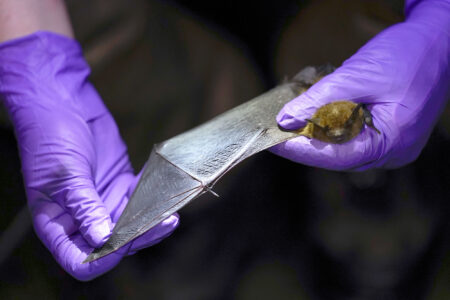
Bat in Marinette County tests positive for rabies
Iron Mountain School Board officers to remain the same
IRON MOUNTAIN — Shari Picucci-White was re-elected Monday as president of the Iron Mountain School Board on a 4-2 ...