
Northwoods notebook: Winter tosses a curve at all species
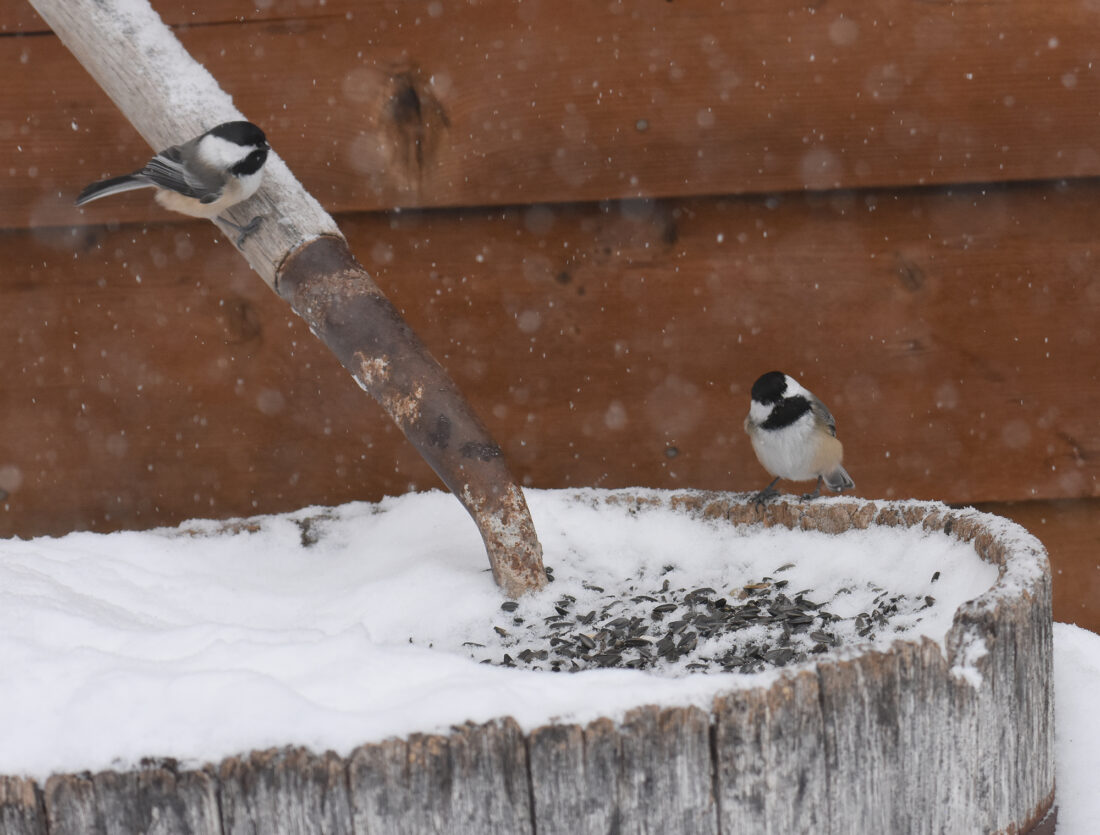
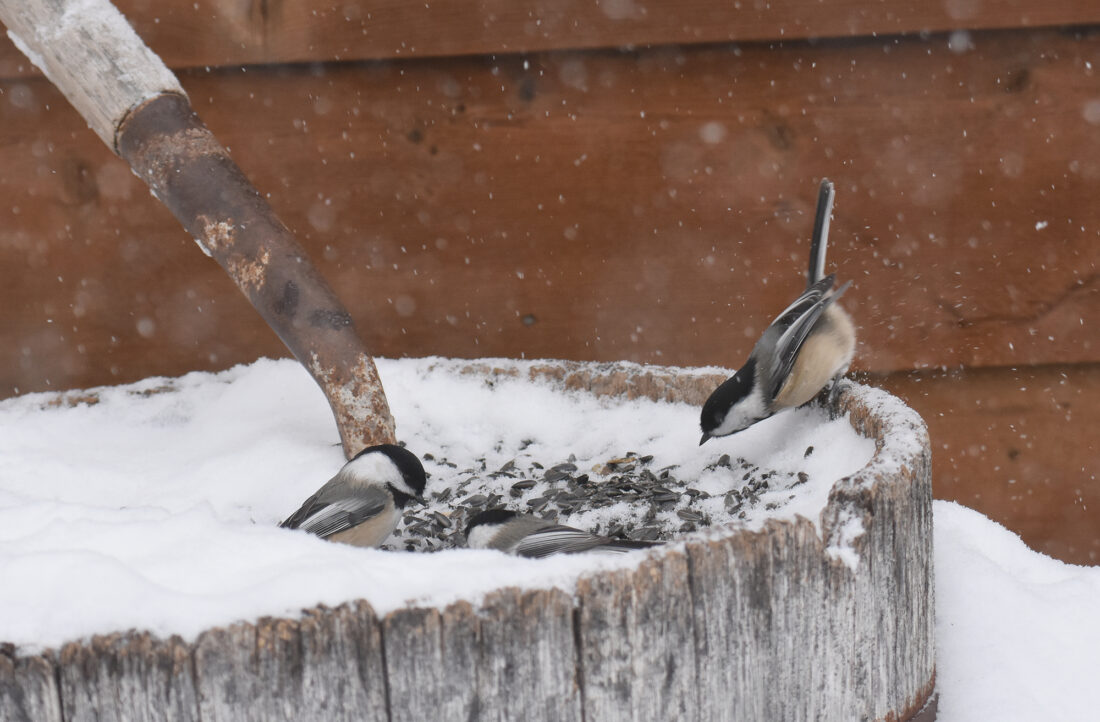
An old shovel becomes a makeshift bird feeder that's been much used by the black-capped chickadees at Six Mile Lake, especially when the snow begins to pile up. (Betsy Bloom/Daily News)
This so far is proving to be a winter of weather mood swings in the Upper Peninsula.
November had cold temperatures and ice setting in early on Six Mile Lake. Winter finches, especially pine grosbeaks, arrived from the north, an influx that had been predicted but happened early.
The freeze-up seemed to bode well for the ski hills and snowmobile trails finally having a good year, perhaps even opening early. They at least were able to ramp up snow production.
But even as the weeks advanced toward the official start of winter in December, conditions shifted. By the time the holidays rolled around, temps had risen and snow had thinned, at least here in the southern U.P., as did the prospects for the hills and trails to accommodate the people who might want to take advantage of the long holiday break.
Then came the storm between Christmas and New Year’s Day and it seemed winter was back on.
But 2026 so far has had snow, ice, rain and temperatures warm enough to cause localized flooding in Escanaba.
So what does a winter with multiple personalities potentially mean for wildlife? Brian Roell, large carnivore specialist for the Michigan Department of Natural Resources, says it’s too soon to tell but certain conditions will affect species differently.
The heavy snow cover across much of the northern U.P. will be a hardship for deer. Roell noted the region has an average snow depth of 20 inches — that’s early to reach that average — and already has seen 18 days as of this past Monday with a foot or more of snow.
The good news is 90 days with those conditions constitutes what the DNR classifies as a severe winter. The scenario becomes more dire if winter lingers into April, especially given the early start in November, he advised.
Roell also pointed out the swings in conditions — severe weather, then mild turns. Snow depth readings have fluctuated as well.
“This year’s winter line,” he said, “looks weird.”
The contrasts come even in Dickinson County — Iron Mountain had less than 6 inches of snow as of Monday, while Felch Township to the north is rated in the 12 to 24 range.
The freezing-thawing-rain-ice have created a crust on the snow in some areas that, again, will help some species while hindering others.
Predators such as wolves and coyotes will be able to run across the crust to better pursue prey. Deer, however, may get bogged down.
The “subnivean zone” — thanks, Roell, for the neat new term, which refers to the area between ground and snowpack –is even more protective for the mice, voles, shrews and other small mammals that set up a network of tunnels and pockets to forage in relative shelter. Owls and foxes can’t as easily punch through the hardened snow to snatch up a meal.
Likewise, deer can’t easily paw through, though they still have access to woody browse. At our place, it’s meant having what appears to be a motherless fawn bold — or hungry — enough to clamber up on the back deck in broad daylight to munch on the black oil sunflower seeds laid out on the picnic table for the birds. Fawns are at a disadvantage in their first year in they aren’t able to put on the fat supplies for winter that older deer can.
Conversely, any warmups that could provide some relief for those struggling with the snow in turn create meltwater pools that might inundate dens and burrows, enough to rouse slumbering bears and other hibernating animals.
But Roell said most animals that remain active in the winter months can endure much of what the season throws at them, as long as it relaxes by February or March.
“That’s where it’s really going to matter — how long?” he said.
Betsy Bloom can be reached at 906-774-2772, ext. 85240, or bbloom@ironmountaindailynews.com.
-
- An old shovel becomes a makeshift bird feeder that’s been much used by the black-capped chickadees at Six Mile Lake, especially when the snow begins to pile up. (Betsy Bloom/Daily News)
Local News
Northwoods notebook: Winter tosses a curve at all species

Liberal Wisconsin Supreme Court candidate raises 10 times more than conservative
Dickinson’s jobless rate in November lowest in the UP
IRON MOUNTAIN — Dickinson County had the lowest jobless rate in the Upper Peninsula in November at 4.3%, which ...
State awards $9M in grants for PFAS contamination at airports

Creative individuals sought for Habitat’s Flip it Forward event
