
Assaults on prison staff have increased in Michigan
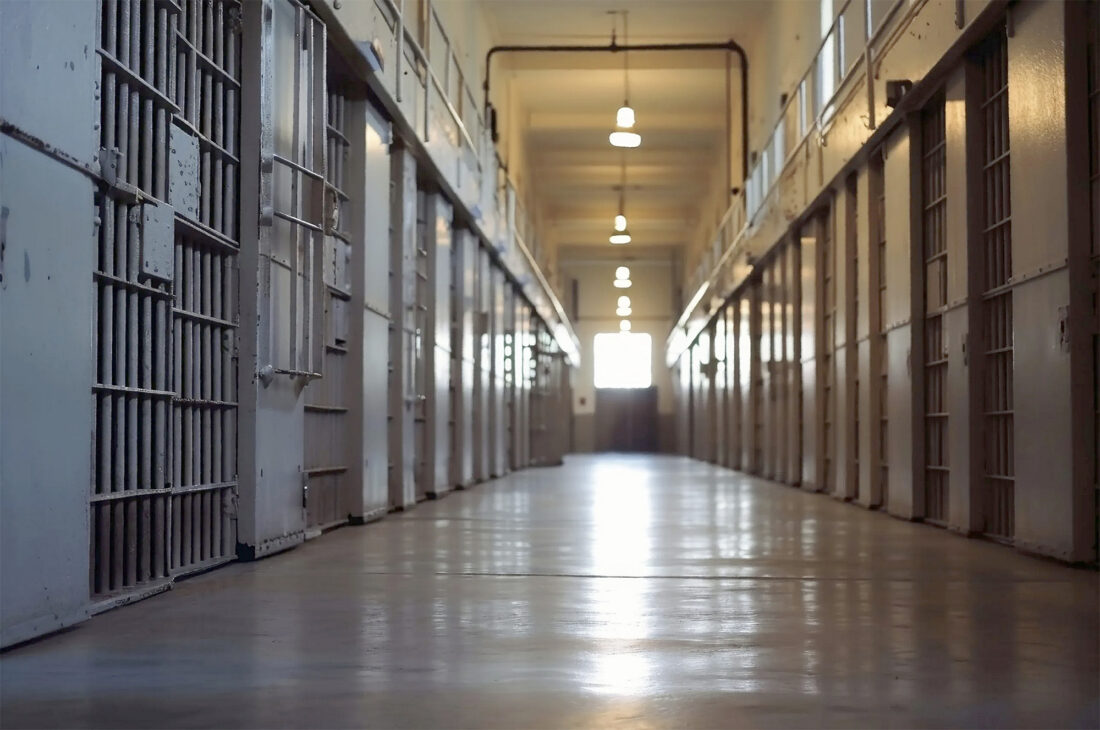
Advocates suggest focusing resources in prison on the most violent offenders, improving placement and providing education and programs, rather than relying on long-term punitive isolation that can increase aggression and risk. (Photo via Shutterstock, Bridge Michigan)
A union representing Michigan corrections officers is sounding alarms over an increase in violent assaults against prison staff, alleging the state is too often holding dangerous prisoners in lower-security settings not designed to house them.
In 2024, there were 71 assaults on employees at the four Michigan prisons that house the state’s highest-security inmates, according to a review by Bridge Michigan. That was up from 44 in 2023.
The state has not yet released critical incident reports for 2025, but the Michigan Corrections Organization says problems have continued at facilities such as the Marquette Branch Prison, which in October saw a “surge” in violence, contraband, assaults and threats to staff.
The union attributes the attacks to a lack of maximum-security prison space, arguing that violent inmates can no longer be separated from the general population as often as warranted. Instead, higher-security prisoners are spread across lower-level housing units in Michigan’s 26 state prisons.
“This improper placement continues to result in a strained system that is more dangerous for the frontline officers,” Byron Osborn, president of the MCO union, wrote in a recent letter to Michigan Department of Corrections Director Heidi Washington.
“Prisoners break the rules, including assaulting staff and each other, and accumulate points. But in most cases, there are no serious repercussions for doing so.”
The Michigan Department of Corrections did not respond to multiple requests for comment on this story.
Osborn said Level V inmates — considered the most dangerous — are not being segregated often enough or are being housed in Level IV facilities in high numbers because of a lack of beds in high-security facilities. The problem persists “down the line,” he wrote, saying Level II facilities are also housing a high percentage of Level IV inmates.
Among other things, Osborn asked Washington to consider converting the state’s St. Louis Correctional Facility from Level IV to Level V with two segregation units to ensure more dedicated space is available for high-security inmates.
Security levels
Michigan’s prison system houses about 33,000 inmates, according to the department. Facilities are classified by security level, ranging from levels I and II, where inmates face fewer restrictions, to levels IV and V, which are designed for more dangerous individuals.
Most prisons house multiple security levels. Marquette Branch Prison, for example, holds both level I and level V inmates. Very few prisons house only one security level, and when they do, it is typically level I or level II. No Michigan prison exclusively houses level V inmates.
Marquette Branch Prison, Baraga Correctional Facility, Charles E. Egeler Reception & Guidance Center and Ionia Correctional Facility are the only state prisons that house level V inmates, though none do so exclusively.
In July and August, corrections officers at the Ionia prison were spit on, struck and injured in an incident with a “disruptive” prisoner, according to the union. In April, a prisoner attacked multiple officers from the Egeler Reception Center when they tried to prevent him from swallowing a toothbrush, the union said.
Historically, inmates who assaulted officers were removed from the general population for a significant amount of time, according to Osborn.
But “those days are long gone,” he said. “That generally doesn’t happen anymore and the prison population knows it so there’s less of a deterrent … because they know they’re not going to segregation for very long.”
Data shows corrections officers at high-security prisons are also using force and Tasers more often.
At the Marquette, Baraga and Egeler facilities, force was used to control a prisoner 293 times in 2023, with Tasers deployed 61 times. In 2024, force was used 439 times and Tasers 107 times.
By comparison, Central Michigan, Cooper Street, Newberry and Parnall correctional facilities, which house only level I inmates, reported significantly fewer assaults. Those facilities recorded six employee-victim assaults in 2023 and five in 2024.
Separation debate
Prison reform advocates agree the state could better respond to violent incidents, but rather than focus on separations, they say the state should work to address the root causes of violent behavior.
“They must begin prioritizing people with the most violent offenses first,” said Hakim Crampton, legislative liaison for Citizens for Prison Reform. “They don’t need to prioritize someone who is just coming into prison for check fraud and only has five years.”
Michigan partners with 13 colleges and universities to offer educational programs inside 17 prisons, according to the Michigan Consortium for Higher Education in Prison. MCHEP, however, does not partner with the four level V facilities.
The Marquette, Ionia and Baraga facilities do offer basic adult education, employment readiness, GED completion and outpatient mental health to inmates.
“You cannot put people who have been convicted of murder, robbery and violent, aggressive convictions into a dormitory-style living,” Crampton said. “Once you start putting people in large rooms with 30, 40, 60 or even 80 beds, you increase the risk of violence amongst their peers and the opportunity for violence against staff.”
Advocates point to research suggesting long-term isolation may worsen behavior rather than improve safety.
A 2024 study published in the Annual Review of Criminal Justice found that extended confinement in small cells with minimal social contact is associated with serious physical and psychological harm.
The Michigan Department of Corrections has worked in recent years to reduce its use of administrative segregation, commonly known as solitary confinement.
State data shows an average of 339 inmates were held in segregation each day in 2024, down sharply from 972 per day a decade earlier.
“Using a punitive approach for people who have already been punished to the most severe extent, with separation from family … it’s counterproductive,” Crampton said.
———
This story was originally published by Bridge Michigan, a nonprofit and nonpartisan news organization at bridgemi.com, and distributed through a partnership with The Associated Press.
Local News
Dickinson sheriff issues monthly report
IRON MOUNTAIN — Dickinson County Sheriff Aaron Rochon has issued his monthly report for December. The road ...

Good ice for Tip-Up Town fishing tourney Saturday
Assaults on prison staff have increased in Michigan

Officers, civilian honored for Ontonagon County ice rescue
IM now expects new plow truck in early 2027
IRON MOUNTAIN — Buying a snow plow has turn complicated for the city of Iron Mountain, but a new one might be on ...
Stephenson man arrested for criminal sexual conduct
MENOMINEE COUNTY – A Stephenson man has been charged with criminal sexual conduct with a minor after an ...