Wisconsinites can’t keep wild frogs, turtles as pets under new rule
-
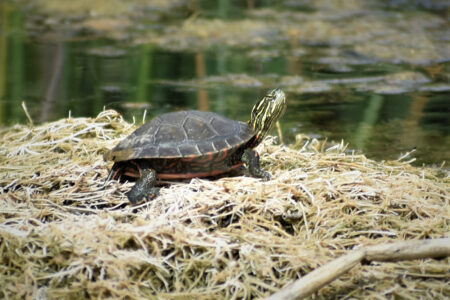
- A small painted turtle basks in the sun on a raft of floating vegetation at Six Mile Lake in Dickinson County. (Betsy Bloom/Daily News, file)
-
- A green frog, the most common variety found in Michigan’s Upper Peninsula, strikes the classic pose on lily pads at Six Mile Lake. (Betsy Bloom/Daily News, file)
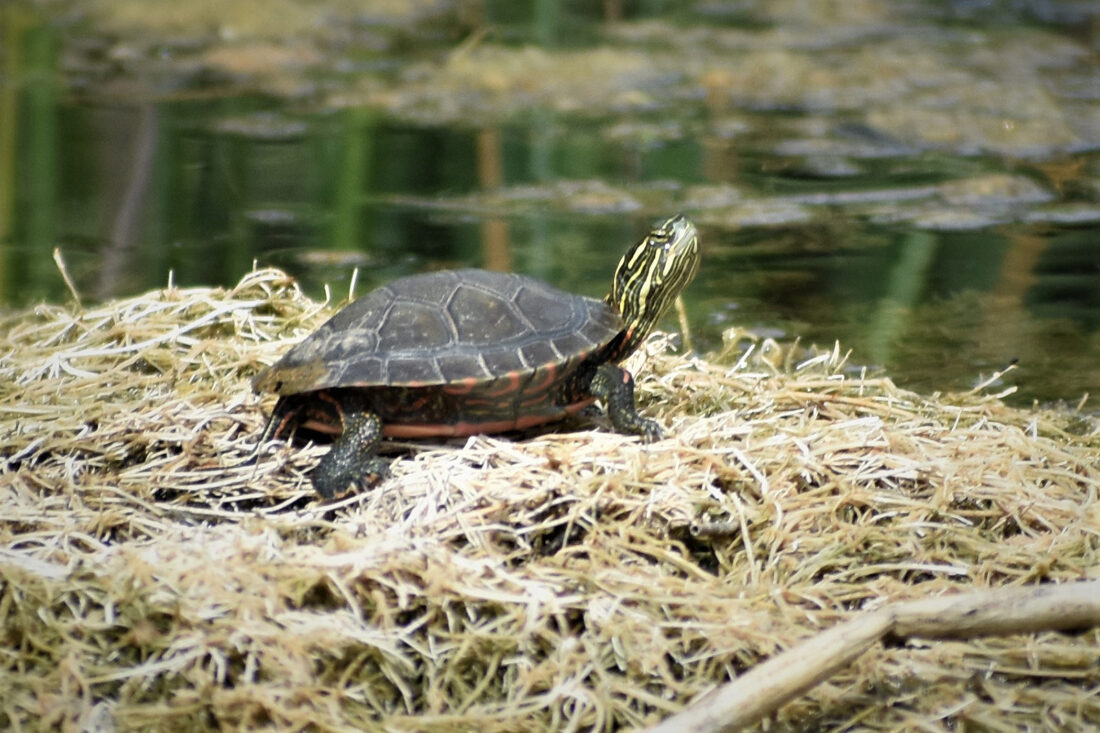
A small painted turtle basks in the sun on a raft of floating vegetation at Six Mile Lake in Dickinson County. (Betsy Bloom/Daily News, file)
It’s toad-ally over.
Amphibian- and reptile-lovers would no longer be able to collect native wild snakes, frogs or turtles and keep them as pets in Wisconsin.
They would also be barred from entering the creatures in any turtle races, jumping contests or other competitions.
The changes are part of a new rule unanimously adopted Wednesday by the policymaking board for the Wisconsin Department of Natural Resources. The primary reason for the change is to reduce the spread of disease among the state’s native amphibian and reptile populations.
Anyone in Wisconsin has long been able to collect and keep up to five amphibians or reptiles that are common in the state, such as tiger salamanders, leopard frogs or fox snakes. That wouldn’t be allowed under the new rule, said Rori Paloski, a DNR conservation biologist — though not all reptile interactions would be banned.
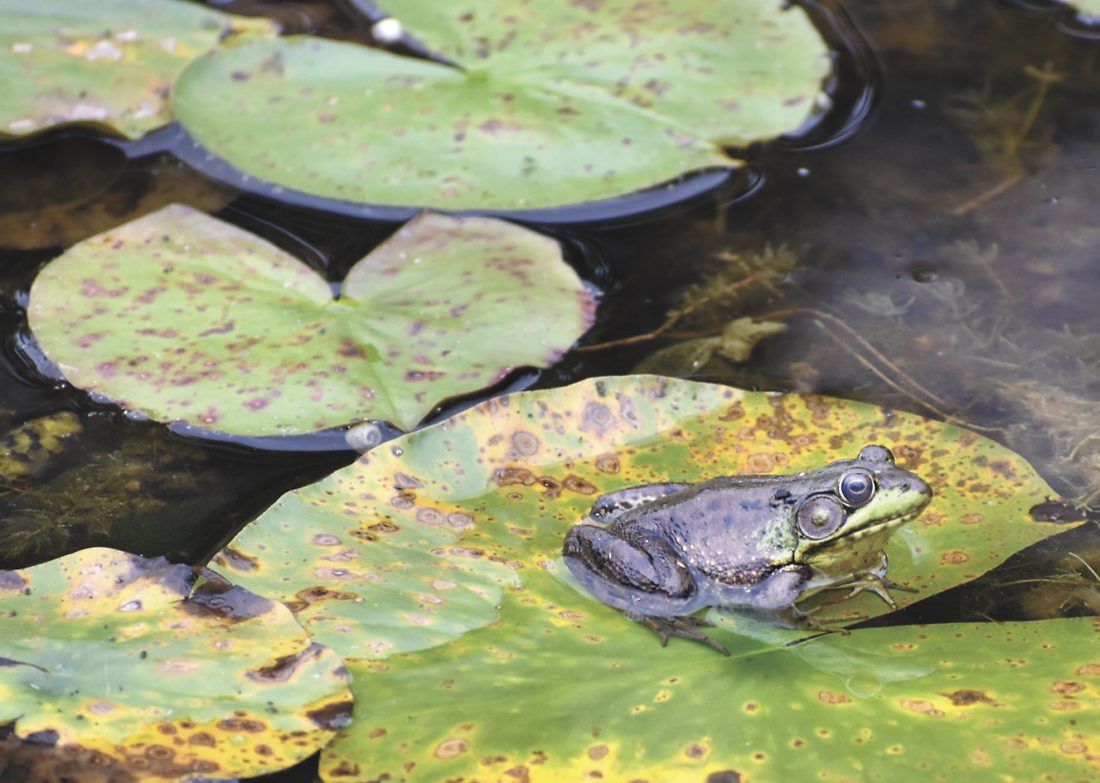
A green frog, the most common variety found in Michigan’s Upper Peninsula, strikes the classic pose on lily pads at Six Mile Lake. (Betsy Bloom/Daily News, file)
“It would allow kids to still be able to go out and collect frogs,” Paloski said. “We want people to do that and enjoy the animals.”
The new rule states people can only keep them for 24 hours.
And the rule wouldn’t affect anyone’s pet turtle or frog. Any native wild animals will be grandfathered in as long as their owners complete a one-time registration of their pets online by June 2027.
The changes drew opposition from some national groups, including the National Animal Interest Alliance and the United States Association of Reptile Keepers.
“National Animal Interest Alliance continues to have serious concerns that the current proposal will have unintended consequences, such as increasing illegal take from the wild to fill demand currently filled with captive-bred animals,” said Art Parola, a board member with the animal welfare group.
The DNR does not currently allow captive breeding of most native amphibians and reptiles with few exceptions, and it hasn’t been allowed since regulations were last updated in the 1990s.
Educational institutions like nature centers and aquariums could keep native amphibians or reptiles under a permit or license.
John Moyles with J&R Aquatic Animal Rescue supports the changes.
“I can’t tell you how many calls we get every week from people who have native reptiles and amphibians that they’ve kept for too long, and now they don’t want them anymore. They don’t know what to do,” Moyles said. “We can’t take them because they were taken from the wild.”
As for the races, the DNR is banning them to control the spread of disease that can result from hundreds of animals being in close contact.
The change also seeks to deter bad actors in the illegal pet trade, particularly for wild turtles. As for frogs, some contests have been held in Wisconsin for decades during community festivals or events such as those in Dousman and Mellen.
The changes would not affect store-bought or non-native species, but the DNR doesn’t recommend using them in races or contests.
More than 600 turtle races are held nationwide that include several in Wisconsin, said Alex Heeb, co-director of the Turtle Conservation Group. He said most people don’t know how to properly care for turtles and relocate them to unfamiliar habitats after the races, which can promote the transmission of diseases like mycoplasma and ranavirus.
“Think of it as a sort of super-spreader event,” Heeb said. “When these turtles are then released back into the wild, they can transfer these diseases back to the populations that they are introduced to.”
The DNR may address eliminating such races or contests in the future.
The rule also allows people to humanely destroy any nuisance snakes found in their home or farm, but it would ban destruction of winter dens for snakes and frogs to protect their populations.
The changes would also reduce bag limits from 10 to three for those who harvest snapping turtles on the Mississippi River. Bag limits remain the same for people who harvest bullfrogs for food. The rule now heads to Gov. Tony Evers. If approved, the changes are set to take effect on Jan. 1, 2027.
Local News

Whitmer focuses on literacy, health care

Forest Park students enrolled in dual enrollment class
Deadline looms for Parent PLUS loan borrowers
LANSING — Michigan families with Parent PLUS loans have just months to act before losing a critical repayment ...
Wisconsinites can’t keep wild frogs, turtles as pets under new rule
Preschool ceiling art at North Elementary
Josie Johnson and Saylor Blank paint ceiling tiles Thursday in the classroom at Iron Mountain's North Elementary ...