Michigan’s main cause of wolf mortality? People
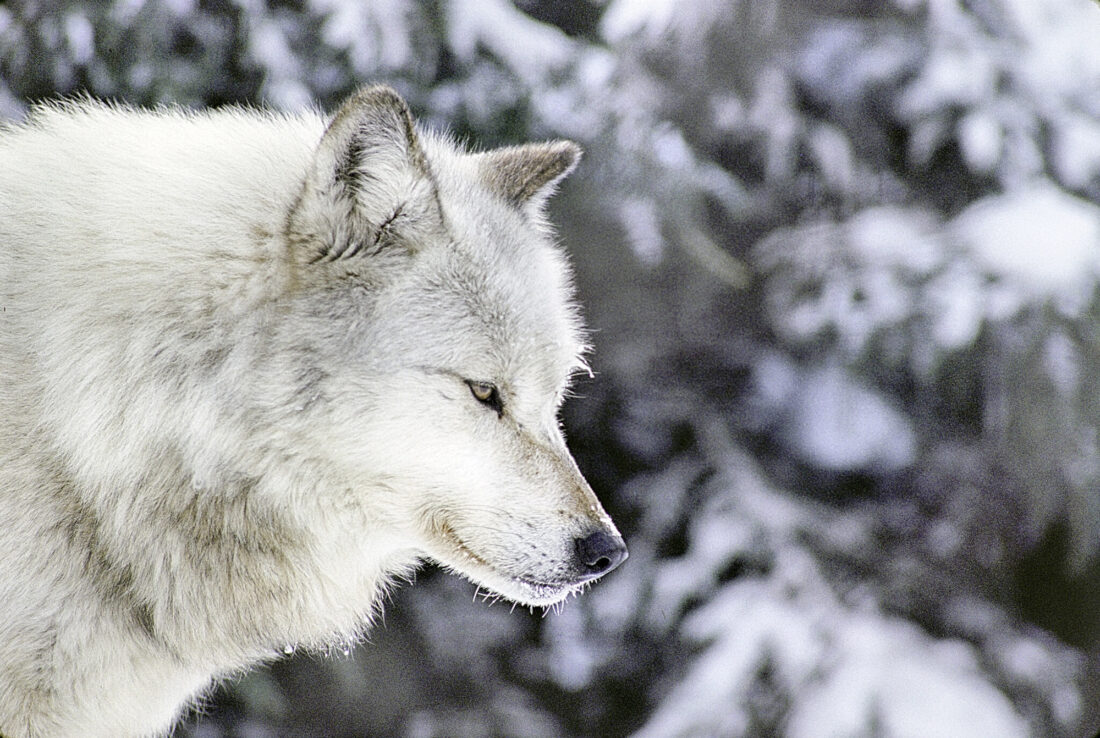
A gray wolf. (Michigan Department of Natural Resources)
LANSING – Even though the gray wolf is classified as an endangered species, a new study found the majority of Michigan’s recorded wolf deaths are caused by humans.
Researchers from Michigan State University and their collaborators used GPS collar and mortality data from 608 wolves in Minnesota, Wisconsin and Michigan between 2010 and 2023 to assess their specific cause of death.
The study found humans caused 65% of them.
In addition to categories such as vehicle collisions (10%) and legal kills (14%), illegal kills represented 38% of cases, making it the leading cause of wolf deaths.
Apart from legal kills, which included depredation control and legal hunting, illegal kills included confirmed and suspected poaching through poisoning, shootings and accidental trapping.
“Despite changes in legislation and public attitudes towards large predators, human-caused mortality continues to impact survival and conservation of carnivore species,” the study said.
According to the Michigan Department of Natural Resources, wolves are native to the state, and research suggests that they were once present in all of its counties.
“Wolves were first added to the federal endangered species list in 1974 after being (wiped out) from the Lower Peninsula by the 1930s and nearly disappearing from the Upper Peninsula by 1960,” the department says on its website.
But since then, there has been a back-and-forth approach. Federal protections for wolves were lifted and reinstated on several occasions through political action and court rulings.
Most recently, a 2022 federal court ruling reinstated gray wolves onto the federal list of threatened and endangered species in the contiguous 48 states.
Based on that classification, “they can only be killed if they are a direct and immediate threat to human life,” the department says.
According to the recent study in the journal Global Ecology and Conservation, illegal kills as a leading cause of death have “the potential to influence population dynamics, affecting population growth and recolonization potential.”
Rolf Peterson, a research professor at Michigan Technological University, said the results are consistent with smaller-scale studies.
Deer are the primary food source of wolves, and illegal kills – especially during deer-hunting season – dominate the population dynamics of wolves in the upper Midwest, he said.
“Yet wolf populations have persisted in what I would characterize as an uneasy peace,” Peterson said, adding that the coexistence of wolves and people in the U.P. – where wolves live – has required adjustments for both species.
At this point, Brian Roell, the DNR’s large carnivore specialist, said illegal takes don’t appear to be harming Michigan’s population, as wolves can survive fairly high death rates.
“The important thing to point back to is that our population has been stable – it’s not decreasing,” he said.
According to Roell, Michigan’s wolf population has been stable since 2011. The department’s last population estimate in 2024 counted 768 wolves. In Michigan, they “have saturated their suitable habitat,” he said.
While the DNR is currently wrapping up a 2026 population estimate, he said, “I fully expect we’re going to be statistically stable again” based on preliminary data.
———
This story was provided by Capital News Service at Michigan State University.
Local News

Ore Dock Brewery to host Festival of the Angry Bear

UP Dark Sky Festival returns to Copper Harbor
Michigan’s main cause of wolf mortality? People
Bill signed letting out-of-state physicians practice in Michigan
Michigan’s participation in a nationwide medical licensure compact is secure after Gov. Gretchen Whitmer signed a ...

Proposals sought for Iron County’s Cooks Run site