
Sparing 8,000 doctors, Michigan lawmakers reach medical compact deal
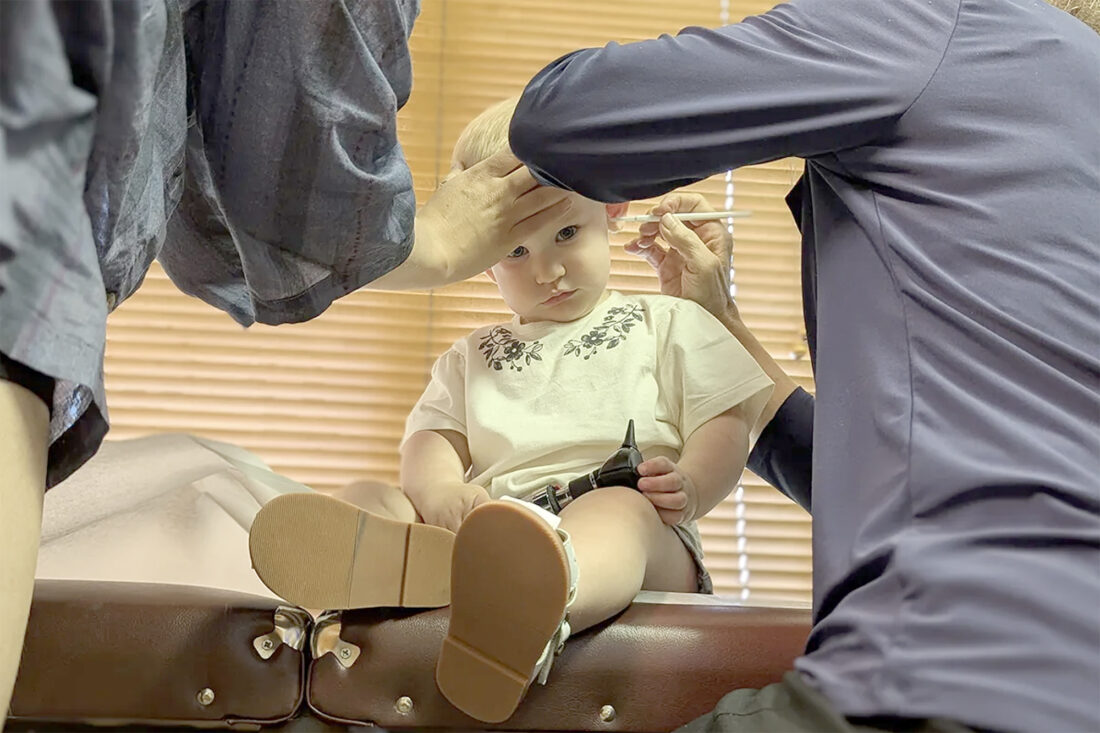
House and Senate lawmakers Thursday say they’ve reached an agreement to pass a bill next week keeping Michigan in the Interstate Medical Licensure Compact. Without it, an estimated 8,000 medical doctors practicing throughout the state could see their licenses lapse. (Robin Erb/Bridge Michigan)
(This story was originally published by Bridge Michigan, a nonprofit and nonpartisan news organization. Visit the newsroom online: bridgemi.com.)
LANSING — Michigan legislative leaders say they’ve reached a deal that will allow an estimated 8,000 doctors to continue practicing medicine across the state, putting an abrupt end to months of consternation over the fate of upcoming medical treatments for thousands.
The state Senate is expected to finalize legislation on Tuesday that would renew Michigan’s participation in the Interstate Medical Licensure Compact — days before it is set to expire.
Both the Democratic-led Senate and the Republican-led House had approved bills to renew the compact with overwhelming, bipartisan support. But legislation had stalled for months amid a strictly political dispute: Which lawmaker’s name would be on the bill that passed?
House Republicans say that will be state Rep. Rylee Linting of Wyandotte. Speaker Matt Hall had alleged Democrats did not want to pass her version of the bill because they have a “problem” with her.
Linting is up for re-election this fall in a competitive district.
“We have confidence that Gov. (Gretchen) Whitmer will sign that bill,” Hall, R-Richland Township, said in a Thursday evening press conference, adding: “The 8,000 doctors whose licenses were at risk — everything is going to work out for them to continue to practice in Michigan.”
Absent quick passage and a signature by Whitmer, medical licenses under the compact are poised to lapse on March 28, meaning those doctors couldn’t legally practice medicine in a state already facing severe shortages of doctors and other health care providers.
That, in turn, would mean tens of thousands of doctors’ appointments on March 29 “don’t happen,” Emily Hurst, a critical care medicine physician at Henry Ford Health and past president of the Michigan Osteopathic Association, previously told Bridge.
On Thursday, she and others said the announced legislative deal was welcome news, but they stopped short of celebrating.
The statements initially released Thursday were one-sided — by Republicans, noted Marschall Smith, executive director of the Denver-based Interstate Medical Licensure Compact Commission.
He called Hall’s announcement “very encouraging,” but added: “There are still a lot of moving parts. There’s no ink on the paper yet.”
He said the compact stopped taking requests for Michigan licenses at 6 p.m. Wednesday and is ready to notify 8,000 doctors that, as of March 29, they no longer have licenses to practice.
Under Linting’s bill, Michigan will renew its participation in the compact — an agreement that allows doctors to practice medicine across state lines.
A spokesperson for Senate Majority Leader Winnie Brinks, D-Grand Rapids, confirmed the upper chamber will vote on the House bill on Tuesday.
“The resolution we achieved today means that thousands of people will receive uninterrupted care and physicians will be able to continue to practice in Michigan,” Brinks said in a statement sent to Bridge Michigan.
But, Brinks added, the matter “could have been easily settled months ago” with bipartisan legislation the Senate approved in May 2025 — a bill sponsored by Sen. Roger Hauck, R-Mount Pleasant — “but it became clear that the speaker was unwilling to take that path.”
Michigan has been a member of the licensing compact since 2019.
Whether the House passed the Senate’s bill, or the Senate passed the House’s bill, was the major source of conflict when it came to renewing Michigan’s participation in the compact.
Meanwhile, many doctors have begun the months-long process of obtaining their Michigan license the traditional way, which includes submitting fingerprints and collecting medical education and other records, Hurst, the doctor, told Bridge Thursday.
She and others warned that the potential disruption to health care could be seismic as thousands of doctors wait for those licenses to be approved without the compact in place.
A typical physician carries a “patient panel” of 1,500 to 2,000 people, said Anne Scott, chief operating officer of the Michigan Primary Care Association, which represents hundreds of community health center sites throughout the state.
A single doctor suddenly unable to practice sets off “a huge ripple effect” for patients as clinics try to reassign patients to other doctors.
“It’s not like your appointment gets bumped one or two weeks,” she said. “The disruption of care potentially can extend much further out.”
Local News
Sparing 8,000 doctors, Michigan lawmakers reach medical compact deal
UP pesticide applicators training, exams offered
ESCANABA — Michigan State University Extension and Michigan Department of Agriculture and Rural Development will ...
Our Saviour’s Lutheran Church hosts blood drive
IRON MOUNTAIN — Our Saviour's Lutheran Church in Iron Mountain will host a UP Health System Regional Blood Center ...

Grant to support new mothers
Beekeepers UP conference planned March 28
HARRIS — The Northwoods Beekeepers Club will host an Upper Peninsula Beekeeping Conference from 8 a.m. to 5 p.m. ...
Man dies in Pembine fire; woman, 2 children injured
PEMBINE, Wis. — A 30-year-old Pembine man died and three other people, including two children, were injured as ...