Dealing with loss to suicide
Local program provides support after tragedy
-

- Great Lakes Recovery has received a $10,000 donation for suicide awareness from the LongRiders Motorcycle Club, with assistance from Bald Eagle Harley-Davidson, The Real Heal 906 and Kenneth James Salon. From left are Jim Reichel, Joe Zychowski of LongRiders, Carol Seger and Joan Zevitz of LongRiders Ladies, Tracy Johnson of Great Lakes Recovery and Theresa Cornelia of Kenneth James Salon. (Karen Klenke photo)
-
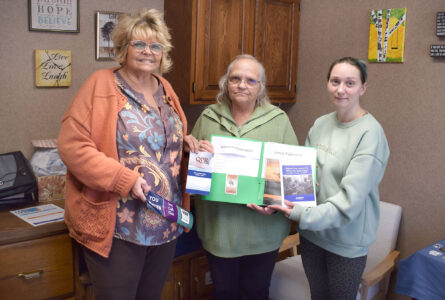
- The Great Lakes Recovery Center’s Local Outreach to Suicide Survivors, or LOSS, program provides immediate and ongoing assistance to families dealing with suicide in Dickinson and Iron counties. Displaying informational pamphlets on the program, from left are Director of Prevention Services Tracy Johnson, Prevention Specialist/LOSS team member Leila Canavera and Assistant to Director Sandra Teske. (Terri Castelaz/Daily News photo)
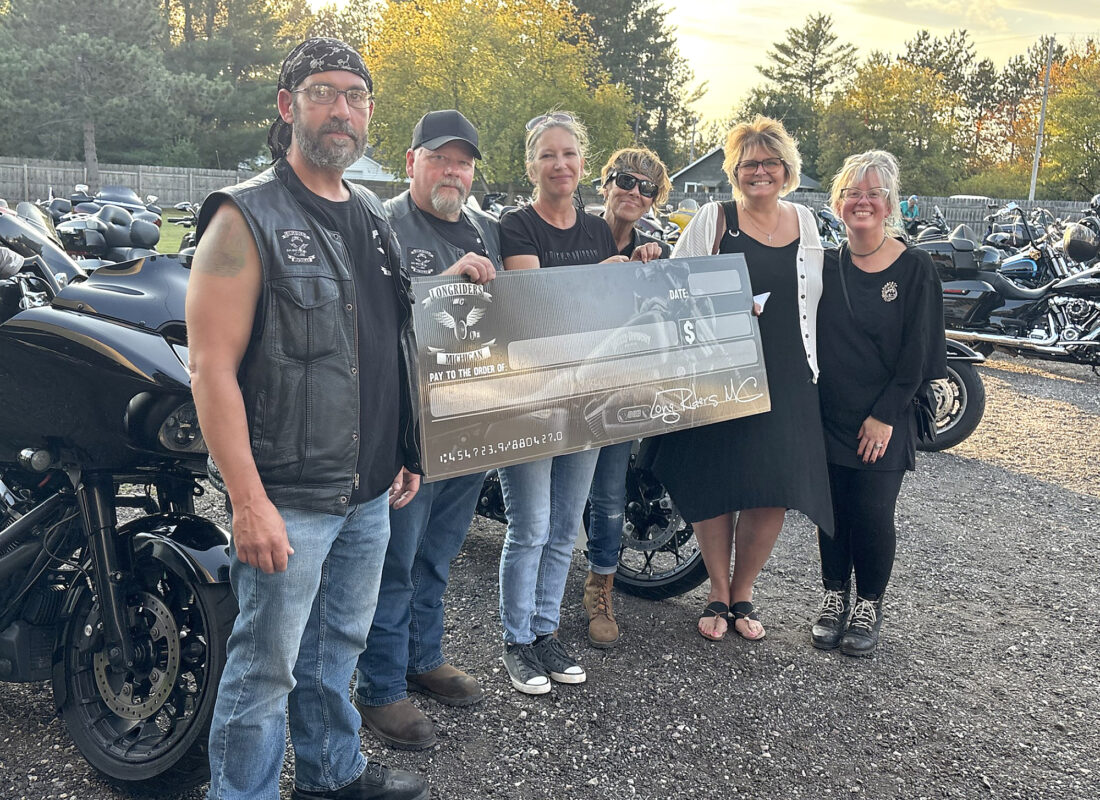
Great Lakes Recovery has received a $10,000 donation for suicide awareness from the LongRiders Motorcycle Club, with assistance from Bald Eagle Harley-Davidson, The Real Heal 906 and Kenneth James Salon. From left are Jim Reichel, Joe Zychowski of LongRiders, Carol Seger and Joan Zevitz of LongRiders Ladies, Tracy Johnson of Great Lakes Recovery and Theresa Cornelia of Kenneth James Salon. (Karen Klenke photo)
IRON MOUNTAIN — Suicide ranks among the leading causes of death in the U.S., a stark reminder of the need for support for those affected by such tragedies.
In Dickinson and Iron counties, the Great Lakes Recovery Center is filling that gap by providing vital services through its Local Outreach to Suicide Survivors — LOSS — program.
LOSS is an evidence-based, active postvention model designed to provide immediate and ongoing support to individuals and families affected by suicide. The program offers resources, connection, understanding and compassionate guidance during one of life’s most devastating moments.
A LOSS team consists of two of more trained volunteers who are activated by local law enforcement when there is a suspected suicide.
“Within the last six months the program has been utilized at a scary high number,” Director of Prevention Services Tracy Johnson said. “We are seeing a real increase in need, but we now have a system in place that is truly impactful for survivors.”
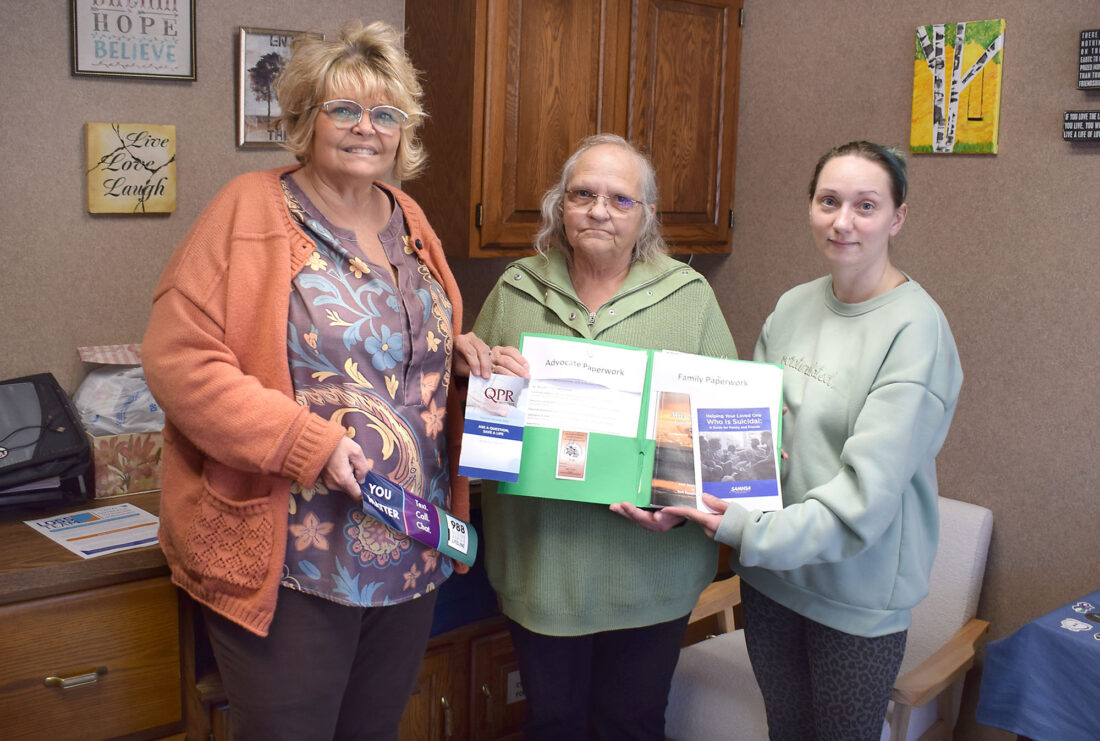
The Great Lakes Recovery Center’s Local Outreach to Suicide Survivors, or LOSS, program provides immediate and ongoing assistance to families dealing with suicide in Dickinson and Iron counties. Displaying informational pamphlets on the program, from left are Director of Prevention Services Tracy Johnson, Prevention Specialist/LOSS team member Leila Canavera and Assistant to Director Sandra Teske. (Terri Castelaz/Daily News photo)
In 2022, Great Lakes Recovery Center applied for a grant to bring the LOSS Team to the local area. LOSS was started by a doctor and a couple, both having lost a son by suicide. Drawing from personal experience and research, they created a framework that is now used nationwide.
Once funding was secured, Johnson completed a three-day training the following May in lower Michigan to become the program’s local lead educator.
She began working with the Dickinson County Sheriff’s Department and the Victim Service Unit to assemble a local team. VSU members were crossed-trained in the LOSS model, combining their experience with the program’s structured approach.
A LOSS team requires a chief trainer, mental health professional and, when possible, an individual who has suffered a loss by suicide.
“There are many, many people that have been affected by suicide,” said Johnson, who serves as chief of training. “I myself has lost a loved one and I also fit the guide as being the mental health professional.”
Johnson explained the team is dispatched once law enforcement identifies through the VSU that it is a suicide.
“The LOSS volunteers also give a sense of relief to those first responders — whether it’s EMTs, law enforcement or firefighters — as many aren’t trained in these situations but have obligations on the scene,” she said.
Team members introduce themselves to the suicide loss survivors, offering immediate support. “We sit and talk with them, make phone calls or even go to the store for those who gave up smoking but just need a cigarette at that time,” she said.
Their main focus, Johnson stressed, is to make things as easy as possible during that critical time.
They provide resources, including checklists for the days after a death, guidance for funeral planning and access to financial assistance through partner organizations such as Lemonade Stand and Six Feet Over.
She credits the funeral homes with working with the families.
LOSS offers Hazmat services within 24 hours, at no cost.
Johnson will also offer counseling or make arrangements for them to see a therapist or psychiatrist.
“Each individual or family is different, it’s on their time — they can reach out at any time,” she said. “The good thing about the program, we stay in connection with that individual or family for two years.”
All services are provided at no cost to survivors, Johnson added.
The local LOSS program also assists with funding; however, they have a limited budget.
Current fundraising efforts include the annual Hope 2 Help Suicide Awareness Walk, private donations and candy bar sales.
They recently received a $10,000 donation from the LongRiders Motorcycle Club.
“We had no idea — I get emotional, how much they (LongRiders) have done for our local families,” she said. “We are so grateful to everyone who made this happen.”
Johnson stressed that funding is their top priority, as its funds have depleted in the past couple months.
They are currently seeking grants and other ways to raise finances to meet the needs each year.
“We need volunteers to help with fundraising,” Johnson said. “We could also use someone that is knowledgeable in writing grants.”
In addition to donations, there’s many ways that individuals can help.
“We have an awesome team that does a wonderful job and it’s something we can keep in the community for a long time,” Johnson said.
Local law enforcement — including the Iron Mountain Police Department, Michigan State Police and sheriff’s offices in both Dickinson and Iron counties — have been integral partners, to ensure better collaboration on scene.
“We have a strong relationship with them all,” she added.
The program also provides a specialized crisis team for first responders, recognizing that firefighters, dispatchers, EMTs, and law enforcement personnel face their own trauma when responding to suicides.
The LOSS Team hosts regular training as well for community members interested in volunteering, emphasizing the importance of preparedness and sensitivity in responding to suicide-related crises.
Johnson said the Great Lakes Recovery Center is constantly sharing its education with the community. They provide a free Question, Persuade, Refer Gatekeepers training to any business, organization or individual free or charge.
“Our number one risk factor here in Dickinson County is depression and anxiety,” she said. “We understand that it’s difficult at times and we want to help those who are suffering.”
Anyone who is in emotional distress can call or text the 988 Suicide and Crisis Lifeline. The 24-hours confidential mental health hotline is free of charge.
Anyone looking for more information or wanting to make a donation or volunteer to the LOSS Team can go online to www.greatlakesrecovery.org/loss-team, email loss@greatlakesrecovery.org or call 906-458-2627.
———
Terri Castelaz can be reached at 906-774-2772, ext. 85241, or tcastelaz@ironmountaindailynews.com.
Local News
Marinette sheriff’s officer retiring
UP Arts, Culture Alliance gets $50K in federal grants
MARQUETTE — The Upper Peninsula Arts and Culture Alliance has been awarded two competitive grants totaling ...

Ore Dock Brewery to host Festival of the Angry Bear
Report highlights Michigan’s progress in expanding preK
LANSING, Mich. — A new joint report highlights Michigan’s continued progress in expanding access to ...

Update: Boy killed in Ironwood area struck by vehicle