
Migration hits the brakes in icy weather
Northwoods notebook
-
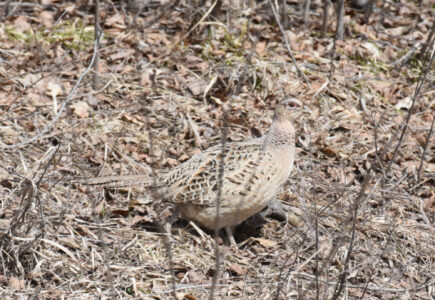
- A ring-necked pheasant feeds Wednesday near M-69 north of Randville. Although considered a breeding bird in the region, nesting reports are scattered this far north. (Betsy Bloom/Daily News photos)
-
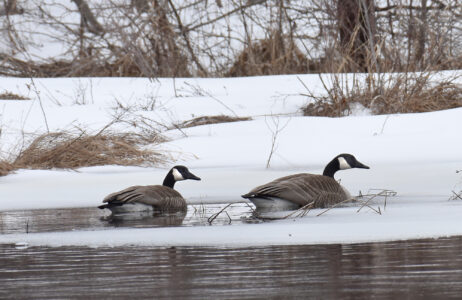
- Canada geese endure the elements Friday in the Six Mile Lake area.
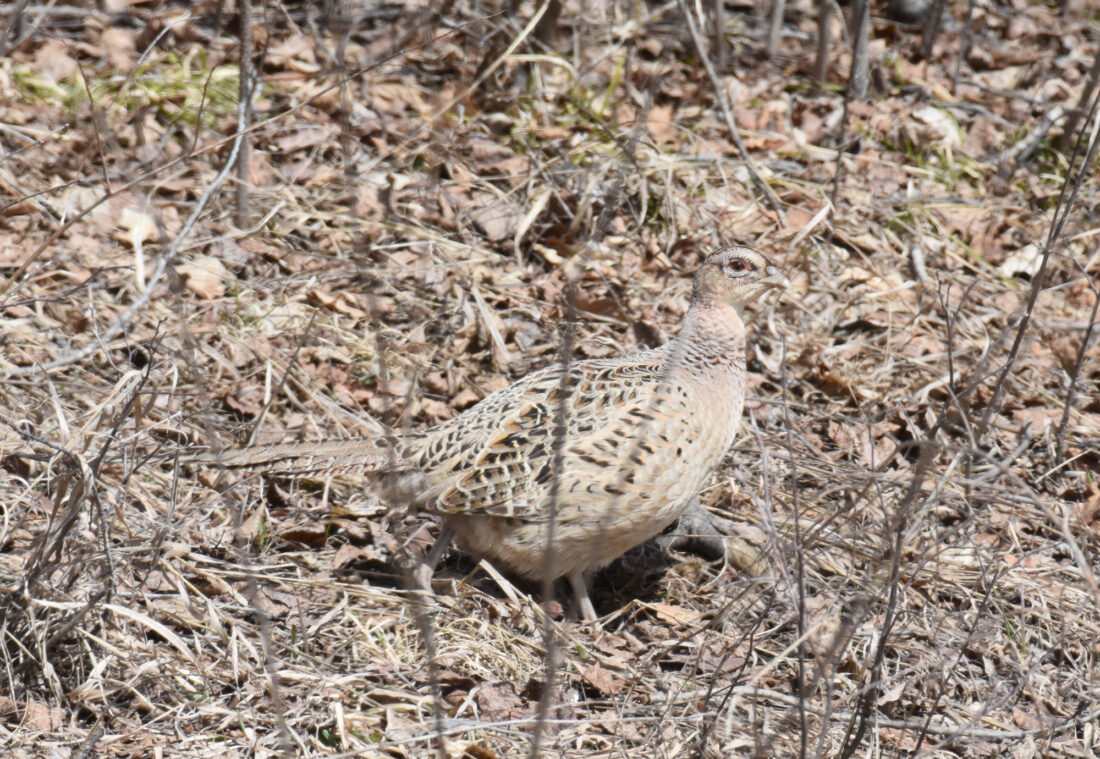
A ring-necked pheasant feeds Wednesday near M-69 north of Randville. Although considered a breeding bird in the region, nesting reports are scattered this far north. (Betsy Bloom/Daily News photos)
Not surprisingly, the recent rounds of severe weather has brought much of the spring migration to a halt in the region.
The Cornell Lab of Ornithology’s BirdCast migration dashboard showed that after an estimated 2.63 million birds crossed Monday in Wisconsin, the movement flatlined through Thursday, though some increase was seen early Friday morning.
Another ice storm predicted in the area through this afternoon likely will mean the holdup could hang on for at least a few more days.
This isn’t unusual for April, when weather conditions can fluctuate. Wildlife rehabilitators in mid-April 2023 had to deal with an influx of common loons grounded by ice buildup while migrating. If forced down on land, loons have legs so far back they can’t walk or launch themselves upward to take off again. They have to make it to a water body that has enough space to get a long, paddling start.
But it’s disappointing, given signs initially pointed to migration being well along by this point. The first week of March brought reports of red-winged blackbirds and common grackles in the Upper Peninsula. Robin numbers began to pick up as well.
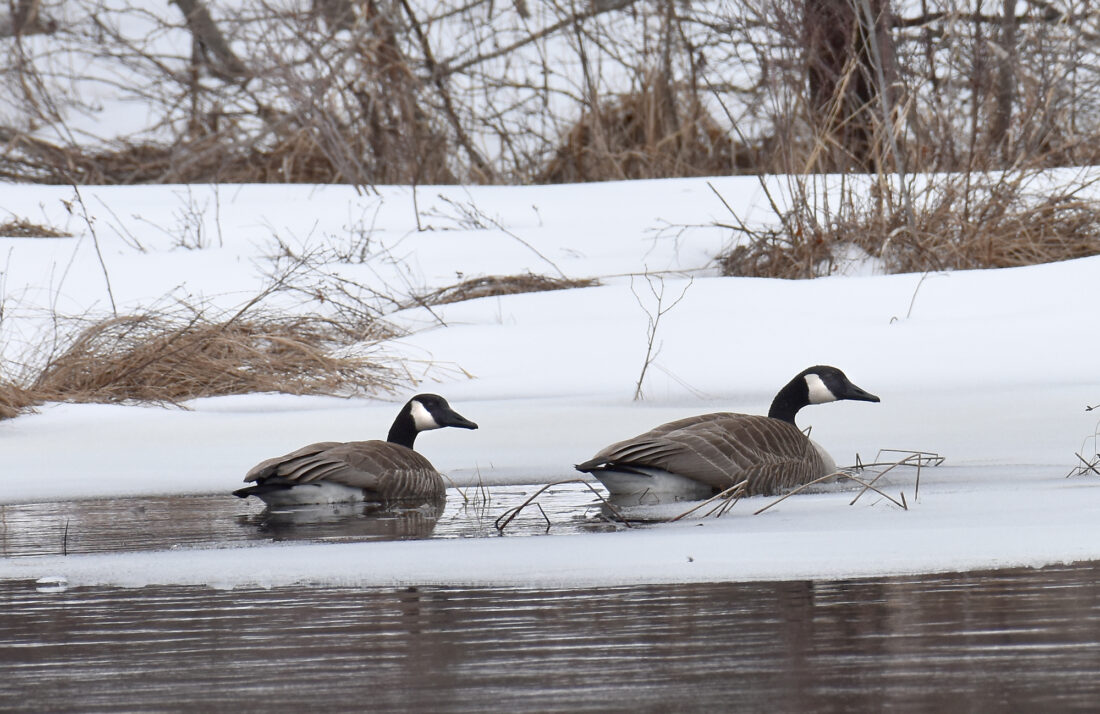
Canada geese endure the elements Friday in the Six Mile Lake area.
Then Blizzard Elsa took hold March 15-16. When the record snowfall faded and temperatures flirted with 60s, birds seemed to get back on track. Turkey vultures — my go-to as a real sign of spring — showed up in earnest about a week ago.
Then Thursday’s ice, sleet and snow appeared to shut it all down.
Some migration progress could still be seen. A male hooded merganser was hanging out with a pair of Canada geese at the outlet where Six Mile Lake feeds into the creek. The geese have been keeping company on some days with several trumpeter swans, though they don’t count as migrants, being year-round residents.
Dark-eyed juncos have been on the deck and under the feeder. The tree sparrows remain for now but should soon be heading north to their breeding grounds on the tundra.
It’s hard to be patient, but when the right southern winds develop, we’ll likely get the sandhill cranes, eastern phoebes, yellow-bellied sapsuckers, northern flickers, waterfowl and other common early migrants back in the area.
But I’m unlikely not alone in thinking winter is overstaying its welcome.
*****
Another bird I spotted this week near where M-69 meets M-95 just north of Randville was unusual enough to warrant turning around for some photographs, even though the species is very familiar.
This female ring-necked pheasant was calmly feeding along the ditch even as traffic passed, not unlike some of the chickens at other homes on M-69.
Ring-necked pheasants aren’t considered common in our area — the forests aren’t ideal for this non-native species that favors “open, agricultural landscapes mixed with grasslands, wetlands, and brushy cover,” according to Cornell’s All About Birds website, https://www.allaboutbirds.org.
But they are considered a breeding bird in the region, though nesting reports are scattered this far north, according to the last Michigan Breeding Bird Atlas.
This one looked plump and healthy. It’s possible it was a captive-raised bird, given how casual it was about being photographed — the Wisconsin Department of Natural Resources regularly stocks thousands of pheasants from the state game farm for hunting.
Still, it might also indicate the species is hanging on, if it can find a male.
*****
Earlier this week, I put out a request on Facebook to send me observations about a native bird that has grown scarce in the region, even in places where it had been reliably seen in the past: The Canada jay, formerly the gray jay.
My question was: Have you seen the bird, recently or in the past, at your home, cabin or deer camps? I’m looking to get stories from anyone who remembers when the “camp robber” was a regular fixture hanging around during hunting season, looking for scraps. If you have a “whiskey jack” encounter to share — and when you stopped seeing them — please email me at bbloom@ironmountaindailynews.com.
Betsy Bloom can be reached at 906-774-2772, ext. 85240, or bbloom@ironmountaindailynews.com.
Local News
Migration hits the brakes in icy weather

Evers vetoes GOP bills for no tax on overtime and tips
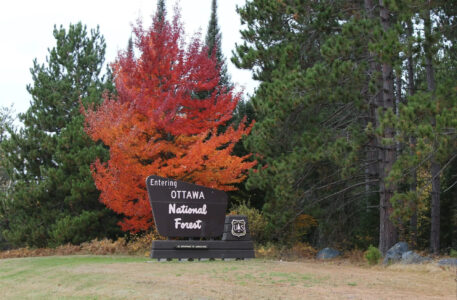
Trump administration plans closure of 4 Michigan forestry research centers
The Archives seeks township information
FELCH TOWNSHIP — The Archives — representing Breen, Felch and West Branch townships — is updating its files ...
Northwood Beekeepers to host apiary inspector
FLORENCE, Wis. — Northwoods Beekeepers will host Patrick Sizemore, apiary inspector for the state of Wisconsin, ...
Registration open for ‘Raise the Roof’ golf outing
KINGSFORD — Registration is open for the 2026 "Raise the Roof" golf outing, a major fundraiser for Habitat for ...