
New book sails into political and legal stories of Edmund Fitzgerald
-
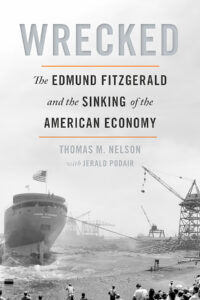
- The cover of “Wrecked: The Edmund Fitzgerald and the Sinking of the American Economy.” (Michigan State University Press)
-
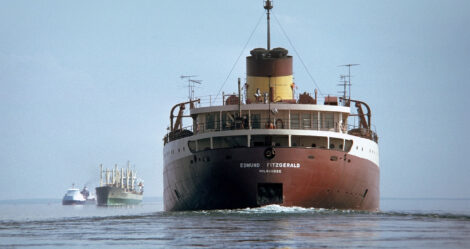
- The Edmund Fitzgerald. Nov. 10, 2025, was the 50th anniversary of the wreck of the cargo ship in 1975 during a storm on Lake Superior, made famous by Gordon Lightfoot’s ballad. (Courtesy of the Great Lakes Shipwreck Historical Society, via Wisconsin Public Radio)
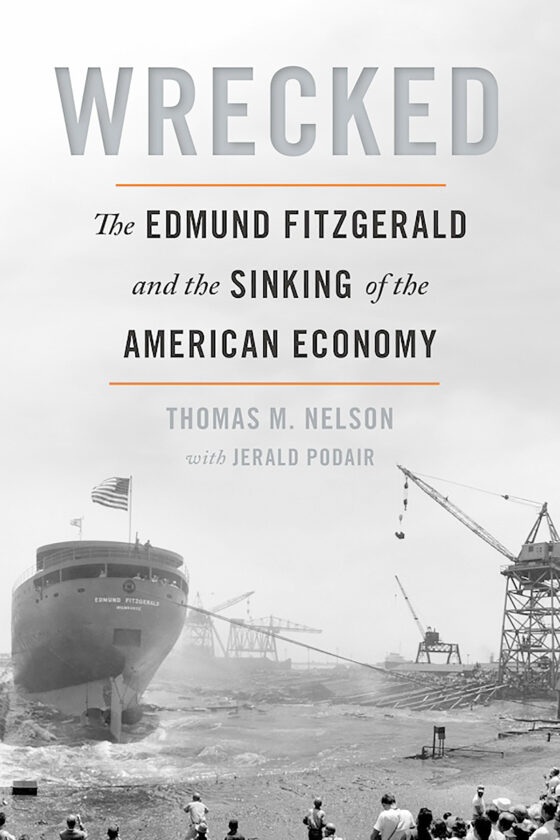
The cover of “Wrecked: The Edmund Fitzgerald and the Sinking of the American Economy.” (Michigan State University Press)
LANSING – A new book, “Wrecked: The Edmund Fitzgerald and the Sinking of the American Economy” (Michigan State University Press, $29.95), uncovers more of the political and legal aspects of the legendary Edmund Fitzgerald shipwreck.
Thomas Nelson, a Wisconsin public administrator and one of the authors of the book, said that while the Edmund Fitzgerald’s story is well known, there is more context behind the event that most people aren’t familiar with.
“This is something more than just a maritime shipwreck,” Nelson said. “The Fitzgerald was a vehicle that literally and figuratively carried the U.S. economy. I looked at this as a way to study the U.S. political economy.”
The Edmund Fitzgerald sank on Nov. 10, 1975, in a storm in Lake Superior while transporting taconite to Detroit.
Nelson said the Edmund Fitzgerald was one of the ships that played a major role in the U.S. economy, transporting taconite and iron ore around the Great Lakes to be made into steel, which was then used to produce automobiles and machinery.
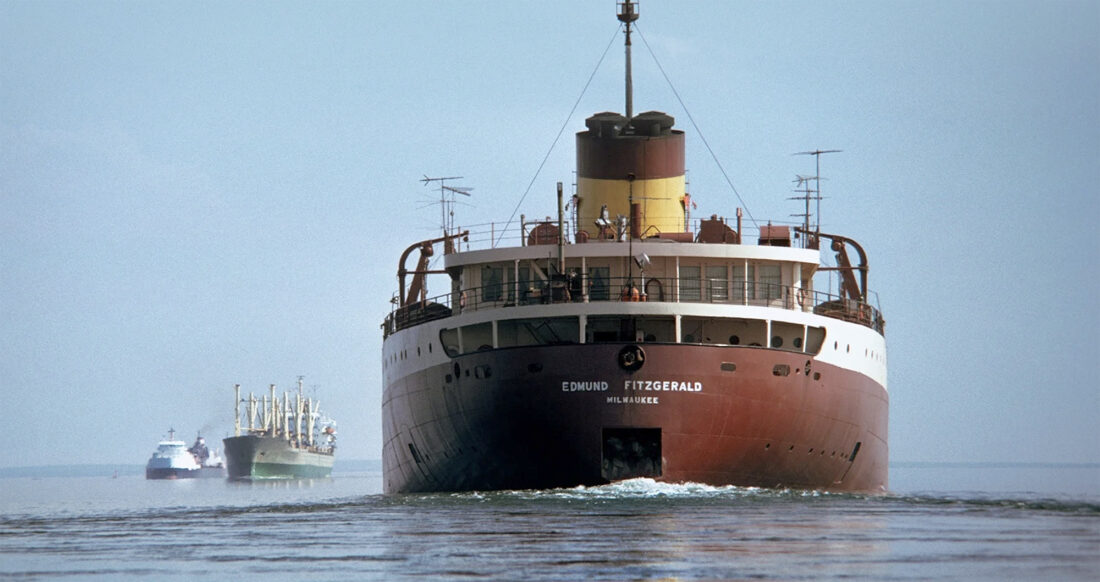
The Edmund Fitzgerald. Nov. 10, 2025, was the 50th anniversary of the wreck of the cargo ship in 1975 during a storm on Lake Superior, made famous by Gordon Lightfoot's ballad. (Courtesy of the Great Lakes Shipwreck Historical Society, via Wisconsin Public Radio)
The book delves deeply into the corporate culture of America at the time of the sinking and Nelson’s theory of how the economic side of that culture contributed to the event.
In the book, Nelson and co-author Jerald Podair discuss the regulatory processes for maritime safety and labor laws and argue that the lack of adequate regulations at the time contributed to the sinking of the Edmund Fitzgerald and, as a result, the “sinking of the American economy.”
Podair is a history professor at Lawrence University in Appleton, Wis.
“I had learned about how (the Edmund Fitzgerald) was emblematic of the manufacturing economy in the 1960s and 1970s because it carried taconite ore,” Nelson said.
“But there’s also the human element of the story. I found myself going in many different directions, looking at not just the economics, but also politics, government regulation, environmental issues and other businesses that were connected to it.”
Nelsons said the “heart of all this” is the 29 families that lost loved ones and the need to prevent another maritime or transportation catastrophe.
He explained that one reason many people are drawn to the story is that they identify with the working-class crew members and their families.
“They can relate to the families themselves. They come from small towns,” Nelson said.
“So in my example, here in Outagamie (Wisconsin) County, our largest economy was manufacturing and the paper industry. When I got to learn the backstories of these crew members and their families, it reminded me a lot of friends and families that grew up in my neighborhood,” he said.
Nelson said one relative told him the book has become “her bible,” saying it’s answered a lot of her questions that have lingered.
“She said the only regret she had was that this book wasn’t written decades earlier,” Nelson said.
Nelson said he hopes readers will be able to read a “unique and compelling” theory of why the ship sank and learn more about the political economy aspects of the event.
“You know if you’re looking at a bookshelf, or maybe searching on Amazon or someplace else, you look at all these different titles, you’ll look, ‘same, same, same, ah, this one’s different,'” Nelson said.
“I call attention to facts, to events related to the sinking that no one has talked about for 50 years. Instead of just looking at graphs and statistics, and other boring books, you are reading a fun story that, in the process, helps animate these issues.”
———
Joshua Kim writes for Great Lakes Echo. This story was provided by Capital News Service at Michigan State University.
Local News
City, school, township meetings scheduled
Iron Mountain City Council will meet at 6 p.m. today at Iron Mountain City Hall. The agenda includes a police ...
UP Arts, Culture Alliance gets $50K in federal grants
MARQUETTE — The Upper Peninsula Arts and Culture Alliance has been awarded two competitive grants totaling ...
Report highlights Michigan’s progress in expanding preK
LANSING, Mich. — A new joint report highlights Michigan’s continued progress in expanding access to ...
New book sails into political and legal stories of Edmund Fitzgerald
MSP: Federal funding restored for natural hazard mitigation
A federal program that provides funding to support hazard mitigation projects has reopened and local governments ...
Crivitz woman killed in UTV rollover crash
MARINETTE, Wis. — A Crivitz, Wis., woman died and a passenger was injured in a UTV rollover crash Saturday ...