Trump administration plans closure of 4 Michigan forestry research centers
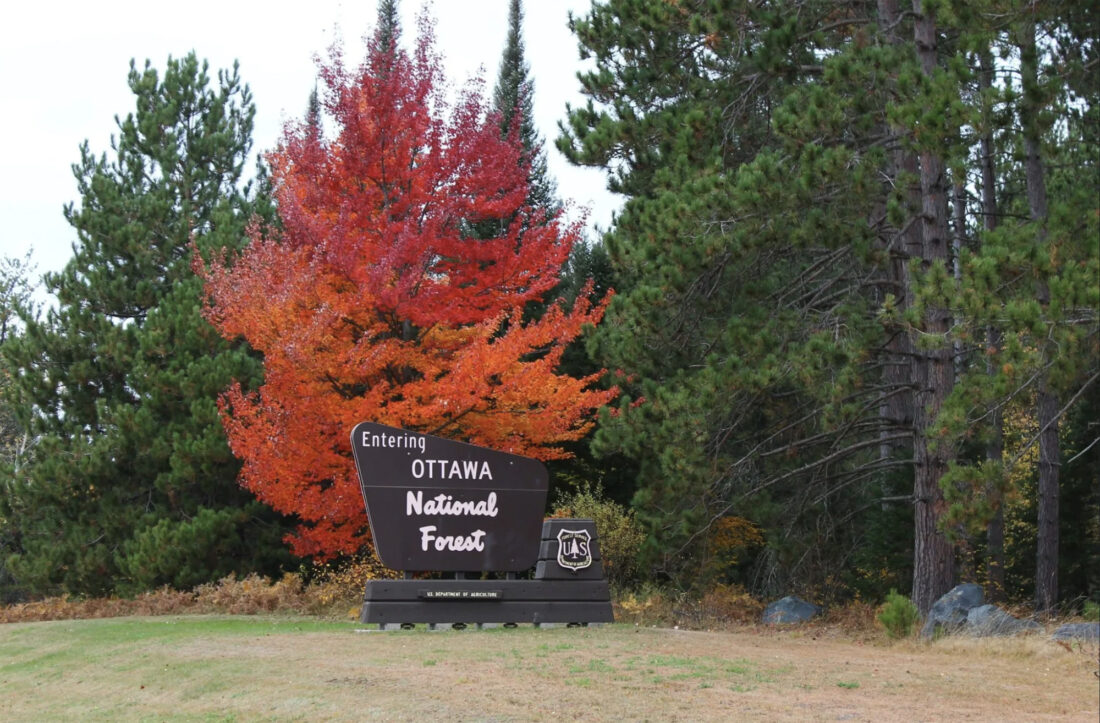
The U.S. Forest Service will close four Michigan research facilities amid a broader restructuring and consolidation. (Courtesy of U.S. Forest Service)
(This story was originally published by Bridge Michigan, a nonprofit and nonpartisan news organization. Visit the newsroom online: bridgemi.com.)
The Trump administration plans to close four US Forest Service research facilities in Michigan, shifting scientists out of the state as it reorganizes and consolidates the agency.
Officials have not announced a closure date for the facilities, located in the Lower Peninsula communities of East Lansing and Wellston, between Manistee and Cadillac, and the Upper Peninsula communities of Houghton and L’Anse, saying changes will be implemented over the next year.
The Forest Service headquarters will also move from Washington, DC, to Salt Lake City in what Agriculture Secretary Brooke Rollins described as a measure to save money, boost logging and put workers “closer to the landscapes we manage.”
“Establishing a western headquarters in Salt Lake City and streamlining how the Forest Service is organized will position the Chief and operation leaders closer to the landscapes we manage and the people who depend on them,” Rollins said in a news release.
The announcement prompted dismay in Houghton, where workers with the U.S. Forest Service Northern Research Station collaborate closely with researchers at Michigan Technological University and the Michigan Department of Natural Resources. A smaller group in L’Anse conducts forest inventories and analysis.
“It’s very disappointing,” said David Flaspohler, dean of the university’s College of Forest Resources and Environmental Science. “I understand priorities change from one administration to the next, and this administration is interested in increasing the volume of timber that is coming off of the national forests. To do that in a sustainable, safe way, you have to have people that are trained in the latest science and silviculture.”
Flaspohler estimated between 20 and 25 people work at the Houghton station, including scientists and other staff. The station has a “multidecadal history of partnerships” with researchers and foresters in the U.P., he said.
The heavily forested Upper Peninsula contains more than 8 million acres of forestland, split roughly evenly between private or locally owned timberland and state and federal forests.
Beyond conducting research that aims to keep northern forests healthy and productive, Flaspohler said, the lab is an important economic contributor to a region with scarce jobs.
“This lab with its many employees — who all had salaries and invested in the region just like any employed person does — that’s going to be lost.”
Two-thirds of facilities cut
The Michigan facilities are part of a network of 57 nationwide. Nineteen will remain following the closures, with the Forest Service instead establishing regional hubs that serve multiple states.
A Madison, Wisconsin, hub will serve Michigan, Illinois, Indiana, Iowa, Wisconsin, Minnesota and Missouri.
Michigan DNR spokesperson John Pepin said leaders in the state Forestry Resources Division are not yet sure how the changes will affect the state agency, which works closely with federal partners.
“It’s pretty apparent that the details and individual impacts to a lot of programs are not worked out yet,” Pepin said.
The biggest change appeared to be in Houghton, Pepin said. The facility houses the Northern Institute for Applied Climate Science, which Pepin said is relocating to Fort Collins, Colorado.
He said DNR and university officials in Michigan and other Great Lakes states “have worked closely” with the institute for many years assessing the climate vulnerability of forests, developing adaptation strategies and applying it to forest management.
It wasn’t clear whether layoffs would occur as part of the reorganization, but the administration’s announcement emphasized the reduction of “administrative duplication.”
“The Forest Service will provide employees and partners with detailed transition guidance as different milestones approach,” stated an agency release.
Agency spokespeople did not immediately respond to emailed questions from Bridge Michigan.
Phone calls to Forest Service facilities in Houghton and Lansing were not answered. A person who picked up the phone in the Huron-Manistee National Forest, which includes the Wellston office, declined to comment. Bridge Michigan was unable to locate a phone number for the L’Anse facility.
While an agency press release described the move as a “structural reset and a common-sense approach to improve mission delivery,” some critics have described it as an effort to shrink the Forest Service and shift its mission away from protecting forests and toward logging and privatization.
Utah has been a frequent battleground for debates about public lands, from the fight over Bears Ears National Monument to a lawsuit by the state of Utah that aimed to take control of millions of acres of federal land and Utah Senator Mike Lee’s repeated efforts to sell off public land.
“This reorganization will wreak havoc on the Forest Service management and organization, adding fuel to the unpopular narrative by officials like Senator Mike Lee that public lands should be sold off to private industry” said Josh Hicks, Conservation Campaigns Director at The Wilderness Society. “At a time when wildfires are getting worse, and access to public lands is already under strain, the last thing we need is an unnecessary reorganization.”

Local News

Evers vetoes GOP bills for no tax on overtime and tips
Trump administration plans closure of 4 Michigan forestry research centers
The Archives seeks township information
FELCH TOWNSHIP — The Archives — representing Breen, Felch and West Branch townships — is updating its files ...
Registration open for ‘Raise the Roof’ golf outing
KINGSFORD — Registration is open for the 2026 "Raise the Roof" golf outing, a major fundraiser for Habitat for ...
Northwood Beekeepers to host apiary inspector
FLORENCE, Wis. — Northwoods Beekeepers will host Patrick Sizemore, apiary inspector for the state of Wisconsin, ...