
US Forest Service workers in Wisconsin may have to move
-
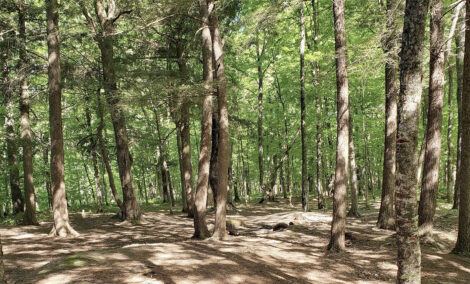
- Part of the Chequamegon-Nicolet National Forest in northern Wisconsin. (Liz Dohms-Harter/Wisconsin Public Radio)
-
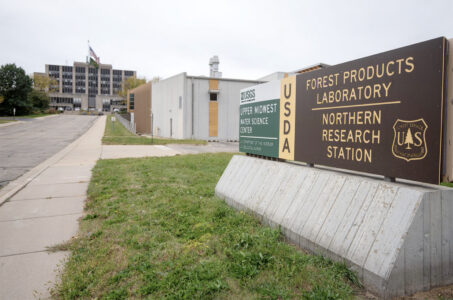
- The U.S. Department of Agriculture Forest Products Laboratory in Madison, Wis. (Angela Major/Wisconsin Public Radio)
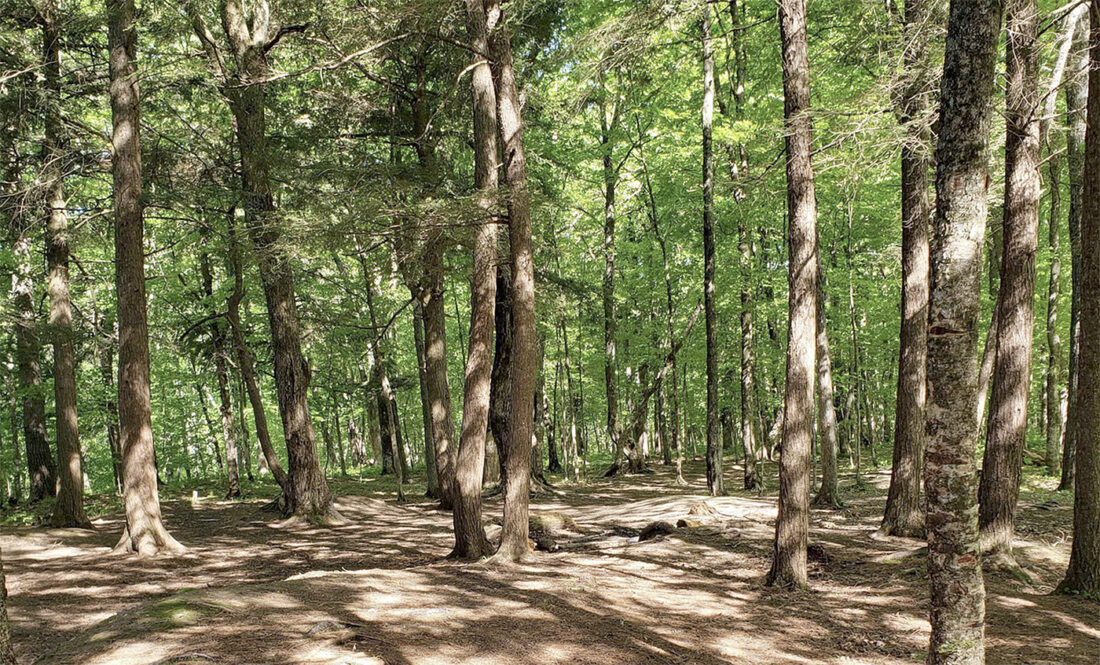
Part of the Chequamegon-Nicolet National Forest in northern Wisconsin. (Liz Dohms-Harter/Wisconsin Public Radio)
A union leader representing federal Forest Service employees in Wisconsin says workers may have to move as part of the Trump administration’s plan to shutter regional offices.
The Forest Service announced Tuesday the agency is moving its headquarters to Salt Lake City and closing nine regional offices, including in Milwaukee. Administrative and technical support in those offices will shift to six operational service centers, one of which will be in Madison. The overhaul will also include 15 state directors to oversee operations in one or more states.
Brian Haas is president of the National Federation of Federal Employees Local 2165. The union represents employees in the Milwaukee regional office and the Chequamegon-Nicolet National Forest. He said the restructuring mostly affects Milwaukee-area employees. Union officials estimate about 50 employees may be affected.
“The regional office actually already was hit a lot harder by people leaving, retiring, taking the different buyouts,” Haas said. “They’re already really down in their numbers.”
Haas said workers have been told they can continue working for the service as long as they’re willing to relocate or change job descriptions. When the reorganization was first announced last year, he said many employees transferred or relocated amid Trump’s return-to-office order.
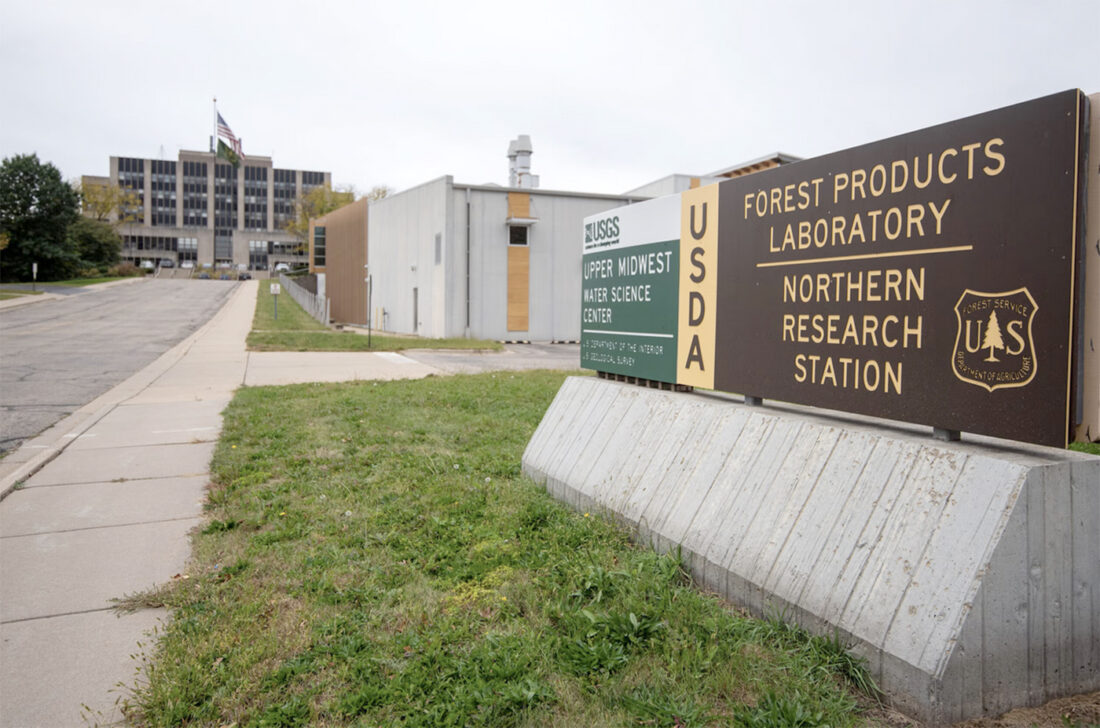
The U.S. Department of Agriculture Forest Products Laboratory in Madison, Wis. (Angela Major/Wisconsin Public Radio)
The number of Forest Service employees in Wisconsin dropped from 645 to 539 between federal fiscal year 2025 and 2026, according to federal workforce data.
The U.S. Department of Agriculture, which houses the Forest Service, has been shifting thousands of employees out of Washington. Around 260 employees in the nation’s capital will be expected to relocate to Salt Lake City, according to the Associated Press.
“This is about building a Forest Service that is nimble, efficient, effective and closer to the forests and communities it serves,” Forest Service Chief Tom Schultz said in a statement.
Trump administration officials said the move will improve forest management, save taxpayer money and boost employee recruitment.
“The official stance from the administration is that it is not a reduction in force, but the reality on the ground is that it is going to continue to drive people to leave the agency,” Haas said.
A USDA spokesperson said employees will receive information about relocation timelines, options and resources to support their decisions. The agency said the number of staff that will be moved beyond the nation’s capital is unknown at this time.
Current and former Forest Service employees say the Trump administration’s actions over the past year have created chaos and uncertainty with few answers. The elimination of regional offices and shift to state-based hubs will take place over the coming year.
No changes for national forest in Wisconsin
The Chequamegon-Nicolet National Forest, or CNNF, is estimated to have about 150 to 200 employees who would be unaffected, Haas said. Kaleigh Maze, a forest spokesperson, confirmed the forest and its district offices would see no staffing changes.
“The Chequamegon-Nicolet National Forest is committed to ensuring that all operations — including wildfire readiness and response — continue without interruption,” Maze said.
Forest Service research facilities in 31 states will also close and be combined under a single research organization in Colorado. The agency’s website shows Rhinelander and Madison research sites would not be affected, but Haas said Rhinelander employees may also be required to move. As of 2023, the agency’s Forest Products Lab in Madison had 80 research scientists and 168 support staff.
Two other facilities are slated for closure, in Wisconsin Rapids and Prairie du Chien. Paul Strong, former forest supervisor of the CNNF, said he’s unfamiliar with those sites and questioned whether USDA facilities may have been included by mistake.
The Forest Service said a single research organization would speed up the use of science in forest management and reduce duplication. Strong told WPR’s “Wisconsin Today” it’s unclear what the move will mean for existing and long-term research projects.
“What I think we should be concerned about is what kind of pressure and stress this puts on employees and how they’re being treated as public servants,” Strong said.
Under the reorganization, the Forest Service said there will be no changes to firefighters or their positions. But the Trump administration is seeking to bring firefighting efforts under a single agency, which would affect thousands of employees if implemented.
Former U.S. Forest Service Chief Mike Dombeck served during the Clinton administration and lives in Wisconsin. He said he supports efforts to streamline the agency, noting past proposals to reorganize offices failed due to lacking support from congressional lawmakers.
Even so, he noted a similar attempt to move the Bureau of Land Management during Trump’s first term was later reversed. Dombeck said restructuring will likely cause the agency to lose more staff who choose not to uproot their families. He also fears the agency will lose ground on managing 193 million acres of national forests, climate change and wildland firefighting issues.
“I think this will be a real wake-up call to what the real values of national forests are,” Dombeck said. “We need to really ask this administration: what is the end game when we take a look at this level of chaos?”
Local News
City, school, township meetings scheduled
Iron Mountain City Council will meet at 6 p.m. today at Iron Mountain City Hall. The agenda includes a police ...
UP Arts, Culture Alliance gets $50K in federal grants
MARQUETTE — The Upper Peninsula Arts and Culture Alliance has been awarded two competitive grants totaling ...
Report highlights Michigan’s progress in expanding preK
LANSING, Mich. — A new joint report highlights Michigan’s continued progress in expanding access to ...

New book sails into political and legal stories of Edmund Fitzgerald
MSP: Federal funding restored for natural hazard mitigation
A federal program that provides funding to support hazard mitigation projects has reopened and local governments ...
Crivitz woman killed in UTV rollover crash
MARINETTE, Wis. — A Crivitz, Wis., woman died and a passenger was injured in a UTV rollover crash Saturday ...