
A week of reptile encounters at Six Mile Lake
Northwoods notebook
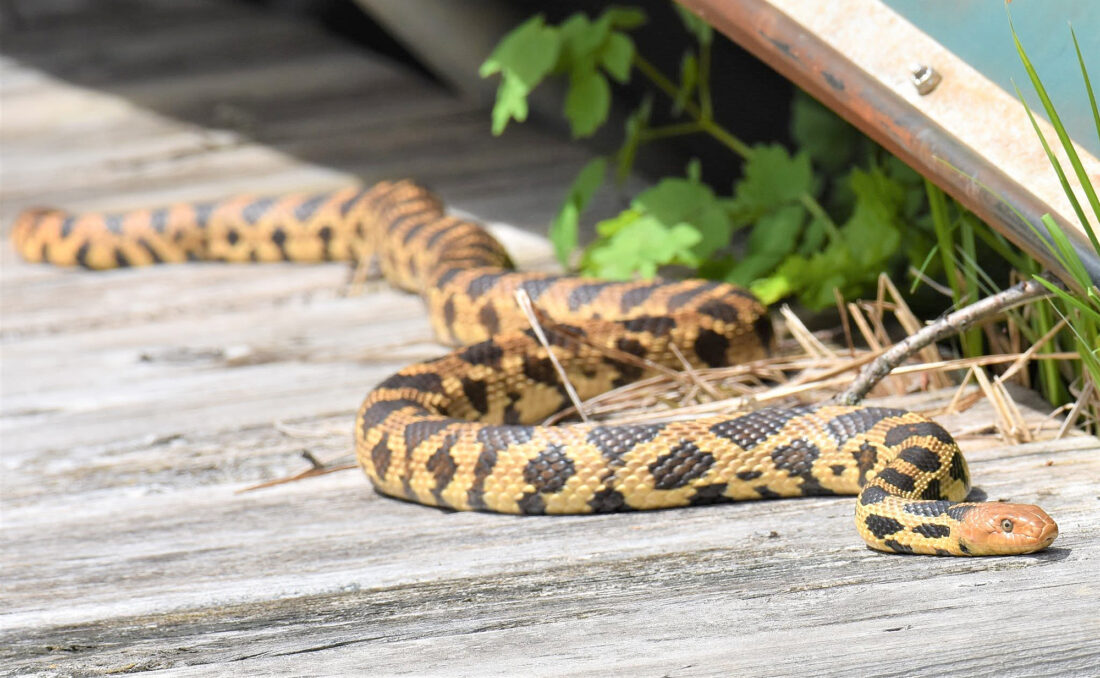
A fox snake, often referred to as a pine snake. They are the largest of the snakes in the Upper Peninsula. (Betsy Bloom/Daily News photos)
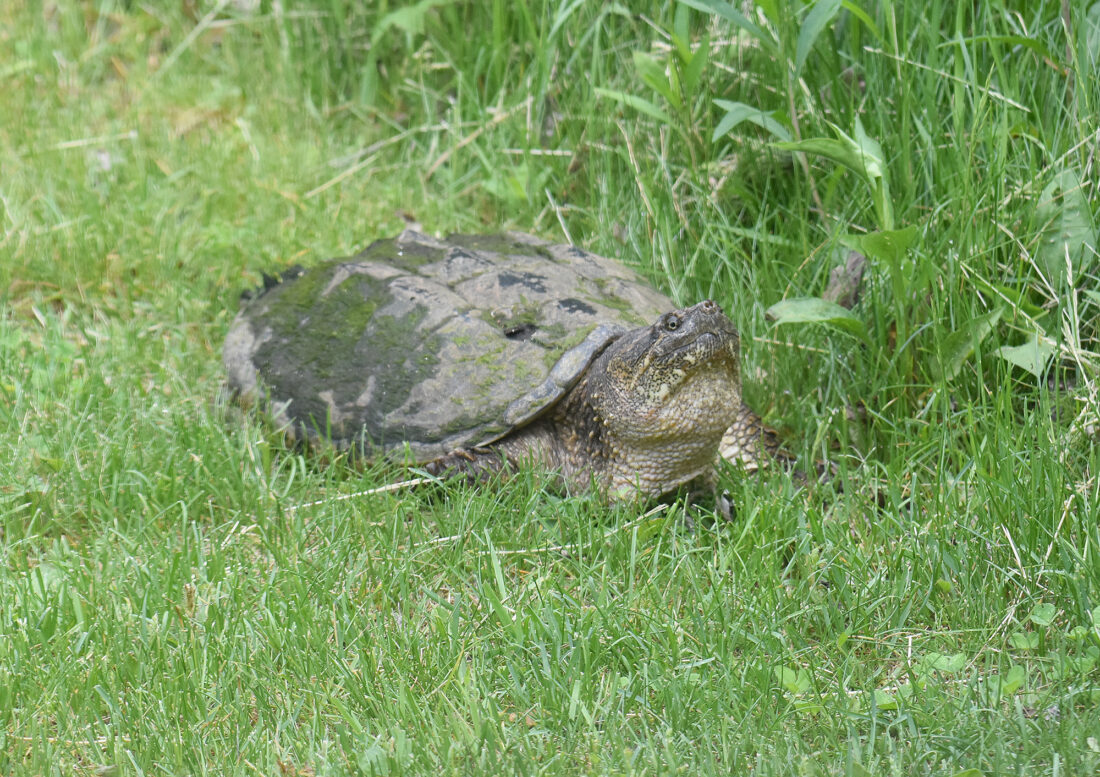
A female snapping turtle heads back to Six Mile Lake after burying her eggs in the sand and gravel along Six Mile Lake Road. An average snapping turtle clutch can have 20 to 40 eggs.
A fox snake, often referred to as a pine snake. They are the largest of the snakes in the Upper Peninsula. (Betsy Bloom/Daily News photos)
A female snapping turtle heads back to Six Mile Lake after burying her eggs in the sand and gravel along Six Mile Lake Road. An average snapping turtle clutch can have 20 to 40 eggs.
Trending
I got home early enough from my job last Friday night that my mom was still awake.
She had a story for me about her day but didn't take photos because she was worried "I'd put it in the paper."
Good guess, because hell yeah I'd put this in the paper -- my 86-year-old mom handled a snake in her family room, solo.
She'd noticed the three cats transfixed on a corner of the bookcase. When she looked closer, the center of their attention turned out to be a fox snake -- locals call it a pine snake -- curled up on a picture that had been forgotten when Christmas decorations were put away, then left atop the books.
The automatic reaction to snakes all too often is to kill them. Even more so indoors, I would imagine. There are boundaries, lines that can be crossed. I try not to judge.
This one, confronted by the cats, was shaking its tail in a desperate attempt to pass as a rattlesnake. It isn't; the Upper Peninsula has no venomous snakes. The fox snake is well-known for using this bluff. It probably didn't realize that movement mimicked what is done with cat toys -- I pictured my cats thinking, "Look, it wants to play."
The snake maybe envisioned its eminent demise, even questioned its life choices.
But my mom showed it mercy.
She grabbed a large garbage bag, wrapped part of it around her hands and tipped the picture frame so the snake wound up at the bottom. She then carried it out to the woods on the border of our property.
And let it go.
I've always been comfortable with snakes. Yet I've never dealt with one indoors. And I admit I would not have thought of a plastic bag. Maybe a bucket and some type of pole. My mom's plan sounds better.
So I hope you'll join me in saluting my mom, Mary Jane Bloom, for courage when faced with an intruder when many I know would have reacted with fear. She made me proud, not certainly for the first time.
*****
The region's other main type of reptile also was quite visible around the house last week, although it thankfully remained outdoors.
Turtles -- painted and snapping -- made a steady trek from Six Mile Lake and across the lawn to lay eggs in the driveway and along the road.
On some days we could see at least one, often more, painted turtles hunkered down in a hole scooped out in the sandy soil.
The snapping turtle were numerous as well, though appeared to favor the entry to the neighbor's pole barn. They always are impressive to see, the size of serving platters, with shells speckled with green algae, unlike the shiny dark carapaces of the painted turtles. Some of the larger ones lumber like mini-dinosaurs, though most scoot along on their belly.
We're far enough back from traffic that the turtles, for the most part, are not at risk of being struck when venturing out on the land to nest. But I've already seen crushed snapping and painted turtles on M-69 and M-95 this year.
So it's again worth reprinting advice from Jim Harding, a former adjunct wildlife specialist at the Michigan State University Museum, on helping turtles safely cross a road --
-- As always, don't risk yourself in trying to assist the turtle. If the turtle can cross without help, let it.
-- If it's safe, try to take the turtle in the direction it was headed, he said, "as long as the turtle's chosen direction isn't taking it into worse danger. There are times when turtles don't choose their paths wisely, in which case I may take the turtle a little farther, away from the road."
-- If it's necessary to move the turtle, handle it gently. For all turtle species except snappers and softshells, grasp the turtle along the shell edge near the midpoint of its body.
-- If it's a snapping turtle, "it's true, don't lift by the tail," Harding said. "Grabbing the rear of the shell is tricky, and the turtle will not appreciate that you are trying to help it. Thus for big snappers, I often opt to push them off the road with a stout stick, or tease the turtle into biting an old towel or jacket and dragging it off the road as it hangs on."
If the eggs survive -- two of the driveway nests had been plundered by Friday, likely by a raccoon -- both the painted and snapping turtles should hatch by late summer or early fall.
The painted turtle hatchlings usually spend the winter in the underground nest, not digging out until the next spring. But baby snapping turtles can't endure the cold underground the way painted turtles can, though it's unknown why, Harding explained in 2022. So they make a beeline for the water once out of the egg.
If you want to improve the odds of turtle eggs hatching, the Wisconsin Department of Natural Resources has instructions and a step-by-step video on how to build a nest cage to protect the eggs and hatchlings from predators at https://dnr.wisconsin.gov/newsroom/release/44291.
Betsy Bloom can be reached at 906-774-2772, ext. 85240, or bbloom@ironmountaindailynews.com.