
Remember when?
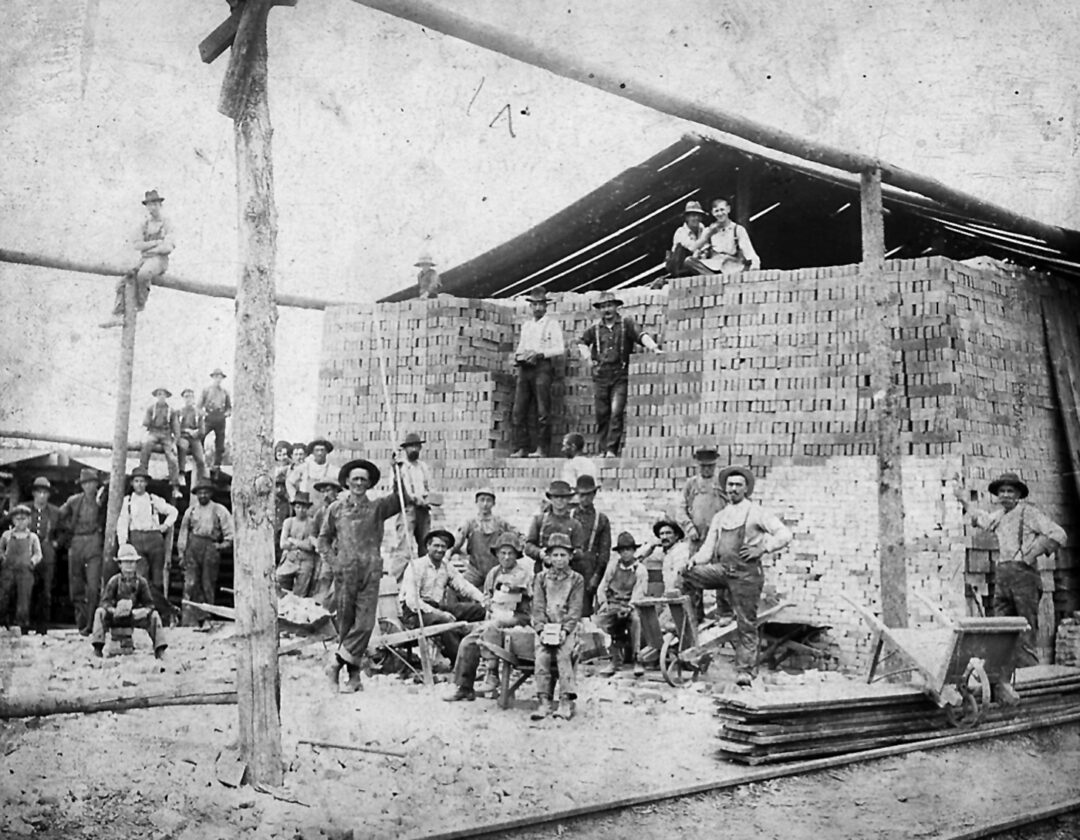
Vulcan Brick Works began operation in 1891. In this photograph, which dates back to about 1891, workers posed with stacked bricks, preparing the kilns for firing. Standing amongst the men are young boys who worked alongside them. (Photo provided by the Jake Menghini Historical Museum of Norway)
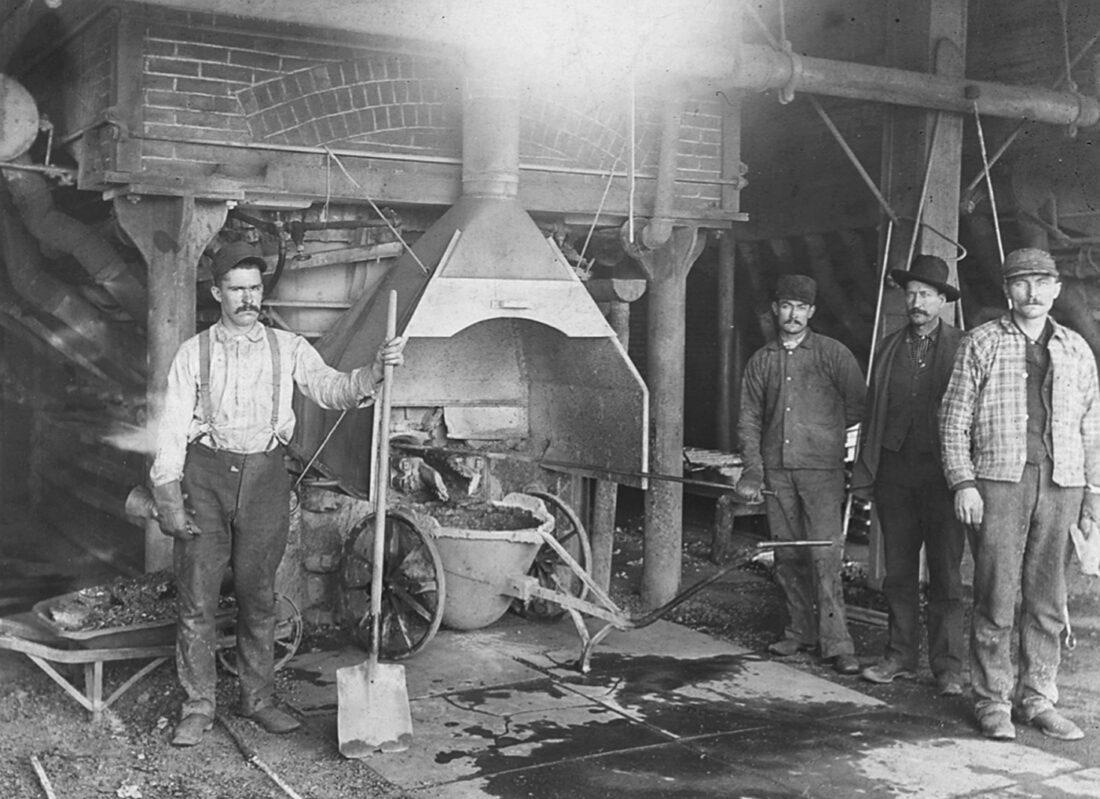
Vulcan Brick Works workers load a two-wheeled cart with clay for making bricks in this 1910-1915 photo. (Photo provided by the Jake Menghini Historical Museum of Norway)
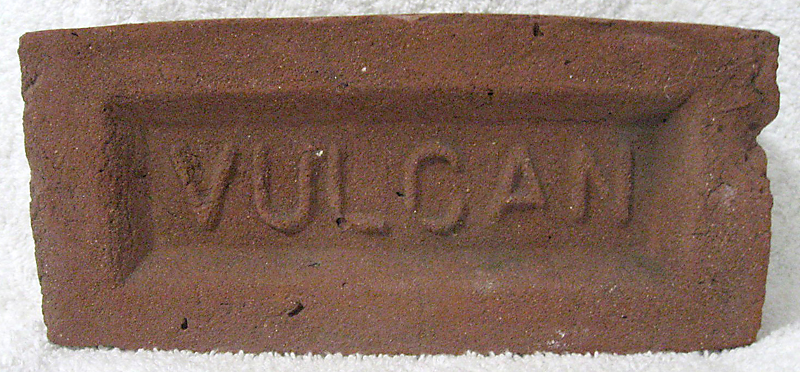
A Vulcan brick produced at the Vulcan Brick Works, provided by Bert Peterson.
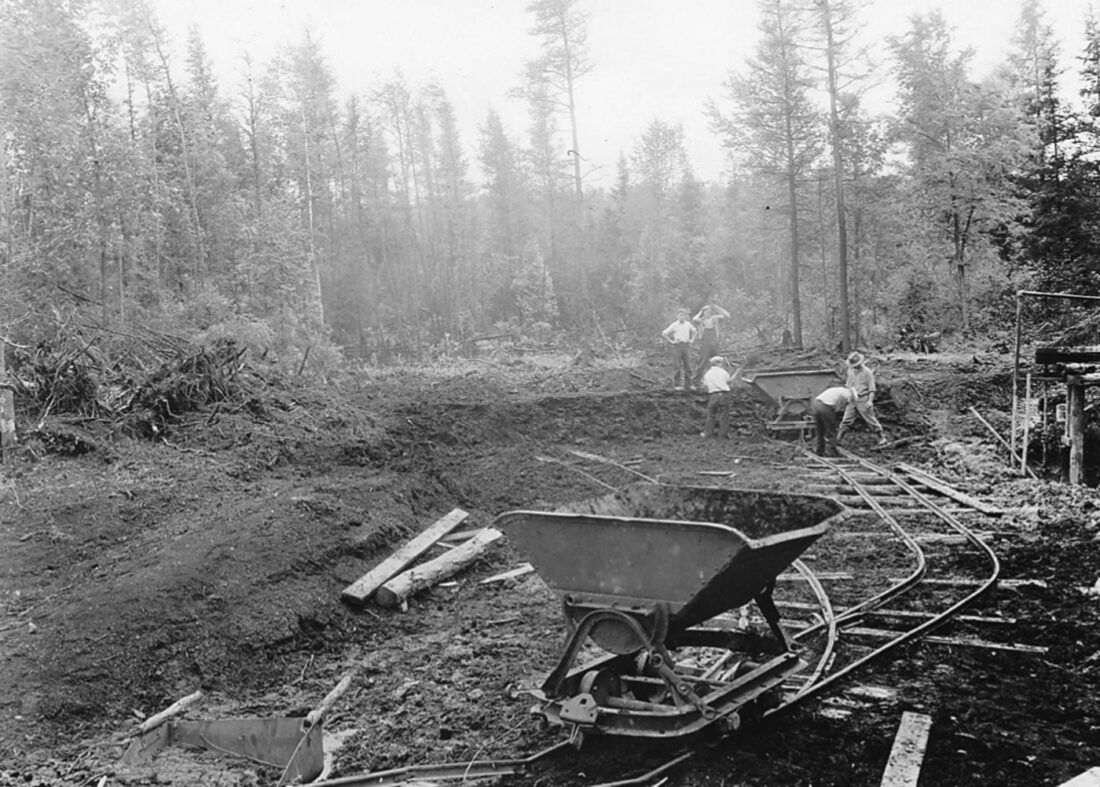
In this 1910 to 1915 photograph, employees load dump cars with clay at the Vulcan Brick Works. (Photo provided by the Jake Menghini Historical Museum of Norway)
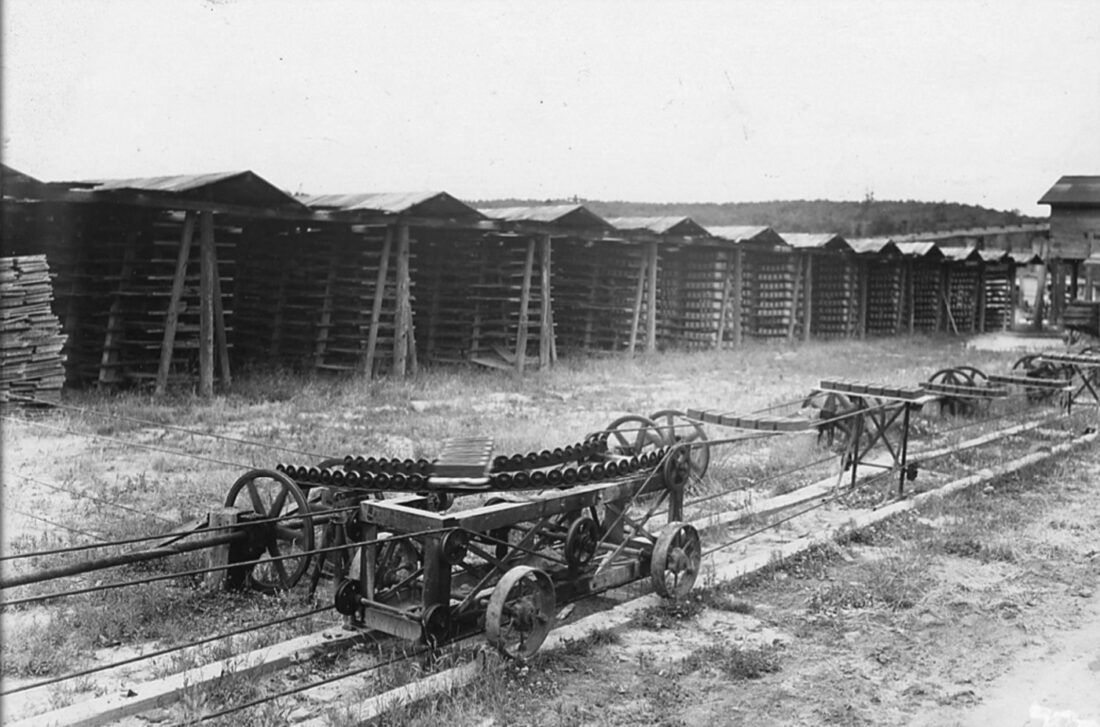
In 1924, Noel H. Turner, a son of William J. Turner, reopened and rebuilt the brick plant, moving the entire operation to a higher location about a quarter of a mile east of the original site. This 1925 view of the Vulcan Brick Works shows the drying sheds with stacks of bricks and conveyors on tracks used for transporting them. (Photo provided by the Jake Menghini Historical Museum of Norway)
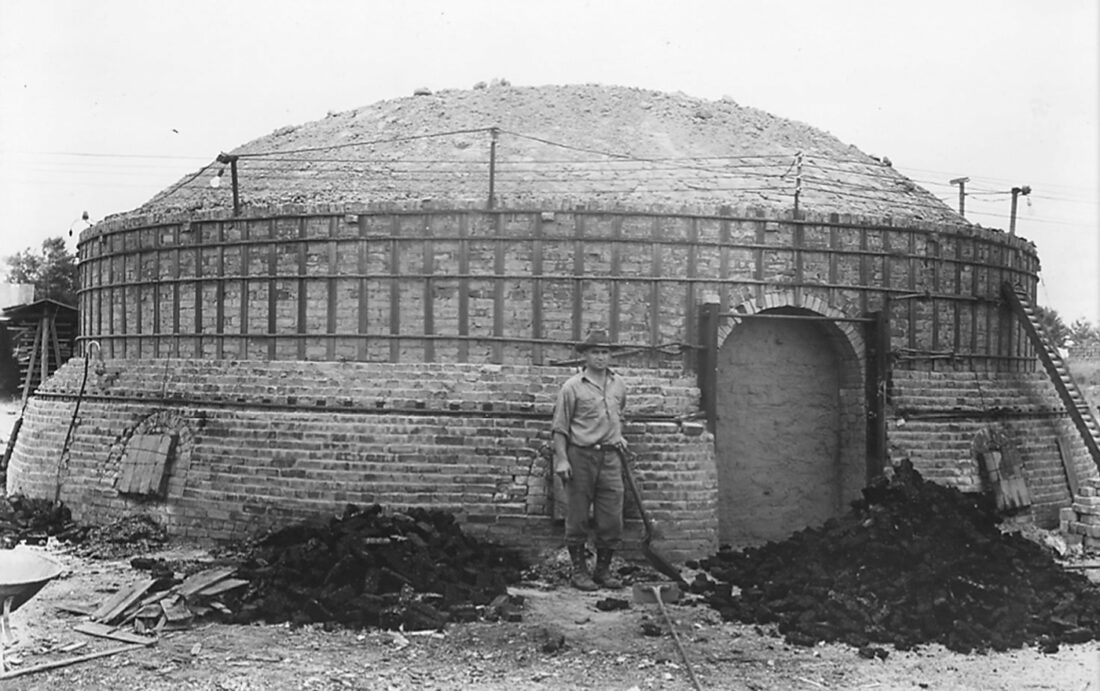
A worker stands next to one of the kilns at the Vulcan Brick Works in 1925. Note the charcoal piles and the construction of the kiln. The wood-burning “scove kilns” were replaced by more efficient coal fired “Boss kilns,” with forced and induced draft equipment. (Photo provided by the Jake Menghini Historical Museum of Norway)
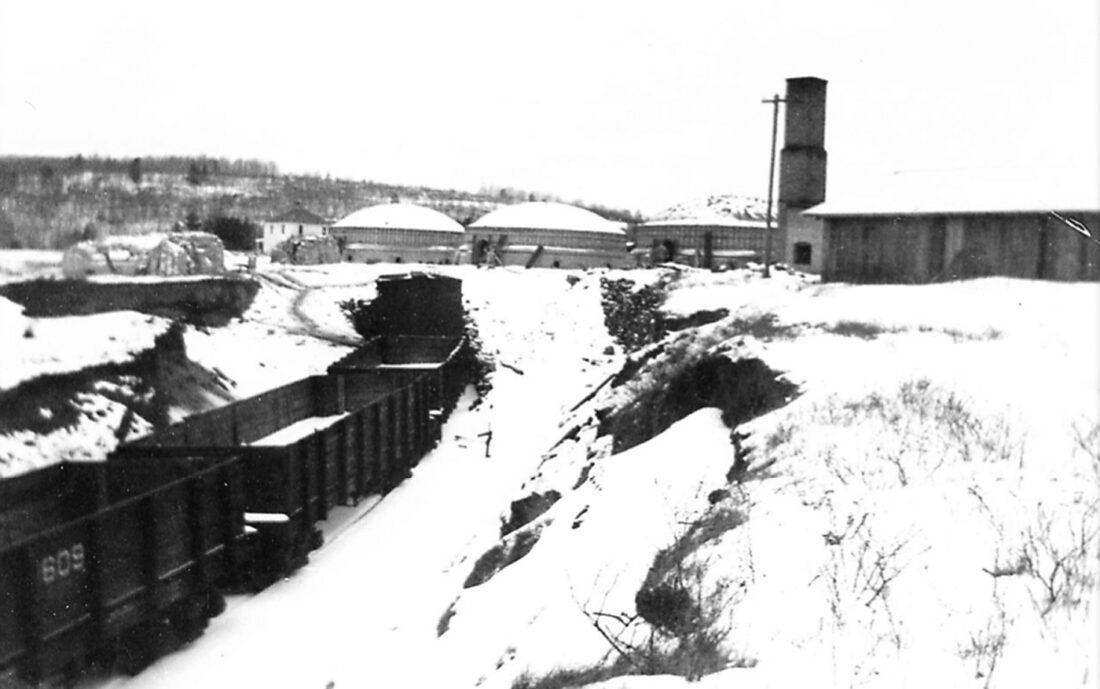
In this 1925 winter view of the Vulcan Brick Works the photographer captures the railroad siding, the three brick kilns and various buildings, including the superintendent’s house in the background to the left of the kilns. Beginning in the winter of 1932, Noel H. Turner began producing local peat, which was briquetted and used as fuel particularly well-suited for burning clay ware such as bricks. (Photo provided by the Jake Menghini Historical Museum of Norway)
Vulcan Brick Works began operation in 1891. In this photograph, which dates back to about 1891, workers posed with stacked bricks, preparing the kilns for firing. Standing amongst the men are young boys who worked alongside them. (Photo provided by the Jake Menghini Historical Museum of Norway)
Vulcan Brick Works workers load a two-wheeled cart with clay for making bricks in this 1910-1915 photo. (Photo provided by the Jake Menghini Historical Museum of Norway)
A Vulcan brick produced at the Vulcan Brick Works, provided by Bert Peterson.
In this 1910 to 1915 photograph, employees load dump cars with clay at the Vulcan Brick Works. (Photo provided by the Jake Menghini Historical Museum of Norway)
In 1924, Noel H. Turner, a son of William J. Turner, reopened and rebuilt the brick plant, moving the entire operation to a higher location about a quarter of a mile east of the original site. This 1925 view of the Vulcan Brick Works shows the drying sheds with stacks of bricks and conveyors on tracks used for transporting them. (Photo provided by the Jake Menghini Historical Museum of Norway)
A worker stands next to one of the kilns at the Vulcan Brick Works in 1925. Note the charcoal piles and the construction of the kiln. The wood-burning “scove kilns” were replaced by more efficient coal fired “Boss kilns,” with forced and induced draft equipment. (Photo provided by the Jake Menghini Historical Museum of Norway)
In this 1925 winter view of the Vulcan Brick Works the photographer captures the railroad siding, the three brick kilns and various buildings, including the superintendent’s house in the background to the left of the kilns. Beginning in the winter of 1932, Noel H. Turner began producing local peat, which was briquetted and used as fuel particularly well-suited for burning clay ware such as bricks. (Photo provided by the Jake Menghini Historical Museum of Norway)
Trending
NORWAY -- Long before modern construction materials became widely available, millions of bricks produced in Vulcan helped build schools, churches, public buildings and mining facilities throughout the Upper Peninsula and northern Wisconsin.
This week's "Remember when?" story, provided by the Jake Menghini Historical Museum of Norway, began in the late 19th century when a deposit of high-quality clay suitable for brick manufacturing was discovered about a mile south of Vulcan. Recognizing its potential, William J. Turner and Dr. B.W. Jones established the Vulcan Brick Works in 1891.
Bert Peterson of Norway said to the best of his recollections that the factory was just off the now Brickyard Road and the open pond in that area was the clay quarry.
Peterson still has a brick stamped "Vulcan" from the business.
The plant quickly became an important industry in the region.
During its early years, the drying kilns were fueled by cordwood. By 1893, Turner had acquired full ownership of the operation and continued production under the direction of several superintendents, including Cole and Finnegan.
Operating from May through December each year, the Vulcan Brick Works employed between 45 and 60 men.
The work continued for a number of men during the winter months as crews cut and hauled approximately 3,000 cords of wood annually to fuel the kilns.
The demand for Vulcan-made brick was strong throughout the Upper Peninsula and northern Wisconsin. Mining companies were among the plant's largest customers, as the brick fireboxes used in steam-powered boilers required frequent replacement.
As a result, many of the brick buildings constructed in the western Upper Peninsula were built using products from the Vulcan plant. Local examples include the Norway Township Hall in Vulcan, built in 1905, and Vulcan High School, completed in 1909. Numerous churches and mining structures throughout the region also used the company's bricks.
The success of the operation led to the development of a small community surrounding the plant. At its peak, the settlement included a schoolhouse and about 15 homes for workers and their families.
Production reached a high point in 1911 when brick sales exceeded 5 million units. The largest single order in the company's history was for 1.2 million bricks used in the construction of the new Iron Mountain High School. To meet the demand, several railroad carloads of bricks were shipped daily over the Wisconsin & Michigan Railroad.
The death of William J. Turner on Nov. 3, 1913, marked the beginning of the end of the original operation. The plant continued producing bricks until 1915 before shutting down.
A decade later, Turner's son, Noel H. Turner, revived the business. In 1924, he reopened the Brick Works and rebuilt the facility on higher ground about a quarter-mile east of the original site.
The modernization included replacing the old wood-burning scove kilns with more efficient coal-fired Boss kilns equipped with forced and induced draft systems.
Noel Turner continued to innovate. During the winter of 1932, the company began producing briquetted peat as a fuel source. The locally produced fuel proved particularly effective for firing clay products such as brick.
Despite these improvements, the plant's second chapter was short-lived. The Vulcan Brick Works ceased operations in 1936, ending more than four decades of brick manufacturing that helped shape communities across the region.
Today, the buildings that remain stand as reminder of an industry that once supplied millions of bricks and played a significant role in the development of the area.
———
Terri Castelaz can be reached at 906-774-2772, ext. 85241, or tcastelaz@ironmountaindailynews.com.