
Remember when?
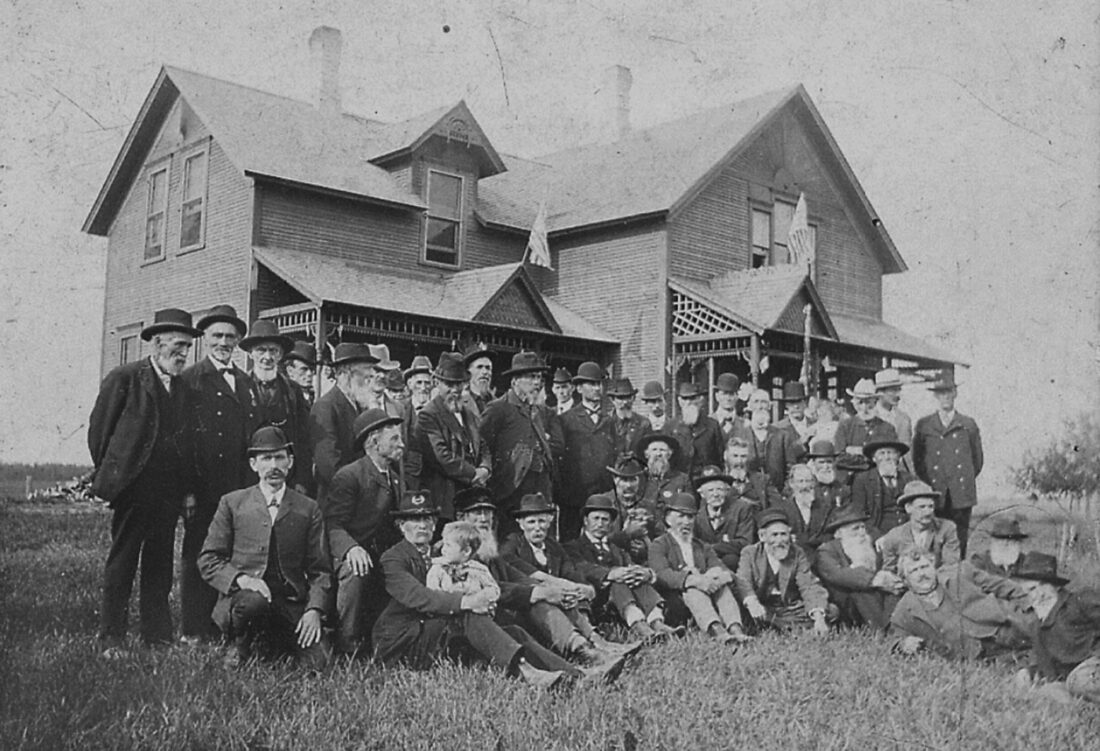
This 1900-1910 photograph shows a large group of men gathered on the lawn of what is believed to be the old Sagola Hotel. (Photo provided by the Menominee Range Historical Museum)
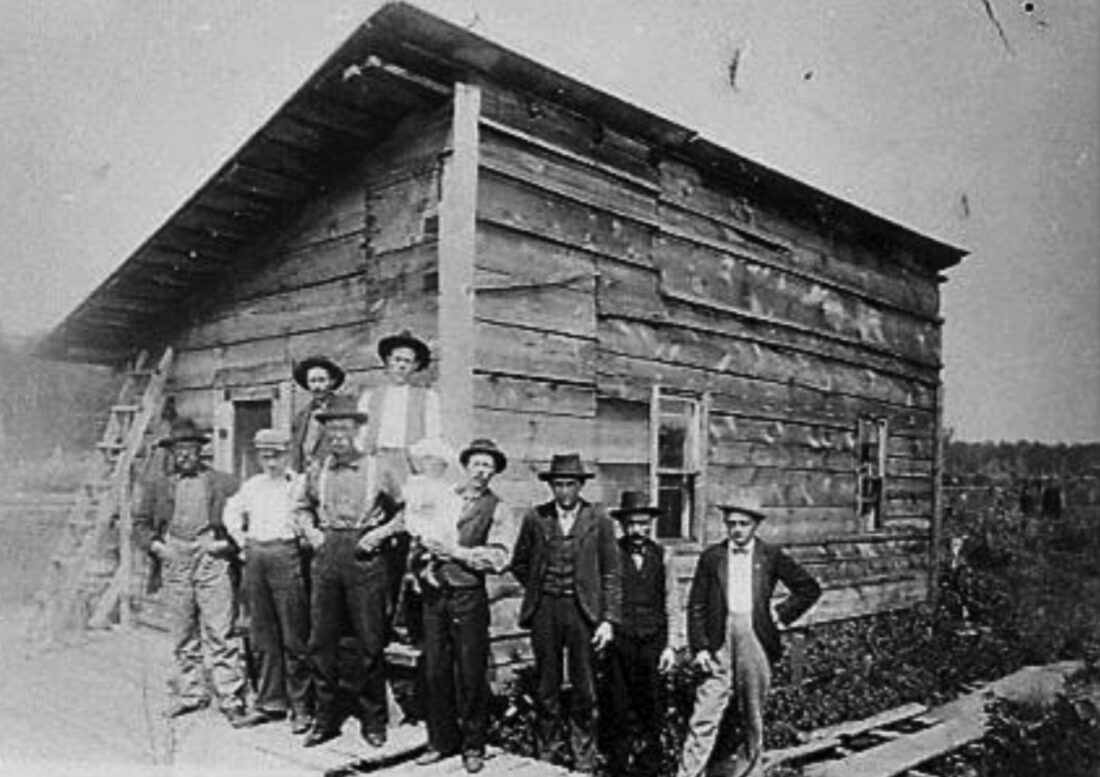
This turn-of-the-century photograph was identified as the bunk house behind the hotel in Sagola. The name of the man at the far left was Sunberg; Ted Broadland standing next to him wearing a white shirt, and Pete Broadland is the gentleman holding the child. (Photo provided by the Menominee Range Historical Museum)
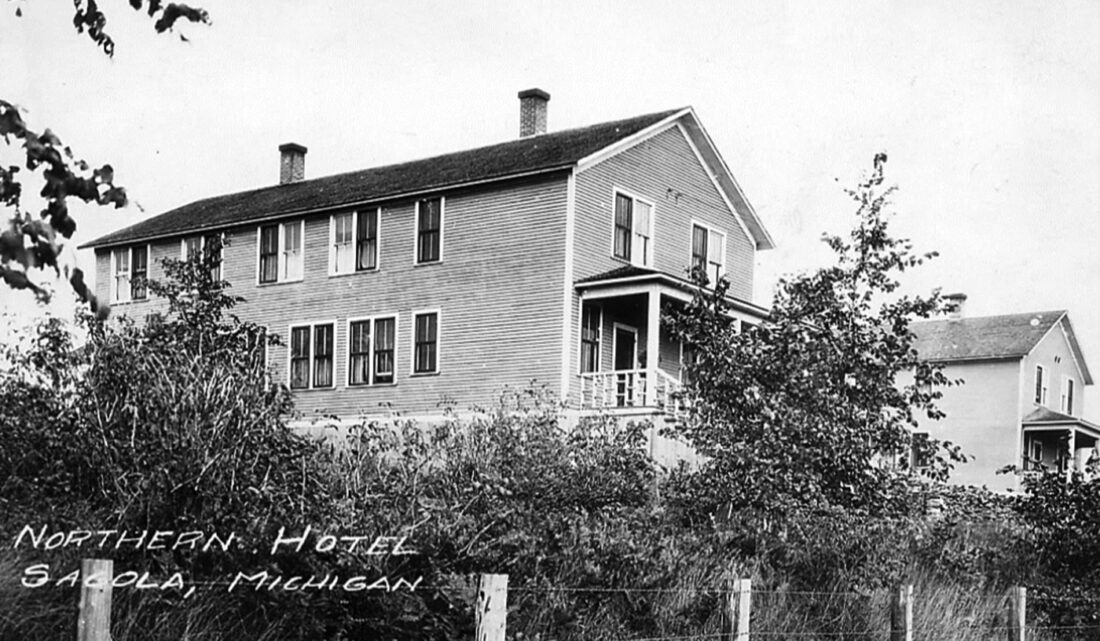
This real photograph postcard, which dates between 1918 and 1930, is a view of the Northern Sawmill Company’s boarding house, the Northern Hotel in Sagola. (Photo provided by the Menominee Range Historical Museum)
This 1900-1910 photograph shows a large group of men gathered on the lawn of what is believed to be the old Sagola Hotel. (Photo provided by the Menominee Range Historical Museum)
This turn-of-the-century photograph was identified as the bunk house behind the hotel in Sagola. The name of the man at the far left was Sunberg; Ted Broadland standing next to him wearing a white shirt, and Pete Broadland is the gentleman holding the child. (Photo provided by the Menominee Range Historical Museum)
This real photograph postcard, which dates between 1918 and 1930, is a view of the Northern Sawmill Company’s boarding house, the Northern Hotel in Sagola. (Photo provided by the Menominee Range Historical Museum)
Trending
SAGOLA -- This week's "Remember when?" looks back at two of the former hotels that once stood in Sagola.
Long before modern motels and short-term rentals, hotels and boarding houses were the lifeblood of small logging communities. In Sagola, two early establishments -- the Sagola Hotel and the Northern Hotel -- provided lodging, meals and a gathering place for residents, lumbermen and travelers in the turn of the centry.
One of the earliest hotels in town was the Sagola Hotel, operated by several local families during the early 1900s.
Among its operators was Frank Fruik, who moved his family to Sagola in 1904.
The Fruiks ran the hotel for several years and, according to records, housed 35 boarders in 1910.
Eventually, the family left the hotel business and moved to a farm a mile south of town, where they raised potatoes, kept dairy cows and sold and delivered milk to area residents.
Another prominent early businessman, Russell Pringle, also played a role in Sagola's hospitality industry.
In 1904, Pringle built a 70-foot-long chicken barn and launched a poultry and egg business with 300 chickens.
He and his wife, Kate, simultaneously operated a boarding house on Sagola Avenue.
Around 1909, the Pringles took over management of the Sagola Hotel, which they continued to run until about 1919.
As Sagola's lumber industry expanded, the need for worker housing grew dramatically. By the late 1910s and early 1920s, the Northern Sawmill Company answered that demand by constructing what became known as the Northern Hotel.
The large boarding house, built on a hill east of the sawmill, accommodated workers employed by the rapidly growing lumber operation.
In his book "Sagola's Early Years: A History of Sagola, Michigan," local historian Darryl Ertel described the facility as a bustling center of activity.
The original two-story structure quickly filled as the mill expanded production and began operating around the clock.
More than 100 boarders were housed there, with day-shift and night-shift workers often using the same beds in alternating schedules. It soon became apparent that an even larger boarding house was needed.
An identical addition was constructed alongside the original building, connected by a corridor that included living quarters above and a spacious dining room below.
The dining hall became a focal point of boarding-house life, remembered fondly by former resident Arvid Asplund, who recalled the meals as both plentiful and excellent.
The operation required a sizable staff. Ben Teige served as the day cook, while Floyd Atkins headed the kitchen during the night shift. Monroe Leeman worked as bull cook, and Jim McMahon handled chores around the facility.
Numerous local women were employed serving meals, washing dishes, changing beds, doing laundry and maintaining the boarding house.
The boarders paid 75 cents a day for room and board.
Life at the Northern Hotel extended beyond work and meals. Lumberjacks frequently gathered for marathon poker games in the lounge area. Others sought entertainment elsewhere, including spending time with local sweethearts near the property's pump house.
As the Great Depression and changing economic conditions reduced demand for worker housing during the mid-1930s, portions of the boarding house were converted into apartments for married employees.
Among the residents were company blacksmith Charles Sheik, Jim and Sarah Martin, and John and Leona Davis. John Davis carried a unique distinction -- he was a survivor of the 1912 sinking of the Titanic.
By 1950, one of the additions and the connecting corridor had been removed, leaving only part of the original structure standing.
Former employee Ethel Atkins remained in the building with her family for several years. The once-bustling pump house was no longer operational, forcing residents to haul water from the local gas station.
The landmark boarding house was finally vacated around 1960. After being purchased by Art Helberg, the structure was demolished, marking the end of an era.
Today, only a few concrete footings remain to mark the location of the Northern Hotel, a reminder of the days when Sagola's hotels and boarding houses housed hundreds of workers and stood at the center of community life.