
UW regents approve fourth tuition increase in four years
Trending
The Universities of Wisconsin Board of Regents approved a plan on Thursday to increase tuition across the state's public university system for the fourth time in as many years.
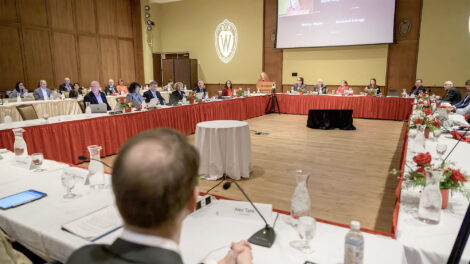
The Board of Regents voted 15-1 to approve the proposal. It will raise in-state undergraduate tuition by 2% and student fees by an average of 3.5% for the upcoming school year.
The university system estimates the total cost of attendance for in-state undergraduates would rise by about 2.5% on average.
Some board members said the move was necessary for universities to respond to rising costs after a roughly decade-long tuition freeze left schools making do with less. But Republicans have been critical of the increase, with some calling for another freeze.
Ahead of the vote, Julie Gordon, vice president of finance and administration for the Universities of Wisconsin, told WPR's "Wisconsin Today" the increase is lower than the rate of inflation over the last two years.
"This tuition increase of 2 percent is really a very measured response that allows us to maintain affordability -- really maintaining our status as a leader in affordability in the Midwest -- while also preserving the quality that I think our students and our Wisconsin families expect," she said.
A presentation at the board's finance committee meeting Thursday showed the University of Wisconsin-Madison had the second-lowest tuition among peer universities in Michigan, Minnesota, Illinois, Ohio, Indiana and Iowa. The University of Iowa's tuition was about $1,000 cheaper than UW-Madison's.
The presentation also says the average tuition at the UW System's four-year comprehensive schools was $8,328, which is more than $3,000 lower than the average annual tuition for the other Midwest states.
The tuition hike is expected to increase revenue by almost $22 million in the 2027 fiscal year, according to the presentation.
Gordon also told WPR the increase would be used to cover state-mandated salary increases for faculty and staff, as well as help campuses respond to rising costs from utilities, fuel, technology, supplies and infrastructure.
Regent Timothy Nixon voted against the increase, saying he felt raising tuition would burden students and parents with higher costs.
He also said he worried it could come back to bite the university system in future state budget cycles.
"The only thing that the people who control the checkbook and the people that vote for the people that control the checkbook will hear is that we're increasing tuition four years in a row," Nixon said at the finance committee meeting. "I think this $22 million will cost us hundreds of millions of dollars in the budget cycle. I don't think it's worth it."
Republicans at the state Capitol have already taken issue with the proposal.
The presumptive GOP nominee for governor, U.S. Rep. Tom Tiffany, was critical of the university system on social media Tuesday, saying he would implement a tuition freeze if elected.
Republican former Gov. Scott Walker implemented a tuition freeze in 2013, which kept in-state tuition for undergraduates flat. It ended in 2023.
State Rep. Dan Knodl, R-Germantown, told WPR's "Wisconsin Today" he would "consider supporting" a tuition freeze in response to recent hikes.
"It's the one way for the Legislature to put some restraints on this type of situation, continued tuition increases, and then that forces the system to become more efficient," he said. "Often in government, that's about our only hammer, is to withhold dollars, or in this case, not allow tuition increases."
Knodl said he didn't have a number of years in mind for a freeze, but he didn't think it would be another decade-long pause. He also said a "broader restructuring" could be needed within the state university system, saying he was concerned about "administrative bloat."
Regent Haben Goitom said at the finance committee meeting that she felt the proposal kept state universities affordable compared to their Midwestern peers despite "concerns about political blowback."
"All of this is going on under the backdrop of each of the universities' relentless pursuit of managing structural deficits," Goitom said. "We've heard it, and we've seen it, so I am in favor of this."
Similarly, Regent Karen Walsh said the university system is still dealing with the consequences of the tuition freeze.
She said the freeze forced the system to go a decade without being able to adjust tuition in response to inflation pressures, often forcing schools to do more with less.
"I have a great deal of sympathy with how much money even $50 can be to a student who is already holding two jobs and has a grant and loans to pay," she said. "But we cannot pretend that inflation has not affected us. It's not just this year. It's not just the tariffs. It's 10 years."
———
Note: Wisconsin Public Radio is a service of UW-Madison and WPR staff are employees of UW-Madison.