
Officials suspect tainted cocaine in overdoses, death in two counties
Trending
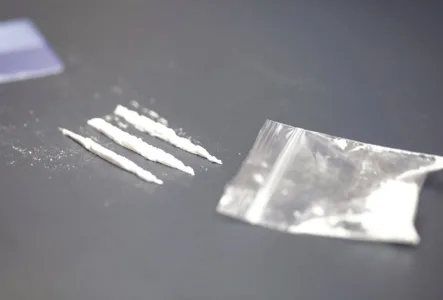
MENOMINEE -- One person has died and at least four others have overdosed in Menominee and Marinette counties since Monday night in what authorities believe is a series of incidents involving tainted cocaine.
According to the Menominee Police Department, all of the overdoses are believed to be connected, prompting a joint investigation involving multiple law enforcement agencies from Michigan and Wisconsin.
"These incidents have had a profound impact on the families, friends and others involved," MPD said in a news release.
While individuals have been detained in reference to this investigation, Menominee County Sheriff Darrin Kudwa cautioned that more of the tainted drug may have been distributed locally.
MPD said because the investigation is ongoing, the department is limited in what can be disclosed at this time. However, they hope to alert the community about the immediate and ongoing threat to prevent further harm.
"Officers and detectives are pursuing every available lead to ensure those responsible for distributing these dangerous drugs are held accountable," MPD stated in the release.
The agency encourages anyone struggling with substance use or anyone who knows someone at risk to seek help immediately.
"By working together through prevention, treatment, education and enforcement, we can help protect our community and prevent future tragedies," MPD concluded.
Anyone with information related to the recent incidents is asked to contact the Menominee County Sheriff's Office at 906-863-4441 or MPD at 906-8635568.
Tips can also be submitted anonymously via the Crime Stoppers of Marinette and Menominee County website or the P3 Tips app.
According to the Wisconsin Department of Health Services, drug checking technologies should be used on all drugs not purchased from a licensed pharmacy.
Unexpected and dangerous substances may still be present in a drug supply, even if they come from a trusted source.
However, the accuracy of drug checking technologies is not guaranteed. The safest practice is to avoid using drugs altogether, the WDHS stated.
To locate a nearby organization or vending machine offering free fentanyl test strips, go to the WDHS' map on their website, www.dhs.wisconsin.gov/aoda/drug-checking.htm.
While police have not yet identified what the tainted cocaine might be laced with, many community members have suggested keeping Narcan (naloxone) on hand to combat potentially fentanyl-laced cocaine overdoses.
Narcan can be life-saving if cocaine is tainted with opioids such as fentanyl or fentanyl-related substances, though it is important to note the medication has no effect on the cocaine itself. Cocaine is a stimulant and Narcan is an opioid antagonist.
This is not the first time suspected tainted cocaine overdoses have been seen in Michigan.
The Michigan Department of Health and Human Services reported that fentanyl-laced cocaine was linked to a deadly overdose surge in Kalamazoo County between April 12 and April 13, 2023, when 10 people were hospitalized and seven died.
"A rapid onset of overdoses can occur with exposure to fentanyl, particularly in individuals who do not know whether fentanyl is present or do not have a history of using opioids such as fentanyl," Kalamazoo County Medical Director Dr. William Nettleton said in 2023.
Fentanyl is a Schedule II controlled substance that is similar to morphine but about 100 times more potent, according to the DEA. Two milligrams of fentanyl can be lethal depending on a person's body size, tolerance and past usage.
The National Harm Reduction Coalition outlined these signs of an opioid overdose --
-- Loss of consciousness;
-- Unresponsive to outside stimulus;
-- Awake, but unable to talk;
-- Breathing is very slow and shallow, erratic or has stopped;
-- The skin tone turns bluish purple for lighter-skinned people, grayish or ashen for darker-skinned people;
-- Choking sounds or a snore-like gurgling noise (sometimes called the "death rattle");
-- Vomiting;
-- Body is very limp;
-- Face is very pale or clammy;
-- Fingernails and lips turn blue or purplish black; and
-- Pulse (heartbeat) is slow, erratic or not there at all.
"If someone is making unfamiliar sounds while 'sleeping' it is worth trying to wake them," NHRC added. "Many loved ones of users think a person was snoring when, in fact, the person was overdosing. These situations are a missed opportunity to intervene and save a life."
———
Sophie Vogelmann can be reached at 906-786-2021 or svogelmann@dailypress.net.