
Region endures another day of hazardous wildfire smoke
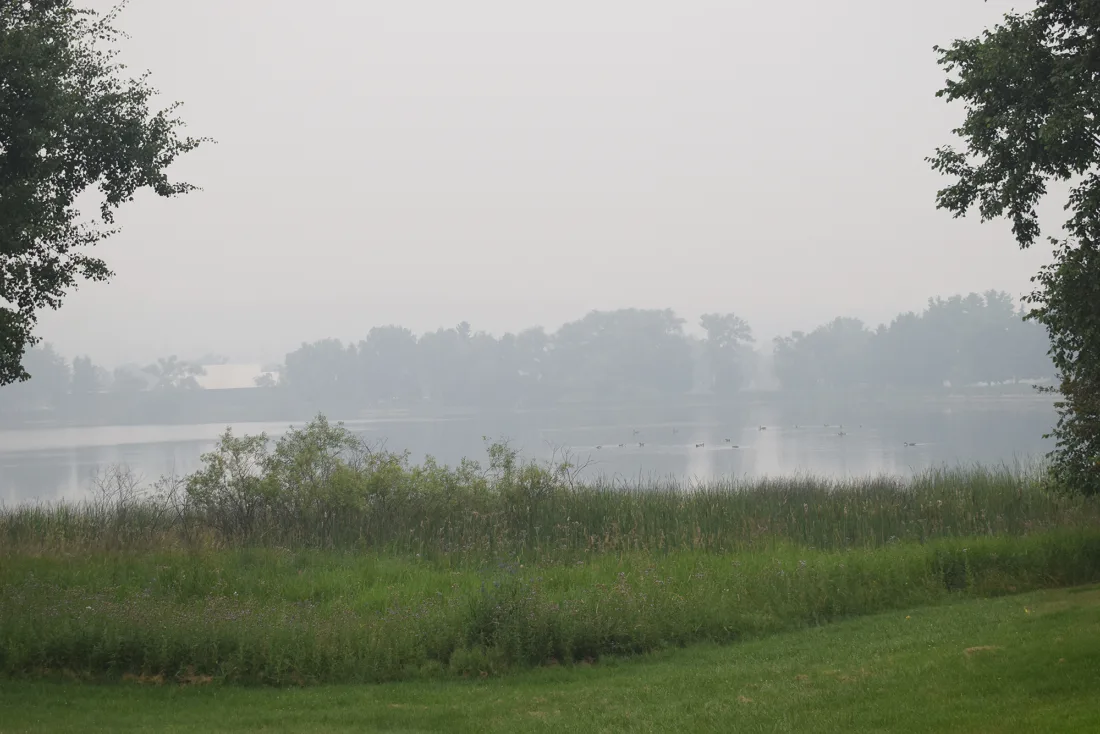
Canada geese forage as a thick haze of smoke from wildfires in Canada and Minnesota hangs over Crystal Lake in Iron Mountain. Meteorologists at the Michigan Department of Environment, Great Lakes and Energy extended the statewide air quality alert at least through today after a second day of heavy smoke left all of the Upper Peninsula’s Air Quality Index readings in the hazardous range, the highest level on the AQI scale. (Betsy Bloom/Daily News photo)
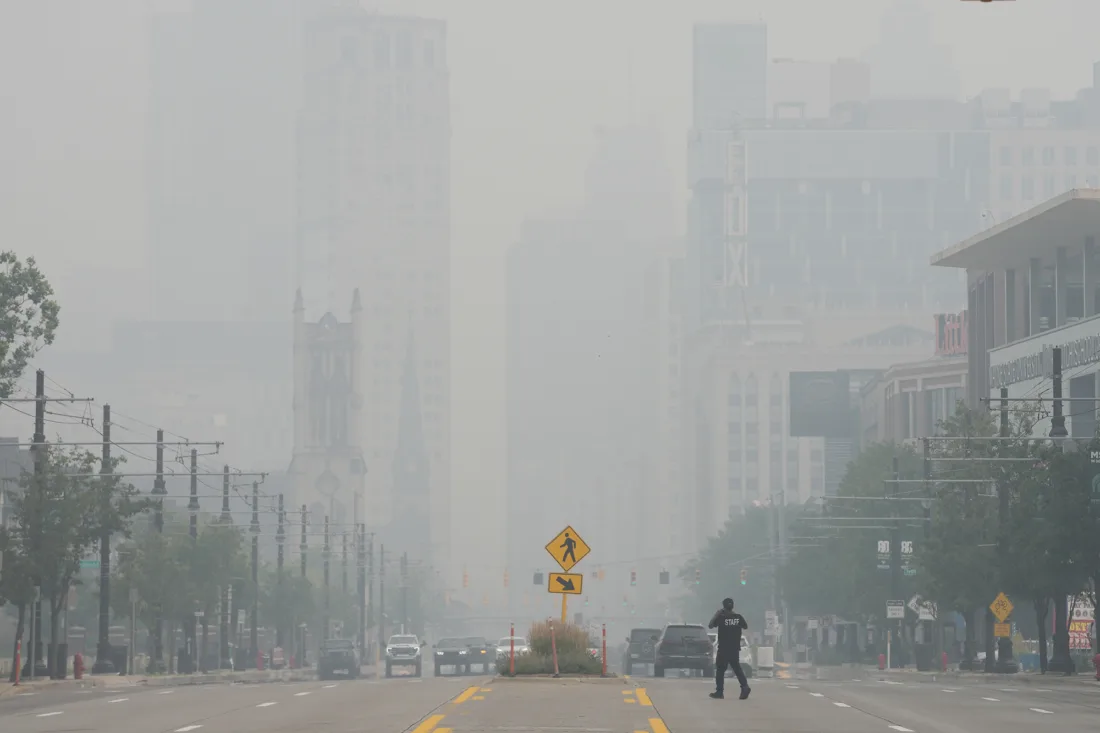
A pedestrian crosses the street Thursday as the Detroit city skyline is obscured during poor air quality due to smoke from Canadian wildfires. (AP Photo/Paul Sancya)
Canada geese forage as a thick haze of smoke from wildfires in Canada and Minnesota hangs over Crystal Lake in Iron Mountain. Meteorologists at the Michigan Department of Environment, Great Lakes and Energy extended the statewide air quality alert at least through today after a second day of heavy smoke left all of the Upper Peninsula’s Air Quality Index readings in the hazardous range, the highest level on the AQI scale. (Betsy Bloom/Daily News photo)
A pedestrian crosses the street Thursday as the Detroit city skyline is obscured during poor air quality due to smoke from Canadian wildfires. (AP Photo/Paul Sancya)
Trending
IRON MOUNTAIN -- The statewide air quality alert will remain in place at least through today as very unhealthy to hazardous conditions from wildfire smoke continue to grip the region.
Meteorologists at the Michigan Department of Environment, Great Lakes, and Energy extended the alert Thursday after a second day of heavy, acrid smoke from wildfires in Canada and northern Minnesota left all of the Upper Peninsula's Air Quality Index readings in the hazardous range, the highest level on the AQI scale.
"Observed smoke concentrations are unprecedented and far exceed the smoke events of 2023 and 2025," EGLE said in a statement posted on its MiAir website, https://air-egle.hub.arcgis.com/. "This can be blamed on the nearness of the fires (north of the Minnesota arrowhead region) and the shear number and size of fires in that area. A front dropped through the region on Wednesday, trapping and dragging that smoke southward to complete the picture."
The statement added, "Indications are that Friday will likely be a repeat of Thursday."
The AirNow monitor Thursday evening had a reading of 783 for the Iron Mountain area, well above the 301 and higher threshold for the "hazardous" designation, when EGLE advises everyone -- regardless of age or health -- remain indoors and reduce activity.
EGLE noted its smoke forecast model can only predict out 48 hours. "That model is currently showing improvements on Saturday, but it is likely that smoke will linger and recirculate for a while. The National Weather Service mentions the possibility of rain on Saturday, which would help. The Friday forecast will shed more light on that."
EGLE again recommended the public avoid strenuous outdoor activities, especially those with heart disease and respiratory conditions like asthma, and watch for symptoms that can include wheezing, coughing, chest tightness, dizziness or burning in nose, throat and eyes. Windows should remain closed to prevent smoke from getting indoors and, if possible, central air conditioning kept running with MERV-13 or higher-rated filters.
Almost all of Wisconsin on Thursday fell into the hazardous category as well, according to a map posted on the Wisconsin Public Radio website.
"As far as wildfire smoke is concerned, this is some of the worst air quality that we've measured at the DNR on record," Craig Czarnecki of the Wisconsin Department of Natural Resources' Air Management Program told WPR's Avery Martinez.
Czarnecki later added, "I know we've had wildfire smoke impacts the last few years, but this is really the highest concentration of smoke that we've seen in any of these episodes … I don't remember ever hitting hazardous (air quality rankings) ever."
Locally, the smoky conditions led the Dickinson County Road Commission to send about 18 employees home mid-day. Several workers already had stayed home sick and those who came in began to report problems within a few hours, said Jim Harris, road commission superintendent.
The DCRC's garage does not have air conditioning so must remain open when repairs and maintenance are being done, Harris explained. They originally had planned that morning to put in a full day, but it proved too difficult with the smoke.
"I had a lot of people not feeling good," Harris said. "You have to have a work environment that's safe … we erred on the side of caution."
That included crews that were out mowing and doing other work out in the field who "were in tough shape, too."
He noted the smoke Wednesday and Thursday came on the heels of the start of the week having temperatures hit 100 and the upper 90s, which took its toll on staff as well.
The DCRC will now come up with a plan to address what to do in the future when such conditions arise again, Harris said. Like others, he said while they've dealt with wildfire smoke in the past, he's never seen it this severe.
The wildfire smoke Thursday extended from the Great Lakes states to the East Coast, leaving major cities such as Minneapolis, Chicago and Detroit with some of the worst air quality in the world, according to news reports. Other cities affected enough for air quality alerts included Cleveland, Pittsburgh, New York, Philadelphia, Washington D.C. and Boston.
———
Betsy Bloom can be reached at 906-774-2772, ext. 85240, or bbloom@ironmountaindailynews.com.