
Remember when?
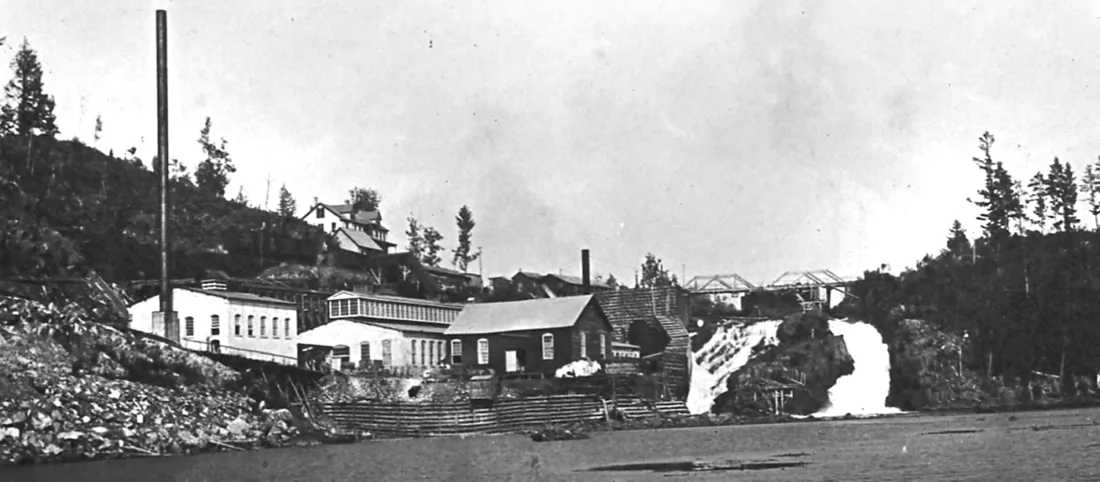
This 1891 photograph taken by Jorgen J. Eskil of Iron Mountain, a pioneer Menominee Iron Range photographer, shows the Badger Paper Company Mill on the Lower Quinnesec Falls of the Menominee River in Niagara, Wis. (Niagara Area Historical Society photo)
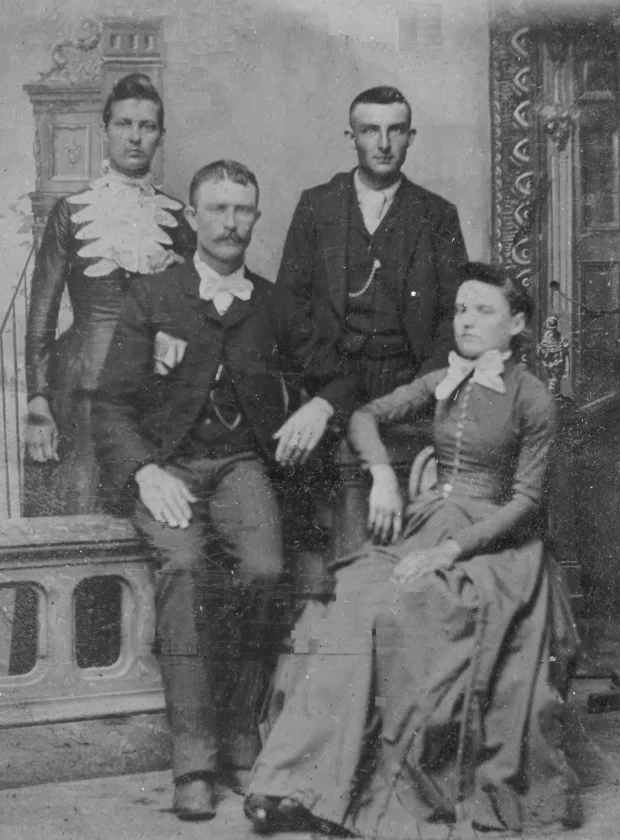
The family of Niagara, Wis., paper mill pioneer John Frambach Stoveken Sr. in 1892 — from left are Margaret (St. Mitchell) Stoveken, wife of John Charles Stoveken Jr.; John Stoveken Sr.; John Stoveken Jr.; and Elizabeth (Kohanek) Stoveken, second wife of John Stoveken Sr. (Niagara Area Historical Society photo)
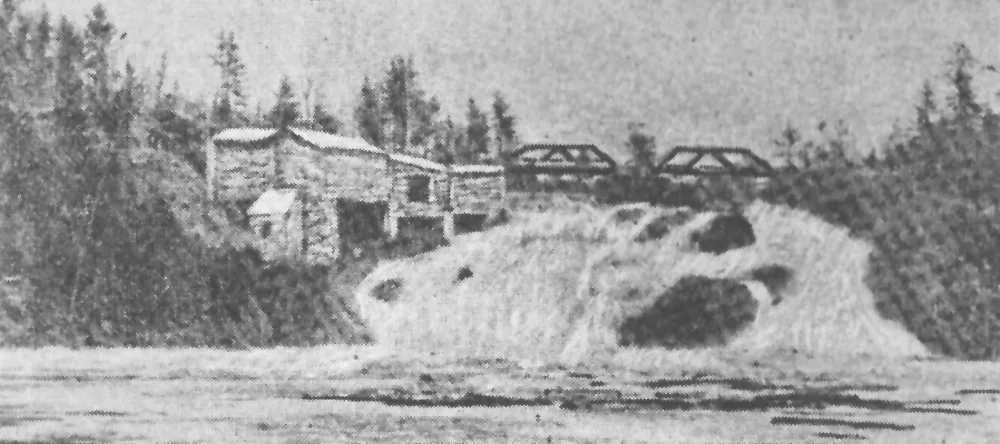
The first pulp mill built by John Stoveken Sr. in what became Niagara, Wis. (Niagara Area Historical Society photo)
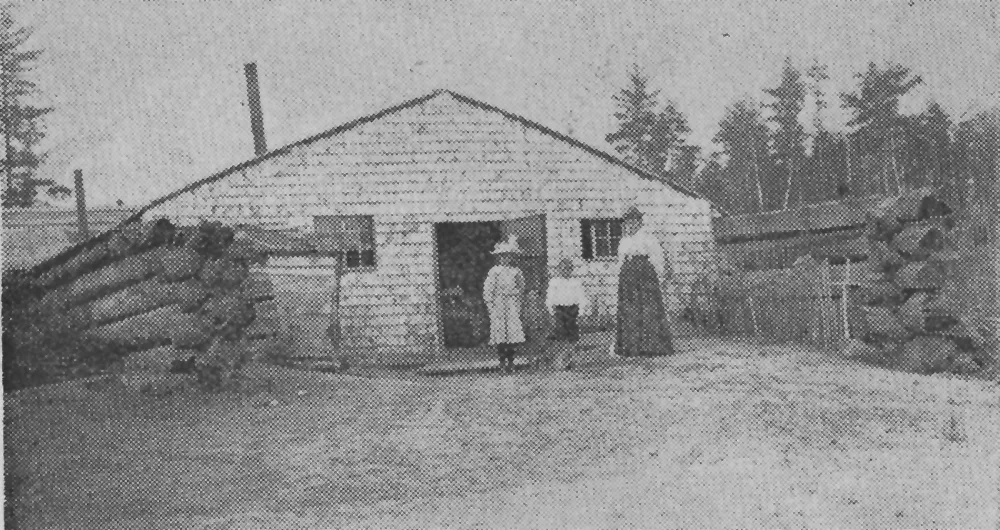
The home of John Stoveken Jr., on the Michigan side of the Menominee River. James Stoveken, who became postmaster in Pembine, Wis., is the taller boy in the photograph. The two others shown are unidentified. (Niagara Area Historical Society photo)
This 1891 photograph taken by Jorgen J. Eskil of Iron Mountain, a pioneer Menominee Iron Range photographer, shows the Badger Paper Company Mill on the Lower Quinnesec Falls of the Menominee River in Niagara, Wis. (Niagara Area Historical Society photo)
The family of Niagara, Wis., paper mill pioneer John Frambach Stoveken Sr. in 1892 — from left are Margaret (St. Mitchell) Stoveken, wife of John Charles Stoveken Jr.; John Stoveken Sr.; John Stoveken Jr.; and Elizabeth (Kohanek) Stoveken, second wife of John Stoveken Sr. (Niagara Area Historical Society photo)
The first pulp mill built by John Stoveken Sr. in what became Niagara, Wis. (Niagara Area Historical Society photo)
The home of John Stoveken Jr., on the Michigan side of the Menominee River. James Stoveken, who became postmaster in Pembine, Wis., is the taller boy in the photograph. The two others shown are unidentified. (Niagara Area Historical Society photo)
Trending
NIAGARA, Wis. -- This week's "Remember When?" -- provided by the Niagara Area Historical Museum -- looks back on how the arrival of a determined paper manufacturer marked the beginning of "life behind the mill."
When John Frambach Stoveken, born in New York in 1841, set out in search of new forests to supply Wisconsin's growing paper industry, he unknowingly laid the foundation for one of the region's earliest mill towns.
As plant manager of the Badger Paper Mill in Kaukauna, Wis., Stoveken faced a growing problem during the 1880s. The forests surrounding the Fox River had been heavily harvested to fuel steamboats, provide lumber for expanding farms, and supply the booming paper industry. The once-abundant stands of pulpwood were rapidly disappearing.
Determined to secure a new source of timber, Stoveken traveled north to the vast forests along the Menominee River.
In 1888, he purchased a large tract of land surrounding Lower Quinnesec Falls, including the valuable land and water power rights at the falls and some distance downstream on the Menominee River.
That investment marked the beginning of what would eventually become the community of Niagara.
"Stoveken was the visionary," Niagara Area Historical Museum Historian Rick Wagner said. "When he arrived, there was no town here -- only dense forests and the river. He recognized that the site had everything needed for a paper mill: an endless supply of timber, abundant water for the paper making process, and the power of the falls to drive the machinery."
Stoveken founded the Northern Pulp Company in 1888 and the mill was erected in Niagara in 1889, later renamed the Quinnesec Pulp Company.
He hired about a dozen workers. His son, John Stoveken Jr., assumed responsibility for managing the new groundwood pulp mill.
The mill began producing wood pulp that same year, using the same grinding technology first introduced at the Badger Paper Mill in Kaukauna a decade earlier. The finished pulp sheets were then shipped south to Kaukauna, where they were converted into finished paper.
With the mill operating, workers began arriving in what was still little more than wilderness.
"To house construction crews and mill employees, Stoveken built the Grand Hotel, one of the community's first buildings," Wagner said. "He also established a general store, post office, sawmill, and other essential service businesses which were needed -- even a couple of taverns."
Stoveken also served as the first postmaster at the known Quinnesec Falls post office and his son operated the general store.
These early businesses became the foundation of the new settlement, attracting additional families, merchants and tradesmen. What had begun as a pulp mill in the forest soon grew into the community that became Niagara, marking the true beginning of life behind the mill.
"Stoveken lived in a log cabin built on the Michigan side of the falls on the bluff," said Wagner, adding that "life behind the mill" refers to anything above the dam.
This is the first part in the "Life Behind the Mill" series with the Niagara Area Historical Society.
———
"Remember when?" appears every Wednesday in The Daily News. Those with suggestions or historical photographs they would like to submit can call Terri Castelaz at 906-774-2772, ext. 85241, or email to tcastelaz@ironmountaindailynews.com.