
Dickinson Flock cameras taken out of commission
Trending
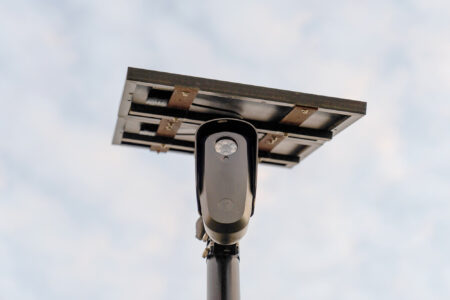
IRON MOUNTAIN -- A local drug enforcement agency that paid for a Flock camera system installed on local roadways is ending its contract with the provider, but an actual removal date hasn’t been determined, according to Dickinson County Sheriff Aaron Rochon.
In the meantime, the sheriff's department has gone ahead and "wrapped the cameras," Rochon told the county board Monday.
Several citizens at a July 13 board meeting protested the presence of automated license plate readers -- or Flock surveillance cameras -- that have been a subject of controversy in many communities. The ALPR purchase had been authorized by the executive board of the KIND drug enforcement team, using KIND forfeiture monies.
According to Rochon, who serves on the KIND board, the cameras had helped remove $50,000 worth of illegal drugs from the streets of the community.
In the wake of the July 13 protest, WLUC-TV reported last week that KIND had decided to end its contract with Flock and had disconnected the cameras. According to the report, KIND outlined its decision in a letter to the county and other local governments,
No copy of a letter has yet been made available by the county to The Daily News.
An online petition at change.org launched by Joshua Arnold of Iron Mountain proposes to ban Flock cameras and all other ALPRs in Dickinson County. As of Tuesday, it showed 568 signatures.
The petition says such cameras "create opportunities for misuse and overreach by authorities, infringe on personal privacy, and can lead to unwarranted surveillance of innocent citizens going about their daily lives."
Arnold addressed the county board Monday, saying he appreciated "the positive outcome" but also seeking a policy to prevent a reintroduction.
Bob Simon of Vulcan suggested further rules might make it possible for law enforcement to use the cameras appropriately.
State Sen. Jim Runestad, R-White Lake, recently introduced legislation to restrict the use and management of data collected by ALPRs.
Senate Bill 1131 would require a warrant before the government could access ALPR databases unless an active criminal investigation, missing person case or stolen vehicle investigation is taking place. The legislation would also require license plate data to be automatically deleted after 14 days if it is not being used for those purposes.
According to Bridge Michigan, ALPRs are deployed across more than 125 municipal and county law enforcement agencies in the state.
Flock Safety's 2025 impact census covering 700 law enforcement agencies showed that the technology assisted in solving 20% of cleared cases, helped locate more than 10,000 missing persons, and contributed significantly to stolen vehicle recoveries across the country.
According to the American Civil Liberties Union, about 80,000 to 100,000 Flock cameras are currently installed across the U.S. The ACLU, which describes the technology as "creepy," says it's been working for more than a decade to increase transparency and accountability for how ALPR cameras are being used.
The ACLU reports that Flock provides one of the most widely used ALPR systems, while others include Axon, Vigilant Solutions (a subsidiary of Motorola Solutions), Genetec, PlateSmart, Innova Systems, Rekor, ELSAG, Perceptics and Jenoptik.
———
Jim Anderson can be reached at 906-774-2772, ext. 85226, or janderson@ironmountaindailynews.com.