
Trending
IRON MOUNTAIN -- The frequency of false alarms is prompting Iron Mountain officials to seek an ordinance forcing businesses to pay for repeated activations.
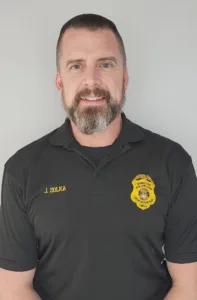
According to a report from Director of Police and Fire Services Jeff Solka, the fire department responded to 55 false alarms in 2025, including 24 at one hotel alone. Through July 31 of this year, that same business has had 16 false alarms.
Police, meanwhile, responded to 129 false alarms during 2025, with one business having 18.
"Responding to this many false alarm calls puts unnecessary work load on personnel as well as unnecessary liability on the city for operating vehicles in an emergency response, when it is found that an emergency response was not needed," Solka said in a memo to the city council
Repeated false alarms at businesses are typically caused by repeated employee error and in some cases neglected maintenance or malfunctioning equipment, Solka said.
Currently, the city has a fee of $35 per run after three for police false alarms, but no ordinance to allow for an order of payment.
Acting on Solka's recommendation, the city council Monday directed Attorney Gerry Pirkola to draft an ordinance to allow billing.
The suggested scale for police responses is $50 for the fourth false alarm, $100 for the fifth, and $200 for the sixth and any subsequent false alarms. For the fire department, it's $100 for the fourth, $200 for the fifth and $400 for the sixth and subsequent runs.
Solka noted that false alarm billing should not include calls related to using 911 service, such as accidental calls, misdials, or automatic calls from cell phone emergency crash detections.
Exceptions could also be made for weather events and other special circumstances, Residential alarms would be exempt from billing, apart from apartment buildings with a central alarm system and more than four units, Solka suggested.
Similar ordinances aimed at correcting mechanical and operational alarm system deficiencies are in place in other Michigan municipalities, including Escanaba and Ironwood in the Upper Peninsula.
In other action, the city council:
-- Learned that a $7.63 million U.S. Department of Agriculture Rural Development loan for sewer improvements is scheduled to close Sept. 11. The loan will help finance an ongoing $18.4 million sewer and water project that Bacco Construction Co. began last fall. The water portion is funded by a 40-year Michigan Drinking Water State Revolving Fund loan of $10.64 million at 2% interest, plus a $2.666 million grant. The USDA 40-year loan has a projected interest rate of roughly 3%.
-- Authorized Bacco to repair 11 manhole covers on South Stephenson Avenue at an estimated cost of $1,000 to $1,500 each. The city is responsible for four sanitary sewer manholes, while the Michigan Department of Transportation can be billed for seven storm sewer manholes. Bacco will use a Whirlygig riser/collar system to create a precise fit with the road grade.
-- In response a question from council member Ken Clawson, heard City Manager Jordan Stanchina report the first round of City Park deer tuberculosis tests is now planned for September, rather than August. The tests are in preparation for transferring the deer to the DeYoung Family Zoo in Menominee County. Doing the tests in September will allow for antler removal at the same time, Stanchina said. Two TB tests will be required, conducted four months apart, pushing the transfer of deer into January at the earliest. Ingalls veterinarian Dr. Barry Wehner will oversee the tranquilization and testing of the deer.
-- Thanked the Kiwanis Club of Iron Mountain-Kingsford for organizing a cleanup at the 25 Location neighborhood park on Forest Street.
———
Jim Anderson can be reached at 906-774-2772, ext. 85226, or janderson@ironmountaindailynews.com.