
Remember when?
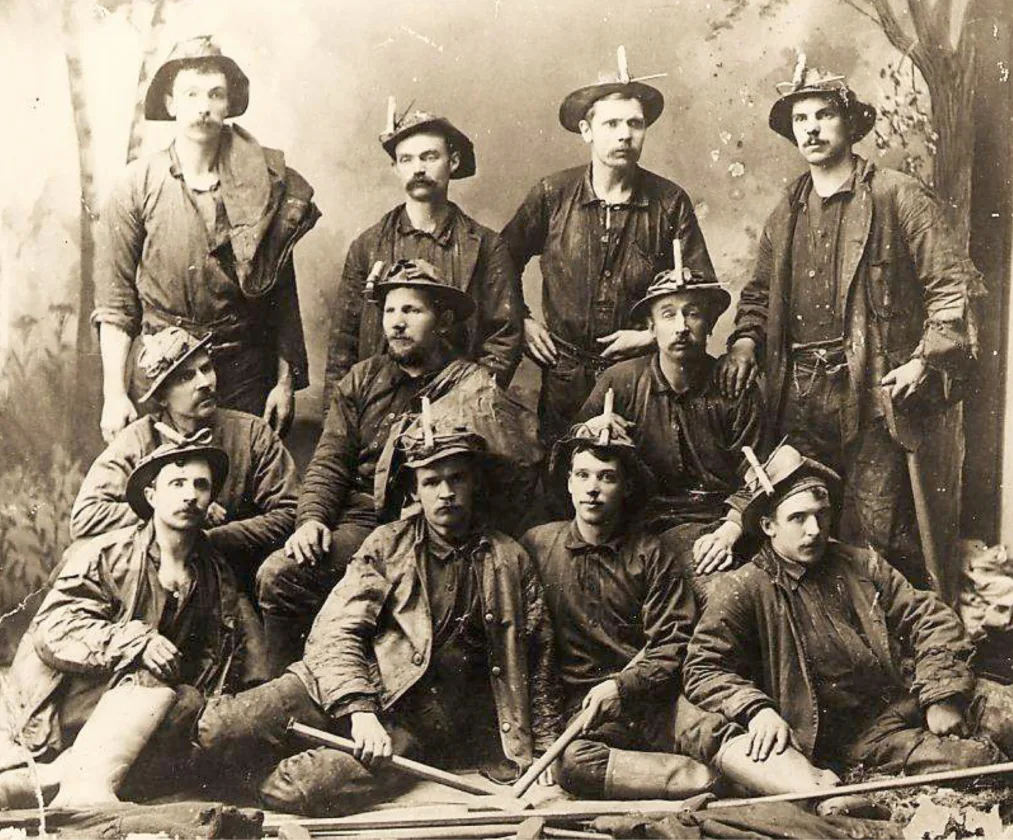
At 3 p.m. Thursday, Oct. 28, 1894, 12 miners in Iron Mountain’s Pewabic Mine were entombed while at work on the fourth level when a room above them collapsed. One of the miners, Peter Gabardi, was fatally crushed by the falling rock. However, these 11 miners were finally rescued between 6 and 7 a.m. Saturday, having been entombed for more than 40 hours. Only two men in the back row have been positively identified: William Beard, at the extreme left, and Peter Hallberg, third from the left. The names of the remaining men are Stephen Allen, John Forrell, Samuel Husband, George Marcous, William Oliver, Thomas Penglase, George Rickard, John Thomas and George Wilcox. Note the “oilers” worn due to wet mining conditions and also the miner’s candlesticks on their hats which were used to light the individual miner’s work area within the mine. (Gene Derwinski/Dick Ferris, via the Menominee Range Historical Museum)
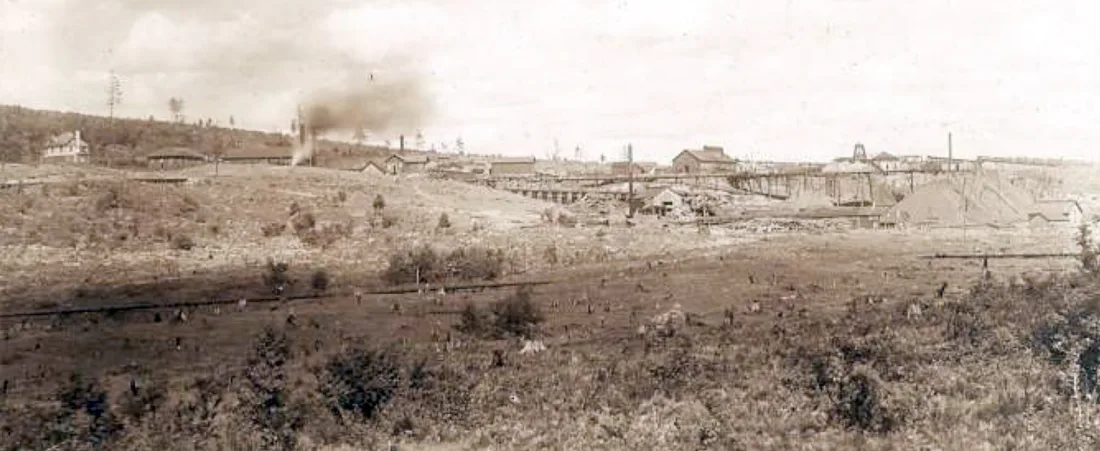
This panoramic view of the Pewabic Mine, facing north, was taken by Jorgen J. Eskil, pioneer Menominee Range photographer, between 1890 and 1900. The mining superintendent’s house is visible at the far left. (Menominee Range Historical Museum)
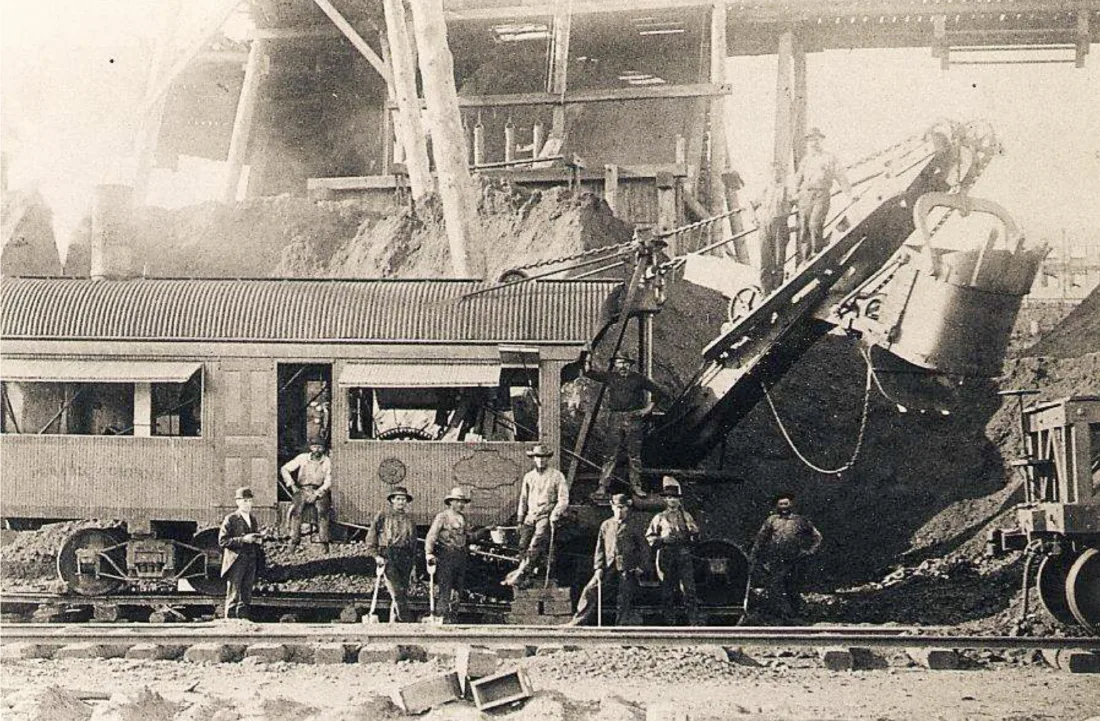
This photo shows the Pewabic Mine steam shovel with a crew of workers, loading iron ore into railroad cars for shipment. The photograph was probably taken by Jorgen J. Eskil, Menominee Range pioneer photographer, in 1893. (Menominee Range Historical Museum)
At 3 p.m. Thursday, Oct. 28, 1894, 12 miners in Iron Mountain’s Pewabic Mine were entombed while at work on the fourth level when a room above them collapsed. One of the miners, Peter Gabardi, was fatally crushed by the falling rock. However, these 11 miners were finally rescued between 6 and 7 a.m. Saturday, having been entombed for more than 40 hours. Only two men in the back row have been positively identified: William Beard, at the extreme left, and Peter Hallberg, third from the left. The names of the remaining men are Stephen Allen, John Forrell, Samuel Husband, George Marcous, William Oliver, Thomas Penglase, George Rickard, John Thomas and George Wilcox. Note the “oilers” worn due to wet mining conditions and also the miner’s candlesticks on their hats which were used to light the individual miner’s work area within the mine. (Gene Derwinski/Dick Ferris, via the Menominee Range Historical Museum)
This panoramic view of the Pewabic Mine, facing north, was taken by Jorgen J. Eskil, pioneer Menominee Range photographer, between 1890 and 1900. The mining superintendent’s house is visible at the far left. (Menominee Range Historical Museum)
This photo shows the Pewabic Mine steam shovel with a crew of workers, loading iron ore into railroad cars for shipment. The photograph was probably taken by Jorgen J. Eskil, Menominee Range pioneer photographer, in 1893. (Menominee Range Historical Museum)
Trending
IRON MOUNTAIN -- This week's "Remember when?" provides some details on the Pewabic Mine that was active on Iron Mountain's east side more than a century ago.
The Pewabic Mine was established east of Millie Hill by Dr. Nelson P. Hulst in 1887 and was in operation until about 1918, according to information from the Menominee Range Historical Museum.
It was one of the largest-producing mines in the area and second in number of miners during its years of operation, employing more than 500 in 1893. It produced about 9.4 million tons of iron ore and had a depth of about 941 feet. The mine was reached by railcar through a series of switch backs up the mountain from downtown Iron Mountain.
On Oct. 28, 1893, near the height of mining operations, 12 miners working on level four were entombed when the room above them collapsed. One miner, Peter Gabardi, was crushed to death by falling rocks. The other miners were rescued after 40 hours trapped in the mine, according to the museum.
The first photo, provided by the museum and credited to Gene Derwinski and Dick Ferris, shows the miners who survived in the Pewabic Mine. Only two men in the back row of this photograph have been positively identified: William Beard, at the extreme left, and Peter Hallberg, third from the left. The names of the remaining men are Stephen Allen, John Forrell, Samuel Husband, George Marcous, William Oliver, Thomas Penglase, George Rickard, John Thomas and George Wilcox. Accounts of the accident in The Range-Tribune and The Current had some confusion over some of the names.
Note the "oilers" worn due to wet mining conditions and also the miners' candlesticks on their hats, which were used to light the individual miner's work area within the mine.
Years later, the mine was imploded to collapse the shafts.
The second photo, also provided by the museum, is a panoramic view of the Pewabic Mine, facing north, taken between 1890 and 1900 by Jorgen J. Eskil, pioneer Menominee Range photographer. The mining superintendent's house is visible at the far left.
The third photo, again from the museum, shows the Pewabic Mine steam shovel with a crew of workers, loading iron ore into railroad cars for shipment. The photograph was probably taken by Eskil as well, in 1893.
———
"Remember when?" appears every Wednesday in The Daily News. Those with suggestions or historical photographs they would like to submit can email Terri Castelaz at tcastelaz@ironmountaindailynews.com.