Copperwood Mine foes sue to block $50M grant for project near Lake Superior
Trending
(This story was originally published by Bridge Michigan, a nonprofit and nonpartisan news organization. Visit the newsroom online: bridgemi.com.)
Opponents are going to court in hopes of blocking a controversial $50 million grant Michigan awarded in August to fund construction of a Canadian company's copper mine in the western Upper Peninsula.
The money was approved by the Michigan Strategic Fund after several failed attempts by economic developers and regional lawmakers to subsidize the Copperwood Mine project with taxpayer money.
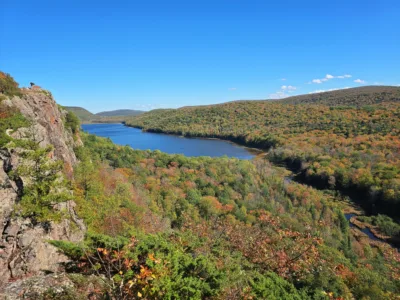
Supporters have said the mine will boost the local economy over its 11-year lifespan. Critics point to the site's proximity to Lake Superior, the North Country Trail and Porcupine Mountains Wilderness State Park.
The filing Monday in Ingham County Circuit Court by the grassroots Protect the Porkies questions oversight of the public funding, with the $50 million coming from the also-controversial Strategic Outreach and Attraction Reserve, or SOAR, fund.
The large-scale development fund has been defunded by lawmakers, who lost interest after the high-dollar spending yielded limited job growth and local backlash.
Lawmakers authorized the money for the Copperwood award for an unnamed company in 2022. Other SOAR votes were promised to go through a public approval before lawmakers after the strategic fund vote.
But with the Copperwood award, the Michigan Economic Development Corp. said the funds went unused, making them available for the mine funding. State officials say the earlier appropriation means that the award faces no further approval by legislators.
That decision demands accountability, Tom Grotewohl, executive director of Protect the Porkies, told Bridge Michigan.
"Regardless of how one feels about the proposed Copperwood Mine, all should acknowledge the (strategic fund board) has set an extraordinarily dangerous precedent for future handouts of public money to foreign companies beyond the purview of elected lawmakers," Grotewohl said.
MEDC spokesperson Danielle Emerson said the department had no comment on the filing.
Copperwood is planned by Highland Copper, which approached the state for the subsidy in 2023. It recently pegged construction costs at $450 million and has said 380 people will be hired at an average wage of $80,000.
In early 2024, the strategic fund board tabled a vote on a $50 million after members raised questions about whether Highland Copper had enough money or any other investors to see the project through.
After learning that the state would be the first investor, the board came back two months later with guardrails on the funding. Still, the request never made it through a state Senate appropriations committee vote.
Two attempts to add $50 million to state budget earmarks also did not reach the final budget.
The funding approved in August authorized about $45 million to Highland Copper to be used for reimbursements on construction and site improvement.
Another $5 million was awarded to the Gogebic County Road Commission to fund some of the road updates the project requires in Wakefield Township.
Several U.P. lawmakers spoke at the strategic fund board meeting in support of the funding.
Marty Fittante, CEO of InvestUP, an economic development group, described the project as "the most important economic opportunity" for the entire Upper Peninsula.
But a few dozen opponents also spoke ahead of the vote. They included representatives from statewide environmental groups. Several tribes retain rights to use the land around Copperwood, and many signed a letter sent to the state in 2025 against the project.
"Indigenous people have seen this pattern before: decisions about our lands and waters are made somewhere else, the economic benefits are promised to others, and our communities are expected to live with the consequences," said Anahkwet "Guy" Reiter of the Menominee Nation.
Barry O'Shea, CEO of Highland Copper, described the state grant as foundational toward attracting financing and capital toward construction and mine operation.
He said he's hoping for a $250 million loan from the Export-import Bank of the United States and federal grants to help cover the remainder.
"You truly can't understate the importance of this to our company," O'Shea said after approval on an investor-focused video.
The state grant is "a key first step as we think about the broader project financing," he added. "It gives us incredible strength as we go into those next steps."
The state Attorney General's office also has been asked to review the funding, a spokesman has told Bridge. No update was available Tuesday.