
Energy developer plans natural gas plants in eastern Wisconsin
Trending
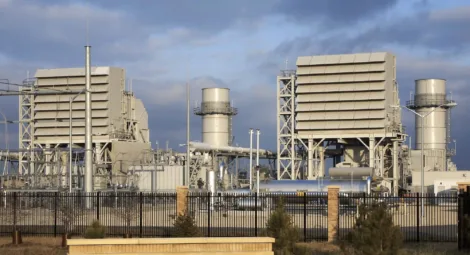
A Chicago-based energy developer is planning to build two new large natural gas power plants in eastern Wisconsin, but the company has not yet said how much the project will cost.
Invenergy filed an engineering plan for a pair of gas plants with the state Public Service Commission on Aug. 20 and plans to file an application this fall. They would be located southwest of Appleton, either in the town of Brillion or the town of Woodville in Calumet County.
The plants, named the Forest Junction and Union Depot Energy Centers, would be able to generate a combined 1.9 gigawatts, or 1,900 megawatts. For context, 1 gigawatt can power 100 million LED lightbulbs.
The Forest Junction plant would be able to generate up to 1.2 gigawatts and "primarily operate during periods of peak electrical demand," while the Union Depot plant would be able to generate up to 750 megawatts and would run continuously, according to the engineering plan.
Invenergy did not disclose the project's cost in its initial filing to the Public Service Commission. The company hopes to bring the plants online by 2031.
The project has drawn support from labor unions whose workers would build the plants, and opposition from environmental groups who are concerned about investments in new fossil fuel generation.
In a statement, Daniel Birmingham, the project's lead developer, said Invenergy is trying to help meet growing energy demand in Wisconsin through both natural gas and renewable energy developments.
"This project will power homes, businesses and critical infrastructure and contribute to a more reliable, affordable, cleaner electricity mix -- in addition to providing a significant economic boost to Calumet County and the Fox Valley region as a whole," he said.
A draft report released by state utility regulators this summer found electricity demand in Wisconsin could increase by more than 40% by 2032, driven by hyperscale data centers.
The same report projects natural gas will account for 50 percent of the state's energy generation by 2032, up from 36 percent in 2024. Meanwhile, coal is projected to decline from 31 percent of the state's generation to just 3 percent.
"We know we need to transition off of fossil fuels as fast as possible to protect our climate and our health," said Ciaran Gallagher, energy and air manager for the nonprofit Clean Wisconsin. "Yet, this projection to generate about 50 percent of our electricity with gas just shows we're doubling down on a resource that we know still emits harmful air pollution and greenhouse gasses."
In addition to the proposal in Calumet County, Invenergy has also filed proposals with regulators to build new natural gas plants in Kenosha and Walworth counties, able to generate a combined roughly 1.5 gigawatts.
We Energies filed applications to purchase those plants earlier this year. According to the utility's applications, the combined cost of acquiring and constructing those plants was more than $2 billion.
We Energies declined to say whether it planned to purchase the Calumet County plants, though the Forest Junction project was included in a spreadsheet the utility filed with regulators in its ongoing rate case. It had a projected in-service date of December 2031.
Brendan Conway, a spokesperson for We Energies, said in a statement that the utility would "have more information available about the Forest Junction project in regulatory filings in the coming months."
Gallagher said Invenergy's proposal will face less scrutiny from the Public Service Commission than one from a regulated utility because the company is a third-party developer. She called it a "loophole" in the way the state regulates utilities.
"Invenergy doesn't have to demonstrate that there is a need for these massive gas plants, and we know that Invenergy is going to turn around and sell it to a utility, most likely We Energies," she said. "They are going to be able to build this plant that will be polluting Wisconsin air without a true regulatory scrutiny."
While the company's engineering plan says the plant will use modern emissions controls, Gallagher said there are no emissions control measures that can "stop all air pollution." She said those controls can be meaningful, but they don't "address the greenhouse gas emissions that contribute to climate change."
Gallagher said she was especially concerned that the 750-megawatt facility was designed to run continuously.
"That's just more air pollution that harms human health, exacerbates asthma incidents, damages lung function (and) causes premature mortality," she said.
Although environmental groups generally oppose natural gas projects, trade unions generally support energy developments, regardless of generation type.
Steve Kwaterski, a spokesperson for the Wisconsin Laborers District Council, said Invenergy's natural gas proposal in northeast Wisconsin was "exciting."
He said the project would create 550 jobs at peak construction, with many of those jobs going to union members.
"These projects not only are an investment in bolstering our state's power grid by providing a steady and efficient, reliable supply of power," Kwaterski said. "But they also serve as a catalyst for workforce development to help us attract additional folks into the trades, as well as putting our existing members to work building this critical energy infrastructure."