
Plan to repeal national forest ‘roadless rule’ under scrutiny
Public comment period ends Sept. 21
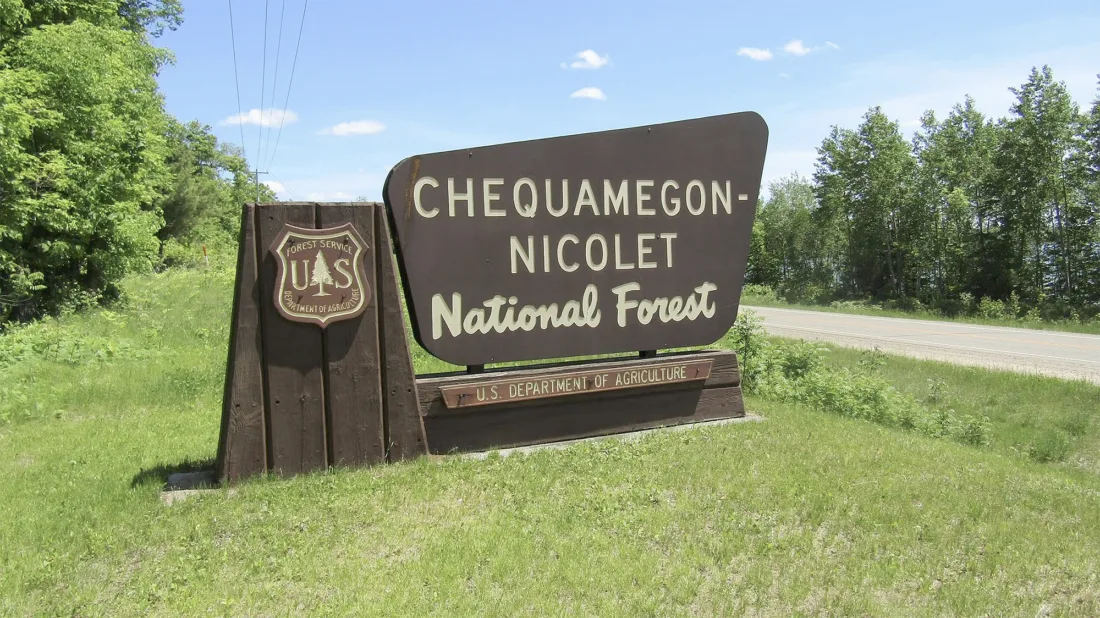
A sign at one of the entrances to the 69,000-acre Chequamegon-Nicolet National Forest in northern Wisconsin. (Rob Mentzer/Wisconsin Public Radio)
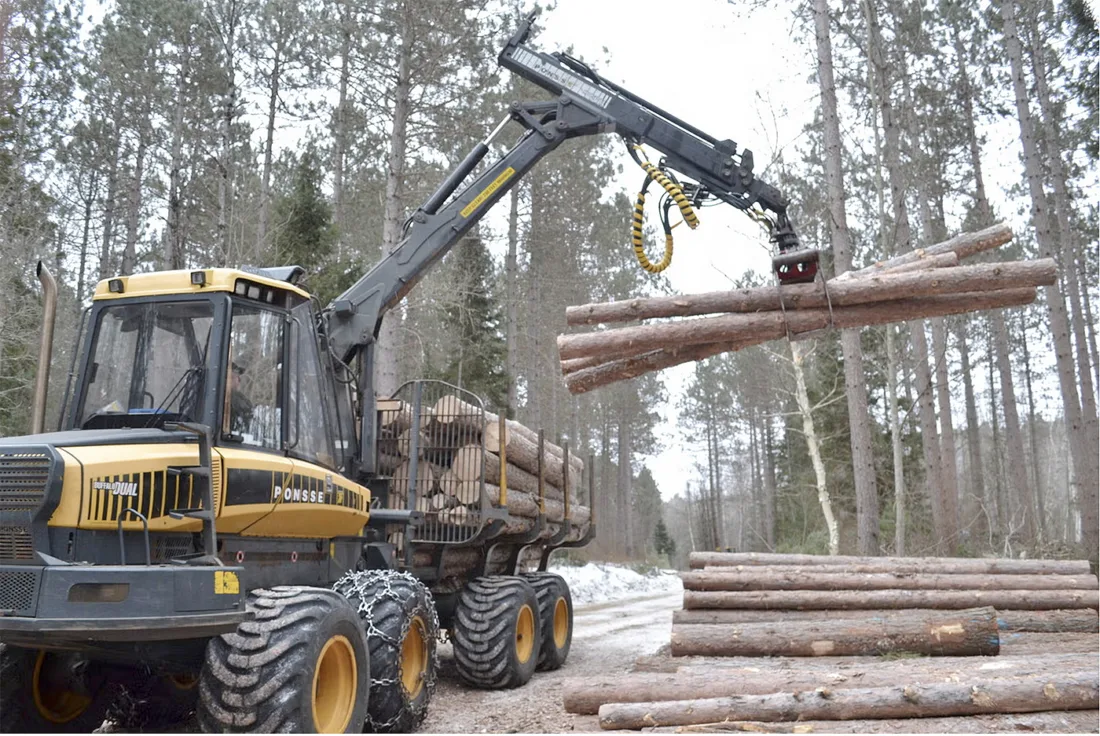
A forwarder stacks fresh-cut logs on the side of a timber road in the Chequamegon-Nicolet National Forest in northern Wisconsin. (Glen Moberg/Wisconsin Public Radio)
A sign at one of the entrances to the 69,000-acre Chequamegon-Nicolet National Forest in northern Wisconsin. (Rob Mentzer/Wisconsin Public Radio)
A forwarder stacks fresh-cut logs on the side of a timber road in the Chequamegon-Nicolet National Forest in northern Wisconsin. (Glen Moberg/Wisconsin Public Radio)
Trending
The Trump administration announced a proposal last month to remove a Forest Service rule that protects millions of acres of National Forest land throughout the United States from commercial logging and road building.
Put in place in 2001, the Roadless Area Conservation Rule applies to land that includes 69,000 acres of the Chequamegon-Nicolet National Forest in northern Wisconsin, and upwards of 80,000 acres in neighboring states.
The Forest Service argues the rule is preventing effective fire management in these areas, and that repealing it will offer land managers more flexibility.
"Rescinding the rule allows managers to address local watershed, economic, and wildfire-risk conditions within the same planning framework as the rest of the National Forest System and allows response to changing conditions," Steven Bekkerus, public affairs officer for the Chequamegon-Nicolet National Forest office, said in a statement to WPR.
A 30-day public comment period on the current proposal and the draft environmental impact statement is now open until Sept. 21. Environmental and conservation groups across the Midwest are asking the Trump Administration to extend that window.
Wisconsin conservationist Mike Dombeck was Forest Service chief in 2001 when the Roadless Rule was put into place and was instrumental in making it happen.
At the time, the Forest Service had a more than $8 billion backlog of road maintenance on the hundreds of thousands of miles of roads in the National Forests.
"So I asked myself, as chief, 'What would a private landowner do? What would a timber company do if they were faced with this tremendous liability, this tremendous cash flow issue?' They'd probably stop building roads, or at least evaluate the system," Dombeck told WPR's "Wisconsin Today."
With the rule, the Forest Service halted construction on new and existing roads in the designated areas. It includes some flexibility for building roads to respond to environmental hazards, and to protect public health and safety in cases of emergency, like fighting wildfires.
"This is a very conservative policy," Dombeck said. "We're not spending money building a road system that creates a long-term liability, it keeps options open for future generations and it's good conservation, ensuring that our few last remaining wild places in the United States will be kept that way."
The rule would loosen federal restrictions on logging activity in Roadless areas. But Henry Schienebeck, executive director of the Great Lakes Timber Professionals Association, said that demand for timber isn't high enough to drive logging in those areas.
"Right now we don't see rescinding the roadless rule having an impact on our industry," Schienebeck said. "Timber availability is there. We've got to have markets for it."
But, he said the situation is different out west.
"We would support it from the perspective of the western states that are seeing so many fires and seeing so much wood destroyed and burnt," Schienebeck said.
But Schienebeck acknowledged new roads built by logging operations in the non-Roadless areas of the Chequamegon-Nicolet National Forest are often barricaded off after a timber sale and not maintained. Schienebeck said he hears disappointment from hunters and anglers who wish to use them.
"A lot of it has to do with the amount of money the Forest Service has to do maintenance on those roads to keep them up," Schienebeck said.
Some groups that aim to expand recreation on public lands say that rescinding the rule makes those areas accessible for more people to enjoy.
But Aaron Hebeisen, field operations coordinator for upper midwestern states at Backcountry Hunters and Anglers, thinks that remoteness is what draws people to those areas.
"By removing the possibility of more motorized access, it's going to provide a better experience for the non-motorized user," Hebeisen said.
Hebeisen said that, in his experience, Roadless areas are still relatively accessible. Getting to them usually involves driving to a trailhead and hiking on foot. And some Roadless areas in the Chequamegon-Nicolet National Forest still have trails that can be used by off-highway vehicles and bikes.
"The existing roadless rule is really a great middle ground. We view that as something that offers the broadest level of opportunity," Hebeisen said.