
Remember when?
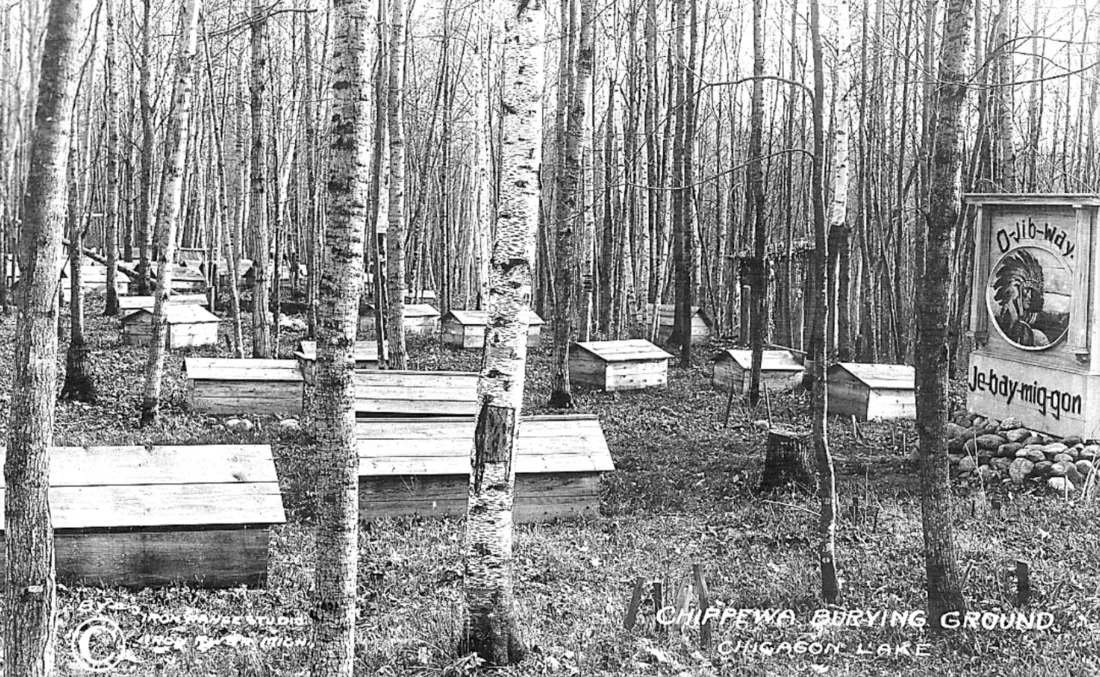
This unused real photo postcard view, provided by William J. Cummings, is identified as “Chippewa Burying Ground, Chicagon Lake,” was taken and copyrighted by the Iron Range Studio, Iron River. It probably dates from the 1920s and shows the Chippewa or Ojibwa Indian burial ground with covered graves in a birch woods. The wooden sign at right reads “O-jib-way Je-bay-mig-gon” and has a painted head of a Native American with a feathered headdress. The funeral ceremony was attended by friends and relatives and was conducted by a Mide priest, who talked to the deceased and offered tobacco to the spirits.
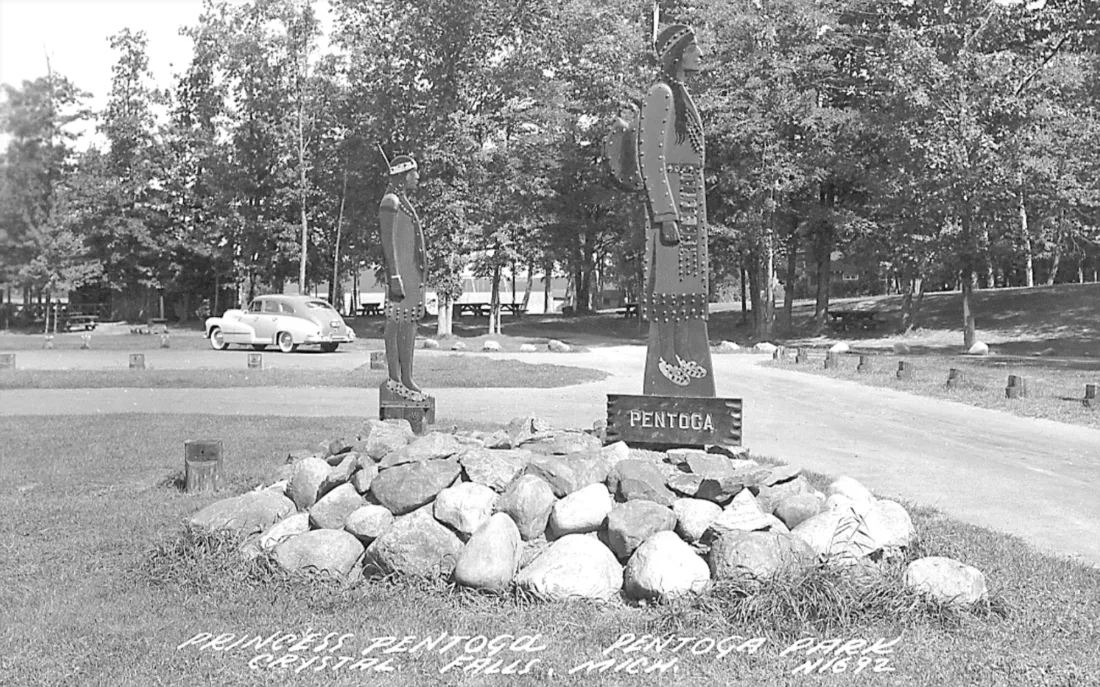
A postcard, dated between 1940-50, that shows the entrance to the park and is identified as “Princess Pentoga, Pentoga Park, Crystal Falls, Mich.” The back of the postcard has a written date of June 13, 1951. It was provided by William J. Cummings.
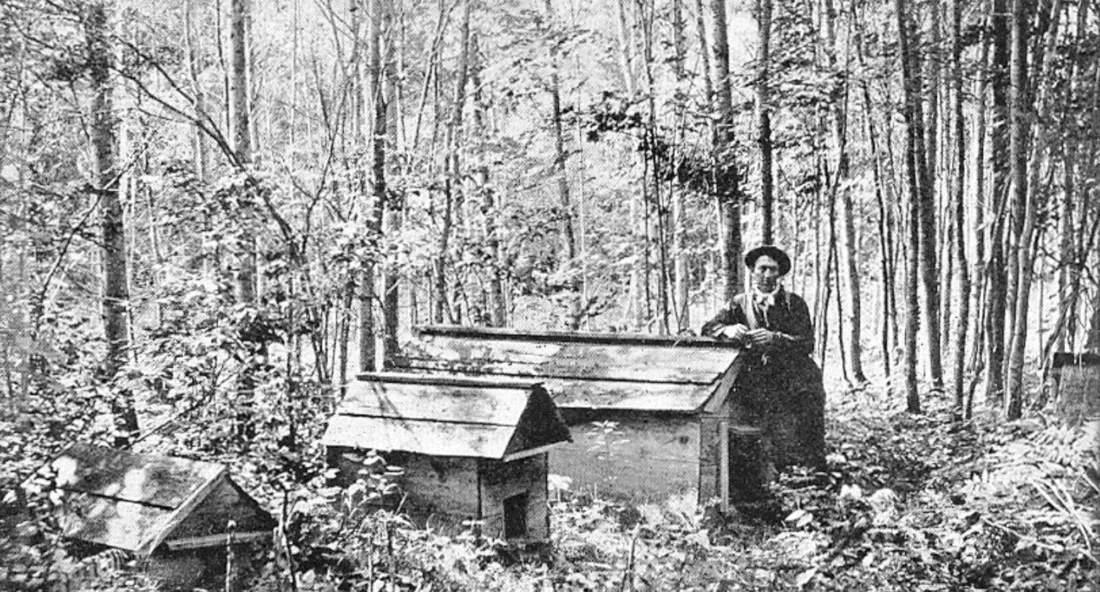
This black-and-white halftone postcard view is identified as “Indian Burying Ground, Crystal Falls, Mich.” Postmarked Crystal Falls, Oct. 23, 1908, shows three wooden burial “houses” with a man in a hat standing to the right of the largest burial “house” in a dappled woodland setting at Pentoga, Chicagon Lake. According to Ojibwa funeral customs, upon death the corpse was washed, groomed, dressed in fine clothing, and wrapped in birchbark before burial in a shallow grave. Following death, the soul of the deceased was believed to journey westward for four days to an afterlife in the sky according to William J. Cummings.
This unused real photo postcard view, provided by William J. Cummings, is identified as “Chippewa Burying Ground, Chicagon Lake,” was taken and copyrighted by the Iron Range Studio, Iron River. It probably dates from the 1920s and shows the Chippewa or Ojibwa Indian burial ground with covered graves in a birch woods. The wooden sign at right reads “O-jib-way Je-bay-mig-gon” and has a painted head of a Native American with a feathered headdress. The funeral ceremony was attended by friends and relatives and was conducted by a Mide priest, who talked to the deceased and offered tobacco to the spirits.
A postcard, dated between 1940-50, that shows the entrance to the park and is identified as “Princess Pentoga, Pentoga Park, Crystal Falls, Mich.” The back of the postcard has a written date of June 13, 1951. It was provided by William J. Cummings.
This black-and-white halftone postcard view is identified as “Indian Burying Ground, Crystal Falls, Mich.” Postmarked Crystal Falls, Oct. 23, 1908, shows three wooden burial “houses” with a man in a hat standing to the right of the largest burial “house” in a dappled woodland setting at Pentoga, Chicagon Lake. According to Ojibwa funeral customs, upon death the corpse was washed, groomed, dressed in fine clothing, and wrapped in birchbark before burial in a shallow grave. Following death, the soul of the deceased was believed to journey westward for four days to an afterlife in the sky according to William J. Cummings.
Trending
This week's "Remember when?" focuses on Pentoga Park, along County Road 424 in Iron County. The park has been owned by the county since the 1920s and is home to a tribal burial site.
According to an inscription at the park, it was the site of the main headquarters where bands of the Ojibwe or Anishinaabe gathered. The park is named for the wife of Meshkawaanagonebi, also known as Chief John Edwards. Pentoga was the mispronunciation of Biindige, shortened from Biindigeyaasinokwe. U.S. surveyor Guy H. Carleton discovered the village, cemetery and campground in 1851.
Many of the tribes in the area were described as being friendly and engaged in trading with European settlers in the area. In 1891, Chief Edwards moved to Lac Vieux Desert, near present-day Watersmeet, leaving the burial grounds.
Iron County engineer Herbert Larson Sr. convinced the county to buy the property and restore it as a park honoring the area's first inhabitants. It was dedicated in 1922. When the park was purchased, only a few of the Jiibegamigoon or Ojibwe burial grounds located on site were intact.
Traditionally after death, the Ojibwe's body is buried in its finest clothes, wrapped in birch bark with his earthly belongings and most prized processions, and buried. A small shelter was built over the grave for protection of the elements and animals.
The cemetery was located on the Badwater-Chicagon Lake Trail and was surrounded by a brush fence. Many of the graves remain but most are in disrepair. The site is still considered a sacred place to the Lac Vieux Desert Tribe, said Alina Shively, tribal historic preservation officer for the Lac Vieux Desert Band of Lake Superior Chippewa in Watersmeet, who spoke at the county's 100th-anniversary ceremony in September 2022.
Pentoga Park is a popular campground during the summer months, which has about 134 camping spaces, with electrical and water hook-ups.
———
"Remember when?" appears every Wednesday in The Daily News. Those with suggestions or historical photographs they would like to submit can email Terri Castelaz at tcastelaz@ironmountaindailynews.com.