
Remember when?
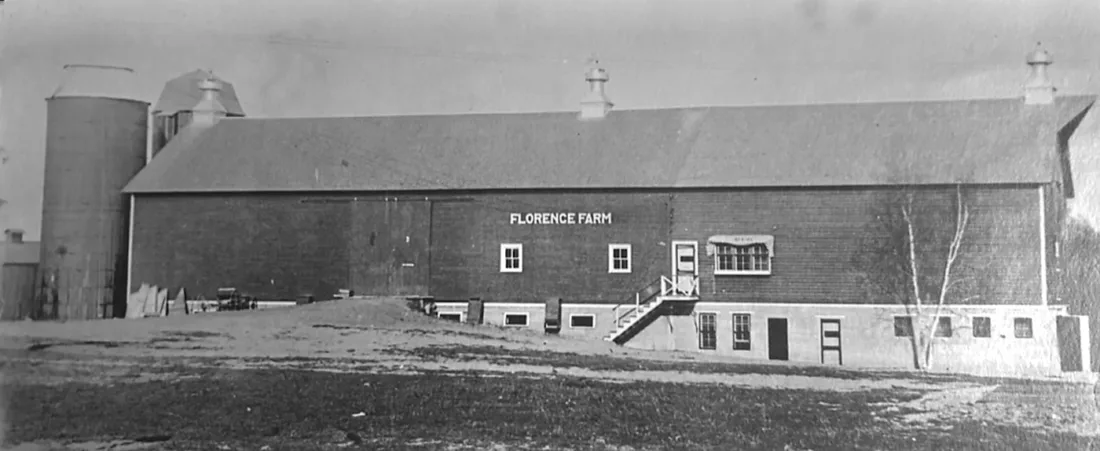
Shown is a 1917 photograph of the Florence Farm, located just north of Florence, Wis., along the Brule Dam Road. According to an article in the Florence Mining News, the farm was considered one of the largest, most modern and best-equipped farms in northern Wisconsin and the Upper Peninsula. The article’s headline proclaimed, “The Florence Farm ranks high.” (Florence County Historical Museum photo)
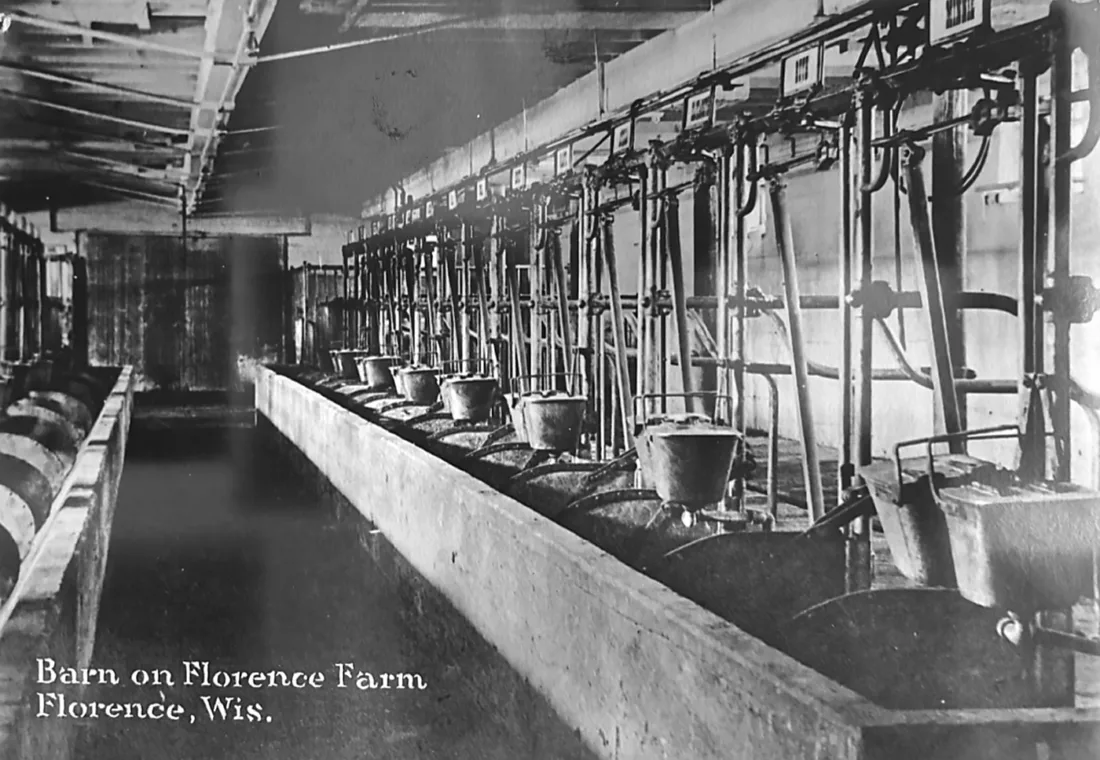
Shown is the modern equipment inside the Florence Farm barn, furnished by James Manufacturing Co. of Fort Atkinson, Wis. The interior featured individual water buckets and manger divisions attached to the stanchions. The dairy operation produced “Class A” guaranteed-pure milk. (Florence County Historical Museum photo)
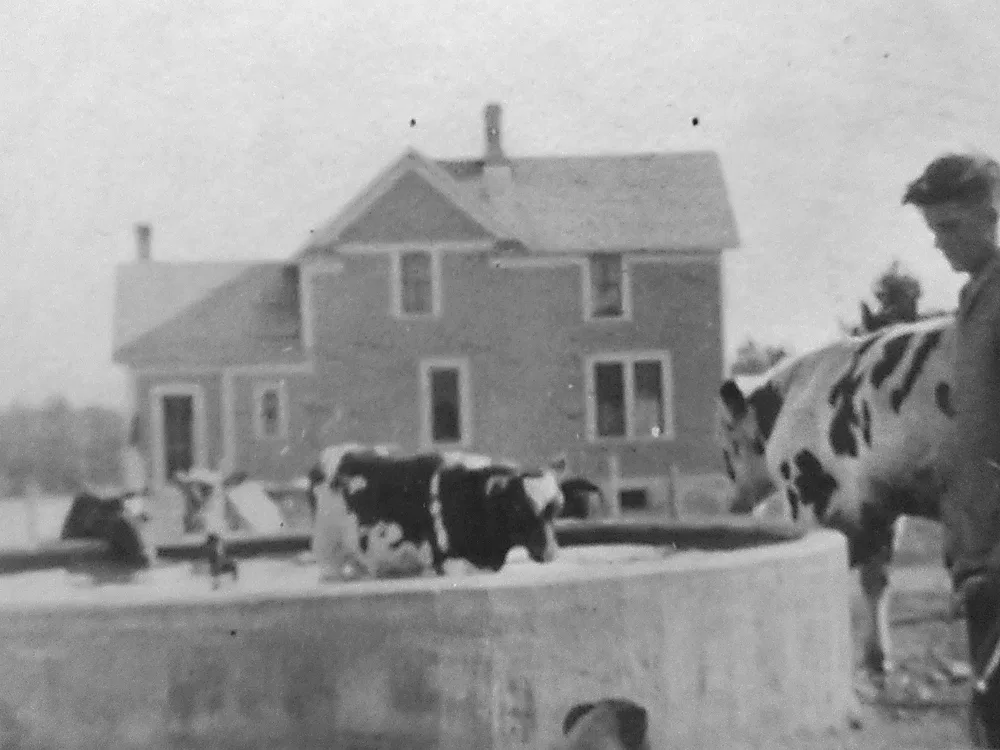
The farmhouse shown in the background, behind the concrete water container for the cows, is the only remaining structure on the Florence Farm site. (Florence County Historical Museum photo)
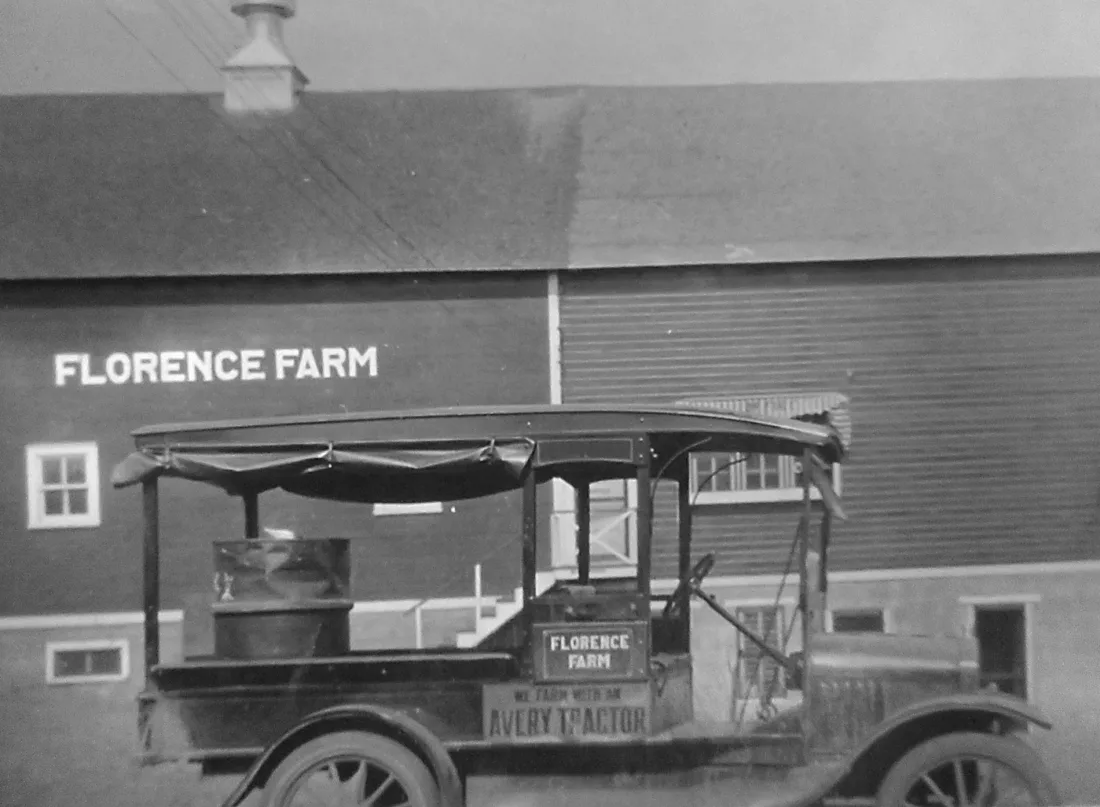
This close-up photograph shows a piece of farming equipment used on the Florence Farm. The side of the equipment bears the statement, “We farm with an Avery Tractor.” (Florence County Historical Museum photo)
Shown is a 1917 photograph of the Florence Farm, located just north of Florence, Wis., along the Brule Dam Road. According to an article in the Florence Mining News, the farm was considered one of the largest, most modern and best-equipped farms in northern Wisconsin and the Upper Peninsula. The article’s headline proclaimed, “The Florence Farm ranks high.” (Florence County Historical Museum photo)
Shown is the modern equipment inside the Florence Farm barn, furnished by James Manufacturing Co. of Fort Atkinson, Wis. The interior featured individual water buckets and manger divisions attached to the stanchions. The dairy operation produced “Class A” guaranteed-pure milk. (Florence County Historical Museum photo)
The farmhouse shown in the background, behind the concrete water container for the cows, is the only remaining structure on the Florence Farm site. (Florence County Historical Museum photo)
This close-up photograph shows a piece of farming equipment used on the Florence Farm. The side of the equipment bears the statement, “We farm with an Avery Tractor.” (Florence County Historical Museum photo)
Trending
FLORENCE, Wis. -- This week's "Remember When?" feature -- provided by the Florence County Historical Museum -- looks back to a 1917 Florence Mining News article featuring the Florence Farm, noting it was one of the largest, most modern and best-equipped farms in northern Wisconsin and the Upper Peninsula.
Located about a mile north of Florence along the Brule Dam Road, the farm was owned and operated by the Florence Iron Co. Inc. and was managed with what the newspaper described as a "scientific, efficient and practical" approach, with the goal of producing "the best of the best."
Frank Boettcher, who had moved to Florence from Menominee several years earlier, served as superintendent. Described as a practical farmer knowledgeable about modern agricultural methods, Boettcher was assisted by W.H. Mathee, a University of Wisconsin graduate who had also completed postgraduate work there and served as the farm's agricultural adviser.
The farm employed several men and teams of horses throughout the year.
The Florence Farm encompassed about 1,000 acres, with about 200 acres under cultivation. Much of the remaining land was used for pasture, while the timberland provided wood for the Florence and Ernst iron ore mines, which were also owned by the Florence Iron Co.
During the winter months, farm workers and teams were kept busy cutting and hauling timber to the mines.
The farm itself was equipped with many of the conveniences and technological advances of the era. Its two-story farmhouse was described as modern, cozy and comfortable, featuring a furnace, hot and cold running water and electric lighting.
The other farm buildings were constructed on solid foundations and arranged in a horseshoe around the farmyard. A large concrete watering trough provided the livestock with a constant supply of fresh running water.
The main livestock barn could accommodate 30 cows, along with space for calves, a cow and a bull.
The barn featured modern equipment that was furnished by James Manufacturing Co. of Fort Atkinson, Wis., including individual water buckets and manger divisions attached to the stanchions.
Sanitation was also a priority. The well-ventilated barn had cement floors, and its gutters and mangers could be flushed using a drainage system. A litter carrier running on tracks transported manure from the barn to a waterproof manure shed about 100 feet away.
The cows stood on wooden planks treated with creosote to help preserve them.
The farm's dairy operation was equally modern for its time. "Class A," guaranteed-pure milk and cream were processed in a separate milk room isolated from the dairy barn.
According to the 1917 article, milk was drawn from the cows using a Sharples milking machine powered by electricity. The milk was then transported by a track-mounted carrier to the milk room, where it was cooled to 50 degrees, clarified and bottled for customers.
Some of the milk was processed through a separator to produce cream, which was also bottled in various sizes for customers.
The Florence Mining News proclaimed that the Florence Farm was quickly becoming one of the leading farms in the north. Local farmers were encouraged to visit and discuss farming questions with the management, who offered advice and information about modern agricultural practices.
The feature gave considerable credit for the farm's success to General Manager Felix A. Vogel, who had worked for years to establish the farm's operations. Vogel took great pride in the farm and was also described as having a strong interest in the welfare of Florence County.
Readers were encouraged to visit the farm in person, noting that its size, modern farming methods, sanitary conditions and machinery could not be fully appreciated on paper. Seeing the milking machine, tractor and other modern equipment, the article suggested, might convince visitors that farming had become "a pleasure instead of a drudgery."
More than 100 years later, the Florence Farm remains a fascinating glimpse into the agricultural and industrial history of the Florence area.
The information and photographs for this "Remember When?" feature were provided to the Florence County Historical Society by Jamie and Bill Mathee, grandsons of W.H. Mathee.
The farm property north of Florence was later owned by the Burkart family and then the Toppe family, both of whom were involved in growing and selling seed potatoes.
Today, only the farmhouse remains at the location, serving as a reminder of the once-expansive Florence Farm and its important place in the county's history.
———
"Remember when?" appears every Wednesday in The Daily News. Those with suggestions or historical photographs they would like to submit can email Terri Castelaz at tcastelaz@ironmountaindailynews.com.