
Wildfires prompt call for more air quality monitors in the UP
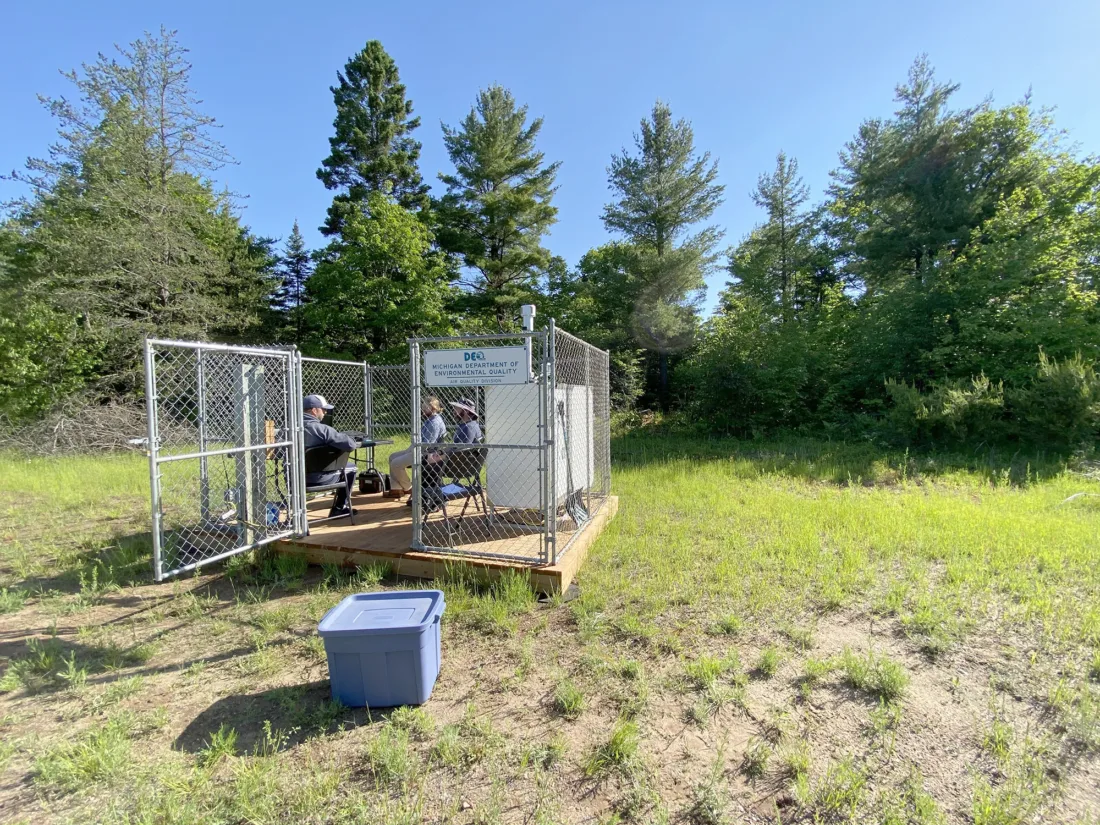
Michigan Department of Environment, Great Lakes and Energy environmental technician Brian Lomerson, left, in 2024 at the first air quality monitor set up in the western Upper Peninsula. He was with Drew Yesmunt and Joe Scanlan, both of whom were to oversee the system in Negaunee Township in Marquette County. (EGLE photo)

Samantha Pickering
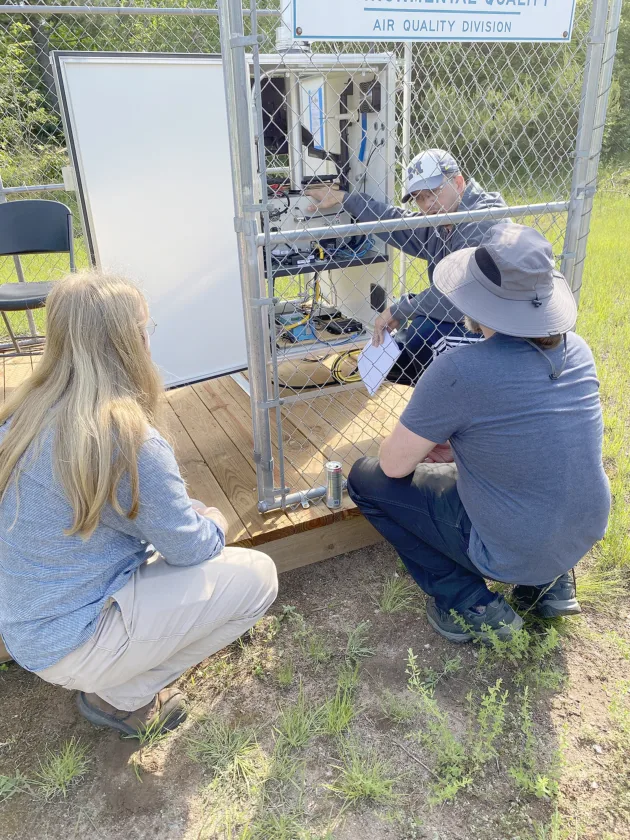
Michigan Department of Environment, Great Lakes and Energy environmental technician Brian Lomerson in 2024 shows off the inner mechanics of the western Upper Peninsula’s first air monitor, installed in Negaunee Township in Marquette County. (EGLE photo)
Michigan Department of Environment, Great Lakes and Energy environmental technician Brian Lomerson, left, in 2024 at the first air quality monitor set up in the western Upper Peninsula. He was with Drew Yesmunt and Joe Scanlan, both of whom were to oversee the system in Negaunee Township in Marquette County. (EGLE photo)
Samantha Pickering
Michigan Department of Environment, Great Lakes and Energy environmental technician Brian Lomerson in 2024 shows off the inner mechanics of the western Upper Peninsula’s first air monitor, installed in Negaunee Township in Marquette County. (EGLE photo)
Trending
LANSING - While Michigan has more than 45 air quality monitoring stations operated by the Department of Environment, Great Lakes and Energy, only two are in the Upper Peninsula.
That raises serious public health concerns due to an increasing number of wildfires and the smoke that follows, environmental experts say.
"Particulate matter can penetrate deep into lungs, and wildfire smoke exposure is an immediate acute event," said Samantha Pickering, the public and environmental health policy manager at the Michigan Environmental Council.
One of the air quality monitors is at Seney National Wildlife Refuge in Schoolcraft County in the eastern Upper Peninsula. In 2024, the second monitor was added in Negaunee, just outside of Marquette.
Statewide, the monitoring stations are connected to more than 200 monitors.
The two monitors in the U.P. check for different pollutants. One measures PM 2.5 pollutants, which are small particles like liquid droplets or tiny solid 2.5 micrometers of chemicals.
The federal Environmental Protection Agency doesn't require monitoring for PM 2.5 particulates in the UP, according to Josef Stephens, a public information officer at the Department of Environment, Great Lakes and Energy, or EGLE.
According to a 2024 posting on the EGLE website, "Citizens have asked for more air quality monitoring in the U.P. for many years. We've added two. We're aware that the public would like more, but have a robust network that goes above and beyond (federal requirements) in the Upper Peninsula," Stephens said.
Pickering said, "When you get closer to the southeast side of the state, that's where you see the majority of them." For example, the large amount of industry and dense population in the Detroit area makes air quality monitoring a priority.
The goal is to increase the monitoring capacity, although funding is an issue, she said.
"They're very costly," she said. "Not all rural communities are accurately represented currently in monitoring and data collection."
Organizations such as the American Lung Association and local U.P. health departments emphasize the danger of wildfire-related air pollutants, especially for those in rural areas who work outdoors or lack clean air shelter.
People such as the elderly and children, especially ones with asthma and other chronic diseases, are highly affected by the smoke, health experts state.
If particles are breathed in it can cause people to miss days of work and school and may create long or short-term health risks, such as heart attacks and premature deaths for those with existing respiratory illnesses, according to EGLE.
Pickering said research has also shown adverse effects of wildfire smoke on mental health and on glaucoma patients.
In addition, she said, "There's a big role that socioeconomics plays in this, since it's hard to get access to resources in rural areas, such as medical care."
Low-income people who cannot access protective equipment or air filtering equipment are at a bigger risk for negative health impacts, according to the Michigan Department of Health and Human Services.
The impact on animals from air pollutants and wildfire smoke hasn't been researched well enough, Pickering said.
"We do know, though, that smoke can lead to dairy cows producing less milk," she said.
———
This story was provided by Capital News Service at Michigan State University.