
Wisconsin’s first forest bathing trail helps visitors reset and find balance
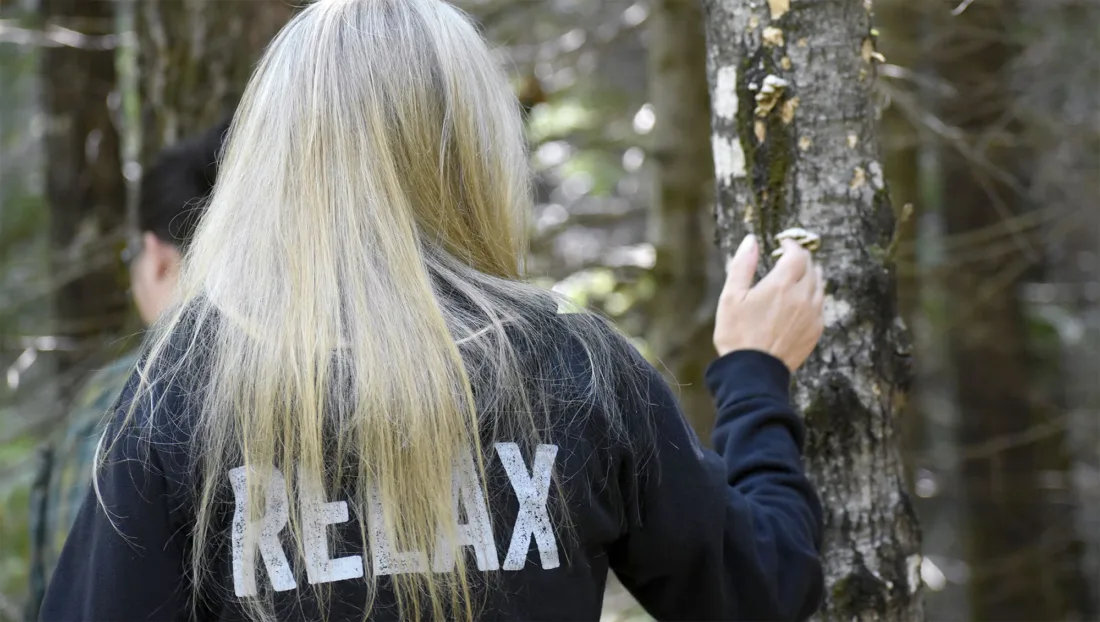
Heather Fletcher of Eagle River, Wis., touches the bark of a tree during a guided walk Aug. 8 on the Tara Lila Forest Bathing Trail in Vilas County. Fletcher said she tried forest bathing for the first time after experiencing a stroke and brain aneurysm that ruptured twice in 2022. (Danielle Kaeding/Wisconsin Public Radio)
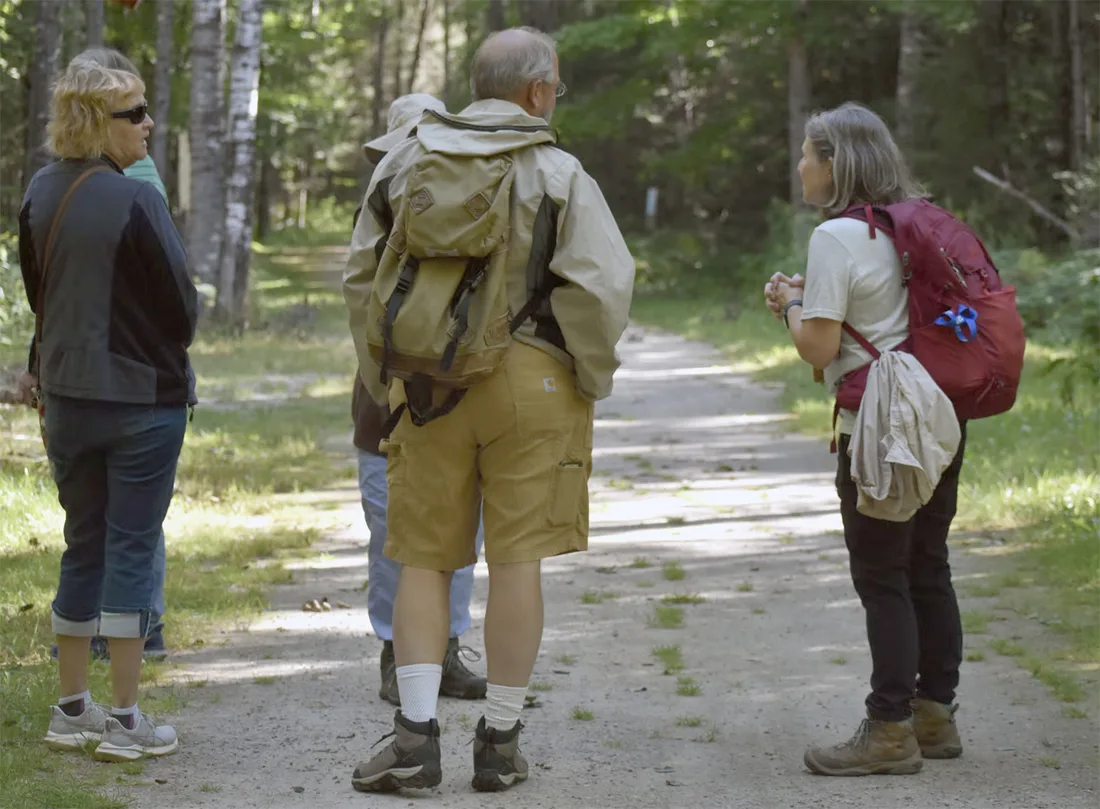
Shelly Rudnick-Peterson, far right, talks with a group that’s gathered at the trailhead of the Tara Lila Forest Bathing Trail in Eagle River, Wis. (Danielle Kaeding/Wisconsin Public Radio)
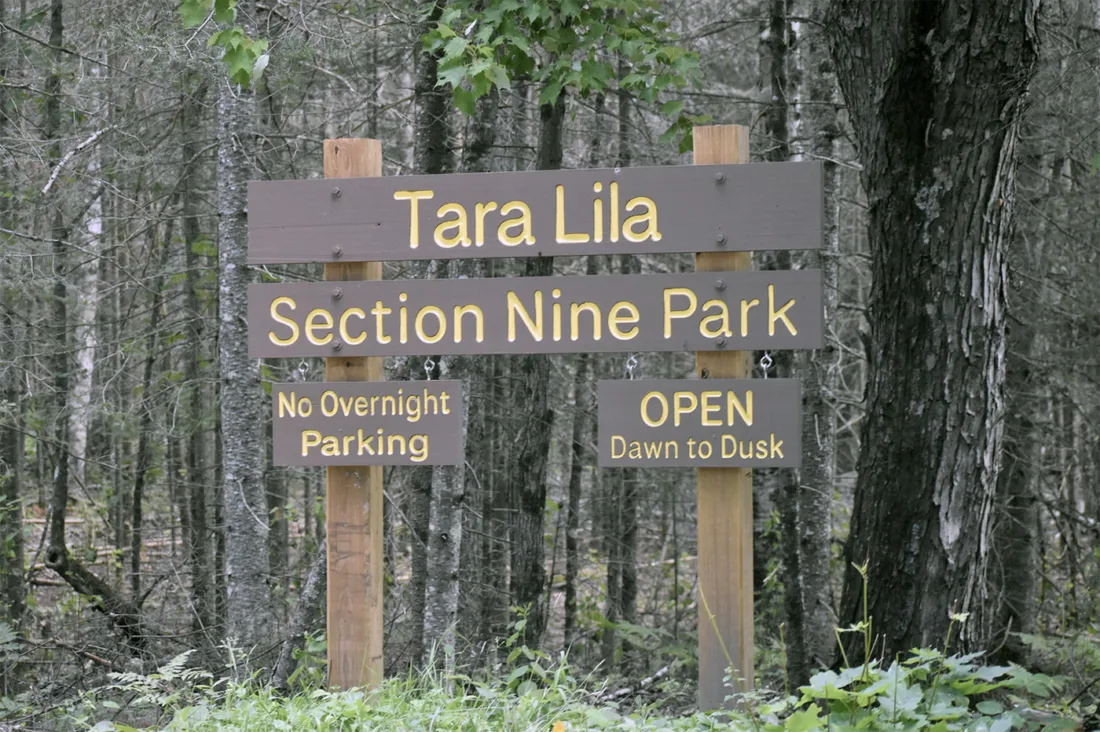
The Tara Lila Forest Bathing Trail in Vilas County is the first forest bathing trail in Wisconsin certified by the Association of Nature and Forest Therapy Guides and Programs. (Danielle Kaeding/Wisconsin Public Radio)
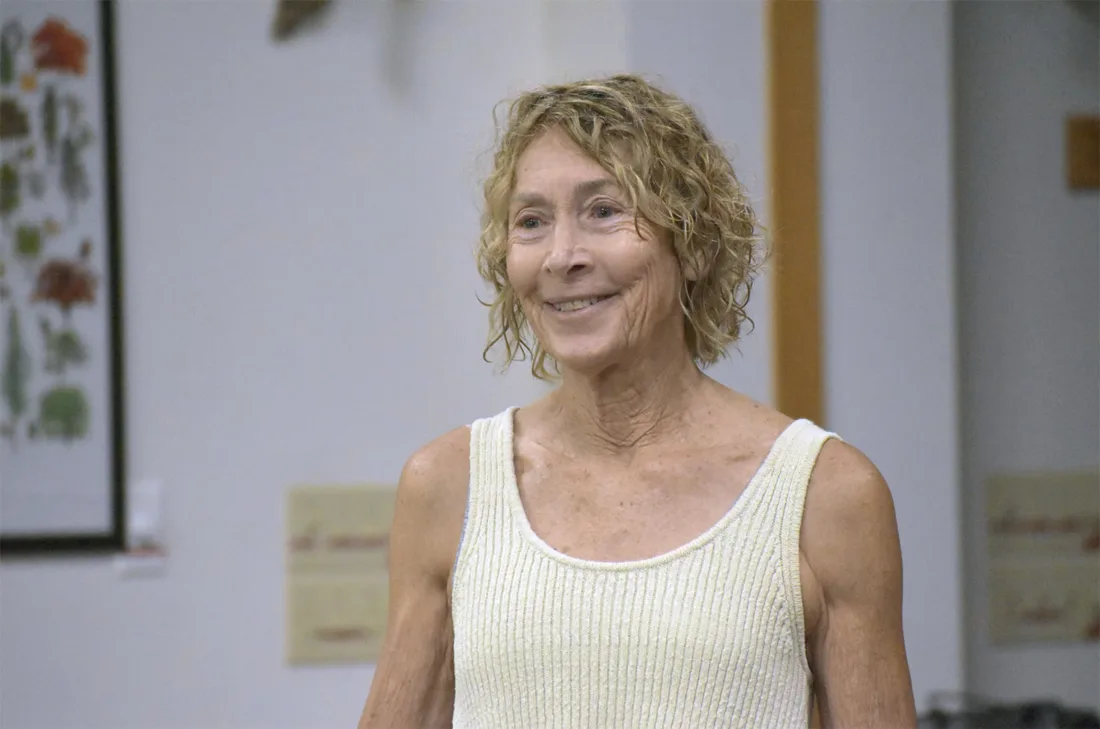
Cindy Conlon, a certified forest therapy guide, introduced a group Aug. 8 to the history behind the Japanese wellness practice of forest bathing at the Trees for Tomorrow campus in Eagle River, Wis. (Danielle Kaeding/Wisconsin Public Radio)
Heather Fletcher of Eagle River, Wis., touches the bark of a tree during a guided walk Aug. 8 on the Tara Lila Forest Bathing Trail in Vilas County. Fletcher said she tried forest bathing for the first time after experiencing a stroke and brain aneurysm that ruptured twice in 2022. (Danielle Kaeding/Wisconsin Public Radio)
Shelly Rudnick-Peterson, far right, talks with a group that’s gathered at the trailhead of the Tara Lila Forest Bathing Trail in Eagle River, Wis. (Danielle Kaeding/Wisconsin Public Radio)
The Tara Lila Forest Bathing Trail in Vilas County is the first forest bathing trail in Wisconsin certified by the Association of Nature and Forest Therapy Guides and Programs. (Danielle Kaeding/Wisconsin Public Radio)
Cindy Conlon, a certified forest therapy guide, introduced a group Aug. 8 to the history behind the Japanese wellness practice of forest bathing at the Trees for Tomorrow campus in Eagle River, Wis. (Danielle Kaeding/Wisconsin Public Radio)
Trending
On a Saturday morning in August, a group of about 20 people gathered at the head of the Tara Lila Forest Bathing Trail.
The 1-mile gravel path is about a 10-minute drive from downtown Eagle River, Wis., in Vilas County.
Tucked back in the woods, it's peaceful. The kelly-green leaves of towering aspen trees rustle in the cool breeze. Rays of sunlight filter through the forest canopy as the scent of moss hangs in the air.
"Forest bathing is an immersive experience in nature, whether self-guided or led by a guide, allows you to be completely present and connected with the forest," said Cindy Conlon, a certified forest therapy guide.
Forest bathing is a wellness practice based on the Japanese term Shinrin-yoku. Tomohide Akiyama, who was director of Japan's Ministry of Agriculture, Forestry, and Fisheries, coined the concept in 1982. His goal was to boost healthy alternatives as the nation's population faced increasing rates of depression brought on by stress, according to the Association of Nature and Forest Therapy Guides and Programs.
Tara Lila is the first forest bathing trail certified in Wisconsin by the association, which has certified around 50 trails worldwide. Studies have shown that forest bathing can reduce blood pressure, stress hormones and improve sleep. Conlon said forest bathing helps people become both alert and relaxed.
"That's a pretty hard thing to accomplish for most people in their daily life," Conlon said. "Most people are wired and tired. (They have to) have another hit of caffeine or another energy drink to get through the day."
Conlon points out that chronic stress in everyday life is known to increase the risk of heart disease or stroke. Four years ago, Heather Fletcher of Eagle River suffered a stroke that forced her to learn how to walk all over again. She said it's what led her to try forest bathing for the first time.
"For me, getting out in nature is the only way for me to be able to reset my central nervous system," Fletcher said. "I get really overwhelmed by crowds, lights, sounds, but if I step outside and go into nature, I can bring myself back into balance."
Near the trailhead, Conlon asks the group to gather around in a circle and close their eyes. She runs them through some breathing practices before they begin their walk. After about 10 minutes, Conlon directs people to begin walking in groups. The trail has nine stopping points, and people can find cards at the trailhead to do their own self-guided walk along the trail.
Each stop on the trail has an invitation for people to follow that includes observing sights, sounds and smells. People walk silently along the path. After a while, participants reconvene in groups to share their observations. The pattern is repeated at each stop.
Some highlight the sounds of wind in the leaves and birds calling to one another while others observe the sound of rotting wood crunching underfoot.
Shelly Rudnick-Peterson of Phelps, Wis., is with the nonprofit group Trees for Tomorrow, which hosted the event. She said forest bathing will change the way she goes on walks.
"I go out on hikes all the time, and it's always about the hike and how many steps," she said. "And (I'll) definitely still do that, but incorporate some of that to just slow down and appreciate (the experience). I think I'm doing that when I'm walking, but I'm not."
Russ Stauber of Marshfield, Wis., retired in May from a manufacturing sales job. For him, forest bathing is a way to reset.
"When you're at the factory, it's really loud and noisy ... and when you're on the road, you have traffic to deal with and here it's just the opposite: so quiet," Stauber said. "Make of it what you will, and enjoy as much as you can using your senses."
Arbor Vitae resident Beth Soltow said it was an emotional experience for her.
"Life is busy for me with family, career. We never take time for ourselves because that would be selfish," Soltow said. "Today was really an eye-opener that it's OK to even take 30 minutes and have some downtime. Being out in nature, it feels grounding ... and healthy and just a way to de-stress."
As they return to the trailhead, Conlon invites everyone to collect one item as a reminder of the walk. When they reach the end, they stand in a circle and lay down flowers, berries and other items in the center.
For her, walking among the trees on the forest bathing trail is like coming home.
"It's just like they're holding you," Conlon said. "They're holding this space for you to come back to your own self."