
Alarmed about algal bloom at Six Mile Lake
Northwoods Notebook
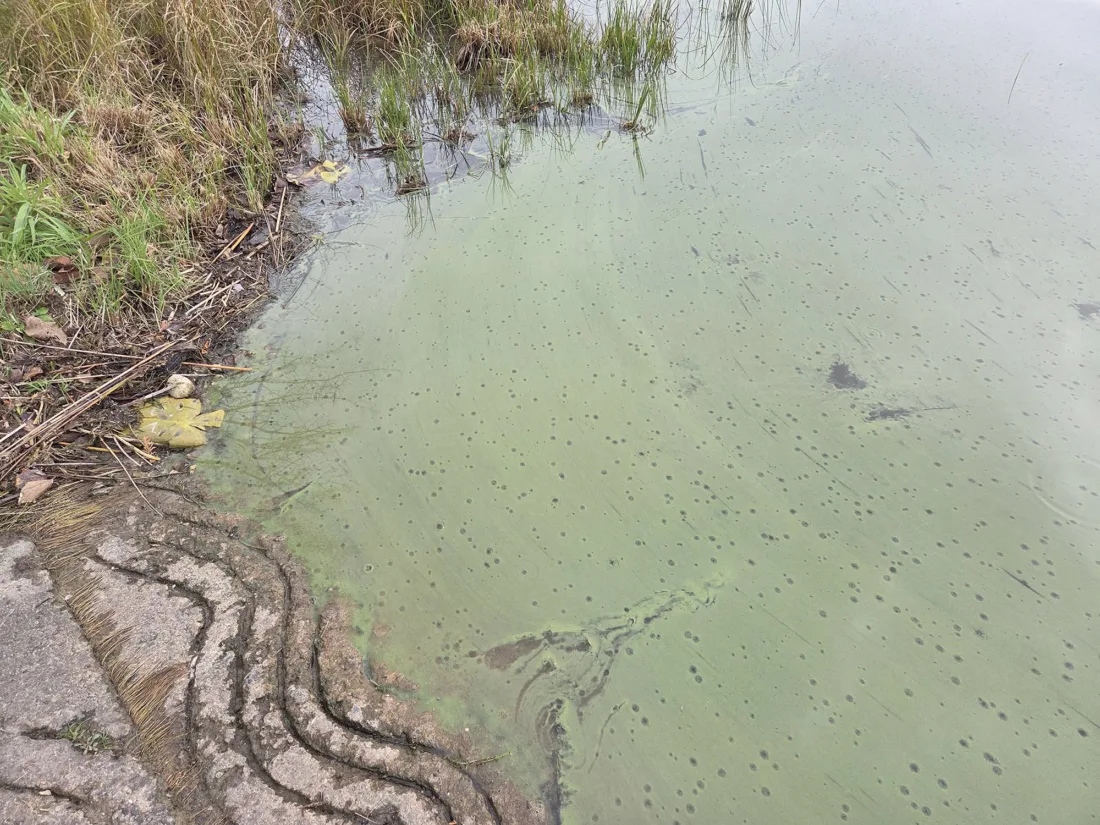
The view Wednesday by the boat launch at Six Mile Lake, showing the water covered with an algal bloom. Experts say blooms occur when conditions are warm and sunny, coupled with a nutrient source getting into the water such as agricultural or lawn fertilizer runoff. Such blooms also appear to be happening more frequently in recent years, they said. People and pets are advised to avoid contact with the algae. (Betsy Bloom/Daily News photos)
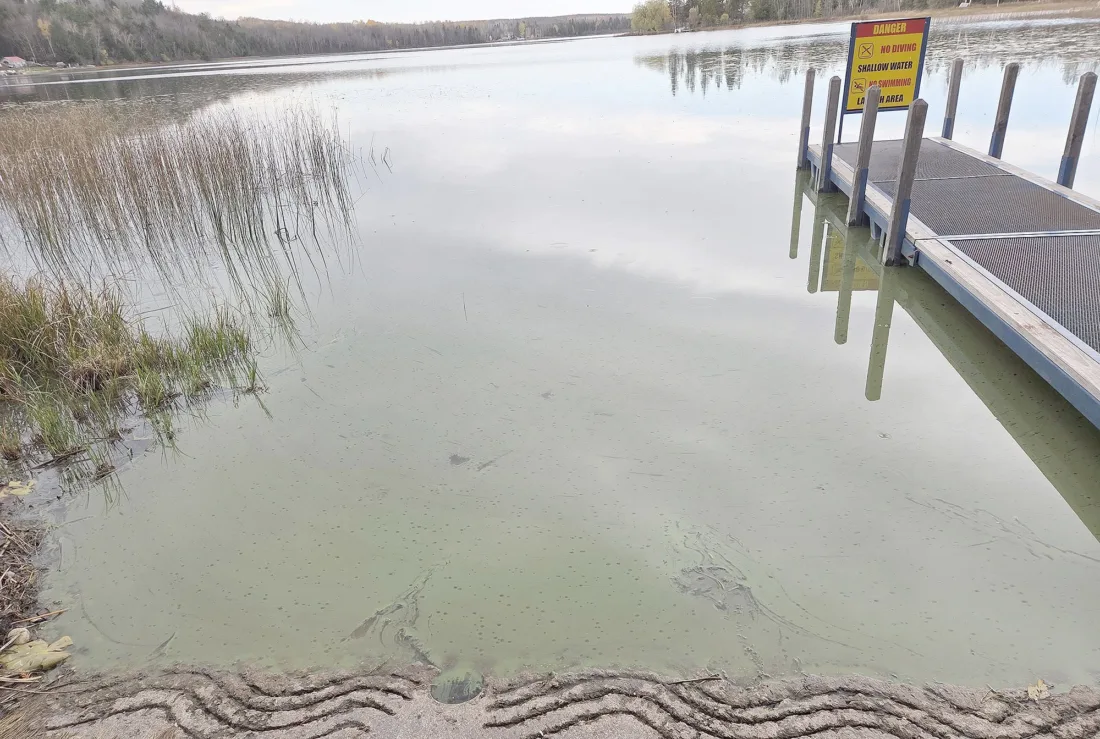
The view Wednesday by the boat launch at Six Mile Lake, showing the water covered with an algal bloom. Experts say blooms occur when conditions are warm and sunny, coupled with a nutrient source getting into the water such as agricultural or lawn fertilizer runoff. Such blooms also appear to be happening more frequently in recent years, they said. People and pets are advised to avoid contact with the algae. (Betsy Bloom/Daily News photos)
Trending
Six Mile Lake caused a few days of concern this past week when its waters turned green, as if lime-colored oil had been poured onto the surface, thick enough to trace trails.
It had me worried about blue-green algae, which can be toxic to humans, pets and wildlife.
While cyanobacteria has been found in the Upper Peninsula, it's not common, said Jennifer Johnson, Michigan Department of Natural Resources senior fisheries management biologist working out of the Crystal Falls office.
A map on the Michigan Harmful Algal Bloom website -- https://www.michigan.gov/egle/about/organization/water-resources/glwarm/harmful-algal-blooms -- most recently showed confirmed HAB outbreaks Sept. 25 at Deer Lake in Marquette County and Sept. 27 at Powell Lake in Alger County. In both cases, the toxins were not detected.
In early August, cyanobacteria was verified in New York Lake in Dickinson County but again no toxins were detected. In fact, none of the seven confirmed U.P. reports in 2026 had toxins found, though the map notes testing did not continue at those sites until the bloom ended.
After looking at the photos, Johnson indicated what happened at Six Mile Lake appeared to be a typical algal bloom, not the more harmful kind. It likely was triggered by the unseasonably warm weather, coupled with some influx of nutrients that fed the algae.
That could include someone treating a lawn at the lake, agricultural runoff, leakage from a septic system or other potential source, Johnson said. Six Mile Lake already has a fair amount of vegetation, which could indicate a good source of nutrients.
She predicted the anticipated return of cooler temperatures next week should help clear it out. The algae already had substantially dissipated by Thursday afternoon, though the water was still murky and worth staying out of just to be safe.
Michigan's Department of Environment, Great Lakes, and Energy, which oversees the Harmful Algal Blooms website, advises that "it is not possible to determine whether algal blooms contain harmful toxins by looking at them, so it is best to avoid contact with any body of water that is covered with algal mats or significant rafts of algae on the surface." That goes for pets as well, so keep those dogs from swimming.
The EGLE website states the number of nuisance algal reports -- particularly the occurrence of cyanobacteria or blue-green algae blooms and concern over the possible presence of algal toxins such as microcystin -- have increased in recent years in Michigan.
EGLE encourages the public to report suspicious-looking algae on the website, including taking photos of the size of the algae bloom and close-up images. Again, the website is at https://www.michigan.gov/egle/about/organization/water-resources/glwarm/harmful-algal-blooms.
Michigan is not alone in dealing with a rising number of harmful algal blooms.
On Sept. 11, Wisconsin Public Radio's Danielle Kaeding wrote about a panel of experts discussing the problem of more frequent HABs on Lake Superior. Her full story is at https://www.wpr.org/news/experts-urge-swift-action-harmful-algal-blooms-on-lake-superior.
Cherie Hagen, Lake Superior program manager with the Wisconsin Department of Natural Resources, was part of the panel discussion at the University of Wisconsin-Superior. She told WPR, "We're seeing these blooms on an annual basis; they're not one-offs. We've been doing monitoring. We're getting more information, but we still don't completely understand. More investment is needed for us to take it to the next level, so we really can take action once we have a better understanding of the drivers."
Among the recommendations, experts are urging more funding for research into what's driving potentially toxic blue-green algae blooms and a real-time monitoring network of buoys to detect and analyze blooms that have emerged since 2012, Kaeding wrote.
More action is needed now as climate change drives more extreme weather in the Great Lakes region, said Emily Finnell, Great Lakes Senior Advisor and Strategist for the Michigan Office of the Great Lakes. She noted Lake Superior is one of the fastest warming lakes in the world.
"When we think of Lake Superior, we think about protection," Finnell said in the WPR story. "Now, our mindset really needs to shift to how do we better understand these environmental impacts that are happening in the lake that are causing these blooms."
Betsy Bloom can be reached at 906-774-2772, ext. 85240, or bbloom@ironmountaindailynews.com.