
DNR groundwater standards for PFAS advance in Wisconsin
Trending
Wisconsin has passed groundwater standards for so-called forever chemicals known as PFAS.
After previous failed attempts, the policymaking board for the Wisconsin Department of Natural Resources on Wednesday voted unanimously to approve standards for six PFAS substances. State health officials recommended limits based on drinking water standards passed by the Environmental Protection Agency, which are facing ongoing legal challenges from water utilities and chemical companies.
PFAS, short for per- and polyfluoroalkyl substances, have been linked to serious health risks that include fertility issues, thyroid disease, kidney and testicular cancers. They don't break down easily in the environment.
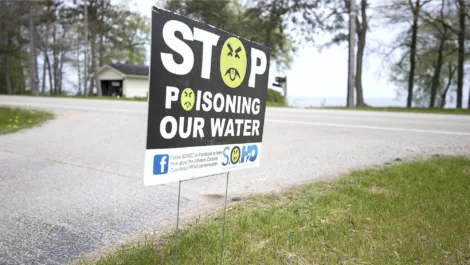
Supporters said the standards are overdue to protect public health. Jeff Lamont, a town of Peshtigo resident in Marinette County and president of the nonprofit group Save Our Water, told the board he lived on bottled water for eight years as the community has been dealing with PFAS contamination of private wells that stems from Tyco Fire Products' fire training facility in Marinette.
"Today is a particularly important day for me personally, and for Save Our Water and the rest of the people in Wisconsin who rely on groundwater as their primary source of drinking water," Lamont told the board.
Natural Resources Board Chair Robin Schmidt said approval of the standards is one of the single most important things that the board can do. Board member Bill Smith said it's an important step.
"This rule package is going to open doors for financial assistance, technical assistance, to at least start to address some of those PFAS concerns for private well owners," Smith said.
Under the new standards, individual limits for two of the most commonly studied chemicals, PFOA and PFOS, will be set at 4 parts per trillion or ppt. The agency also set standards at 10 ppt for three other chemicals: PFNA, PFHxS and GenX. And it set limits for PFBS at 2,000 ppt.
Most Wisconsin residents rely on groundwater for drinking water. In 2022, the DNR found 71 percent of 450 private wells sampled had at least one PFAS chemical, indicating widespread contamination. Around 4 percent, or roughly 32,000 private wells, are estimated to exceed the new groundwater standards.
Wisconsin follows Minnesota, Michigan, Illinois and Iowa in setting groundwater standards for PFAS.
Without standards, Peter Burress, government affairs manager with Wisconsin Conservation Voters, estimated Wisconsin could be spending up to $1 billion on PFAS-related health costs derived from a 2022 study.
"There are real costs of inaction," Burress told the board. "There are real costs associated with facing cancer treatments, miscarriages, heart surgeries and developmental challenges."
The new standards will pose costs for wastewater treatment plants, industrial facilities, landfills and businesses. The DNR anticipated the highest two-year cost of setting the standards would be $9.9 million. A state law known as the REINS Act requires legislative approval for costly regulations that exceed $10 million over any two-year period.
Industry and wastewater groups told the agency that it underestimated compliance costs by excluding expenses tied to PFAS cleanup and spreading biosolids or sludge on fields.
The Madison Metropolitan Sewerage District estimated that it alone could face around $10 million over a two-year period to dispose of biosolids at landfills or through incineration.
The Municipal Environmental Group's Wastewater Division told the agency those alternatives to landspreading aren't widely available and urged the DNR to consider costs of treating PFAS in biosolids. The group pointed to a Minnesota report that estimated PFAS treatment of biosolids may require upfront costs ranging from $40 million to $110 million for each facility.
"We greatly appreciate the need to protect people's private drinking water supplies. We just want to make sure that utilities and their ratepayers aren't shouldering a significant burden for compliance with this rule," said Vanessa Wishart, a Madison attorney representing the group.
Industry groups Wisconsin Manufacturers and Commerce, Wisconsin Paper Council, Midwest Food Products Association and the American Chemistry Council had told the agency that its analysis seemed to be structured to avoid triggering the $10 million threshold under the REINS Act.
Adam Jordahl, WMC's director of environmental and energy policy, said the agency's economic analysis doesn't comply with the law.
"WMC and industry share the goal of EPA, DNR, and the general public of ensuring that public and private drinking water supplies are safe. Yet, good intentions do not relieve DNR of its responsibility to comply with the law," Jordahl said in an email.
The DNR said its economic analysis appropriately estimated costs tied to groundwater standards. The agency added that such activities may be eligible for funding under PFAS laws signed this year and further reduce costs tied to the new limits.
The state approved PFAS standards in drinking water and surface water in 2022, but the board failed to pass limits in groundwater. Later that year, the DNR launched another effort to set limits for the chemicals in groundwater, but that work came to a halt in 2023 after estimated compliance costs exceeded the $10 million threshold under the REINS Act.
The rule is still subject to approval from the governor and the Legislature.