
Remember when?
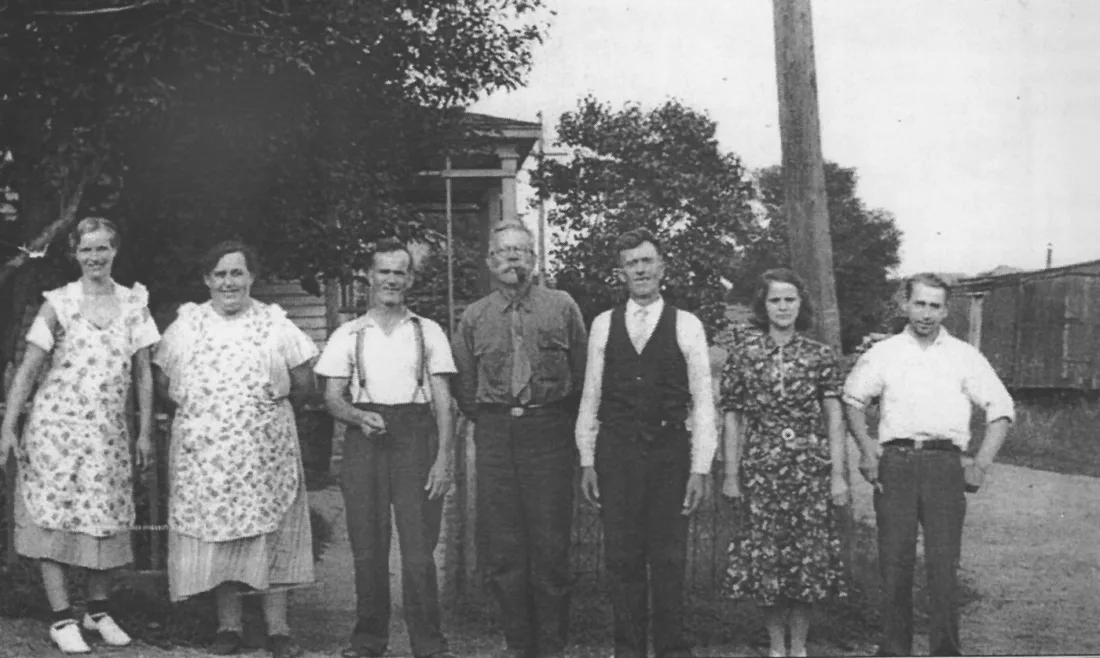
The Boerner family of Niagara, Wis. — from left are Anna, Mary, John, Martin Sr., Jacob, Katherine and Martin Jr. To the left in the photograph is the Boerner home that was one of the first frame homes in Niagara behind the mill. To the right is a railroad caboose. (Niagara Area Historical Museum photo)
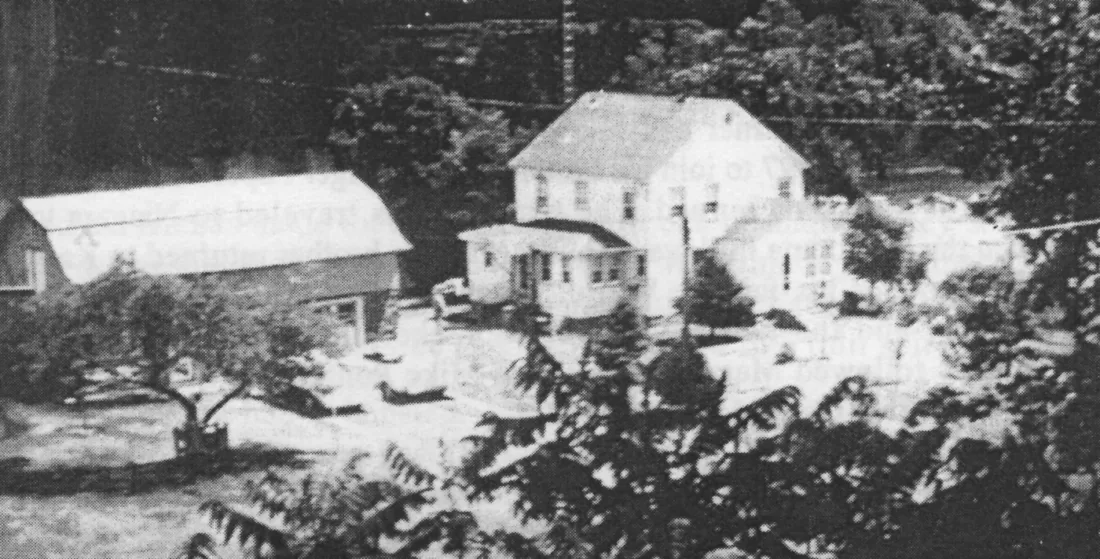
The home of Jacob and Rose Boerner, behind the former Kimberly-Clark mill in Niagara, Wis. (Niagara Area Historical Museum photo)
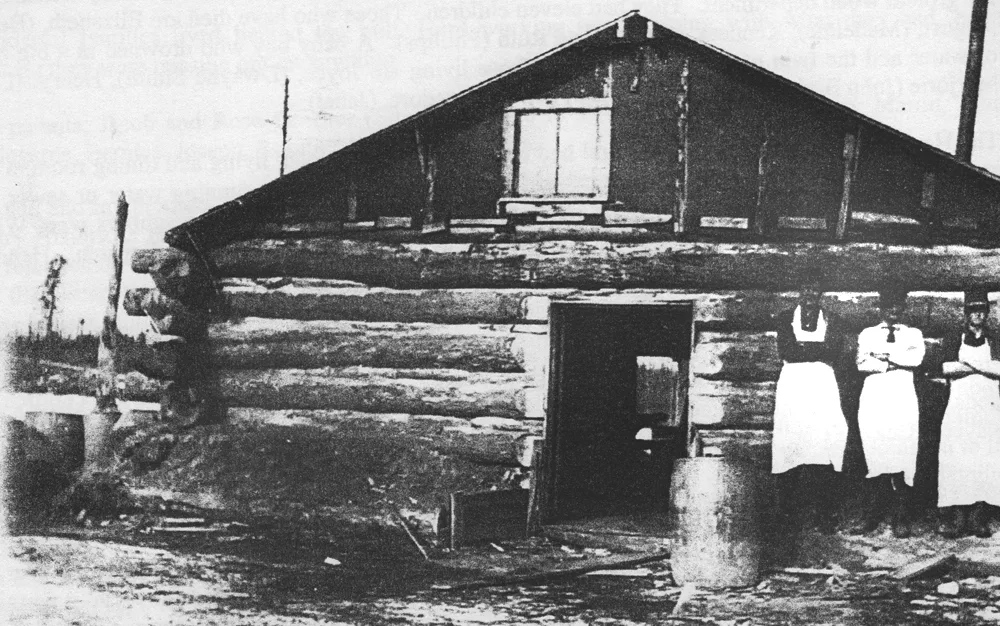
One of the two former cook’s shacks along the Menominee River where loggers who worked for the Kimberly-Clark mill in Niagara, Wis., ate their meals. (Niagara Area Historical Museum photo)
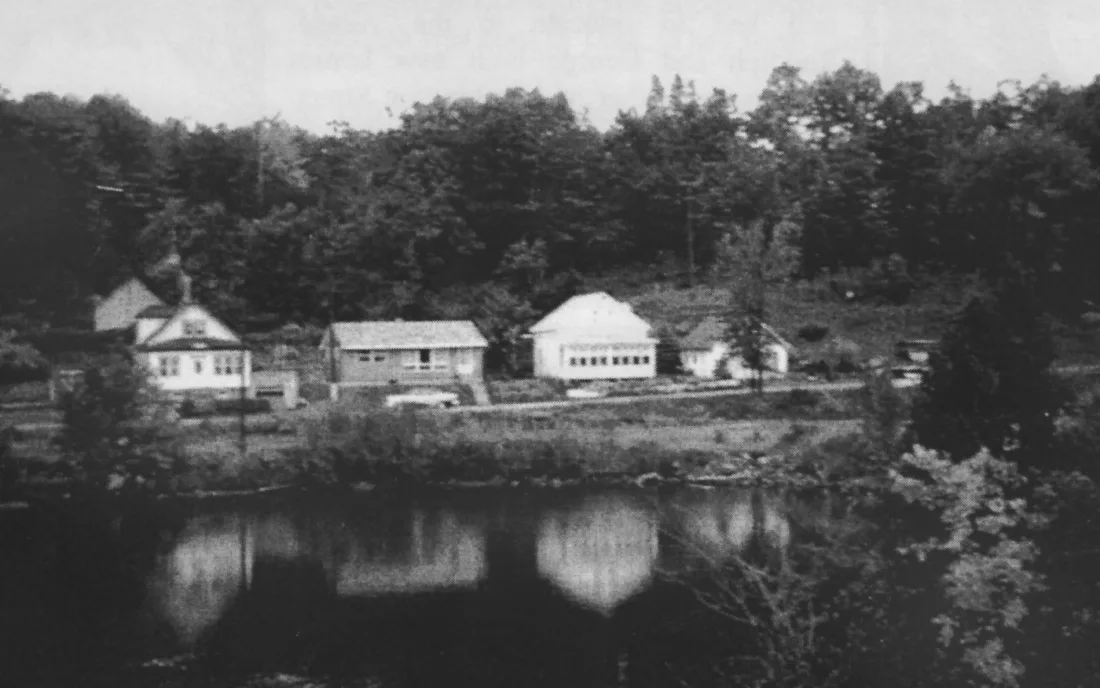
Houses shown “Behind the Mill” in Niagara, Wis. — from left are the homes of Mike Ponzio, George Rapaich and Sylvester Kososki. (Niagara Area Historical Museum photo)
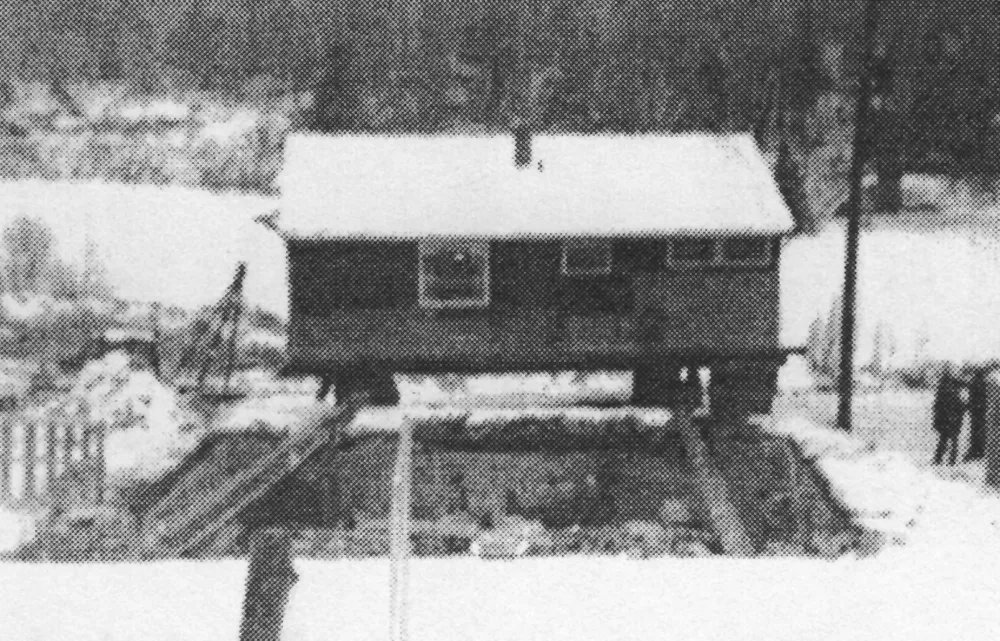
The George Rapaich family home being moved in Niagara, Wis. (Niagara Area Historical Museum photo)
The Boerner family of Niagara, Wis. — from left are Anna, Mary, John, Martin Sr., Jacob, Katherine and Martin Jr. To the left in the photograph is the Boerner home that was one of the first frame homes in Niagara behind the mill. To the right is a railroad caboose. (Niagara Area Historical Museum photo)
The home of Jacob and Rose Boerner, behind the former Kimberly-Clark mill in Niagara, Wis. (Niagara Area Historical Museum photo)
One of the two former cook’s shacks along the Menominee River where loggers who worked for the Kimberly-Clark mill in Niagara, Wis., ate their meals. (Niagara Area Historical Museum photo)
Houses shown “Behind the Mill” in Niagara, Wis. — from left are the homes of Mike Ponzio, George Rapaich and Sylvester Kososki. (Niagara Area Historical Museum photo)
The George Rapaich family home being moved in Niagara, Wis. (Niagara Area Historical Museum photo)
Trending
This week's "Remember When?" -- provided by the Niagara Area Historical Museum -- continues with its "Life Behind the Mill" series, offering a glimpse into the close-knit community and everyday experiences of generations of families who resided along the Menominee River.
In 1898, the Badger Paper Co. sold the mill to Kimberly-Clark Corporation.
Niagara Area Historical Museum Historian Rick Wagner said an account published in the Iron Mountain News described how Kimberly-Clark officials traveled by train to Quinnesec to inspect the property before making the purchase. From there, they continued by horse-drawn sleigh down the frozen Menominee River.
"Once they saw the location, they immediately said, 'We will take it,' and closed the deal," Wagner recalled.
By the next year, Kimberly-Clark had removed the existing mill and constructed a 60-ton groundwood mill, a 50-ton sulphite mill and a two-machine paper mill on the site.
The expansion brought workers from throughout the region and beyond.
"They came from Germany, Poland, Austria, Italy and Canada -- many settling behind the mill," Wagner said.
Niagara Area Historical Society President Karen Klenke noted that in written documents the "Behind the Mill" area was divided into three sections -- the Michigan side of the river, the larger Wisconsin section where most of the families lived, and another Wisconsin section that extended farther above the main area.
Wagner said the first two sections could be reached by Tunnel Road. Residents in the upper section used what was known as Shortcut Road, or Cinder Road.
For those living in the upper section, reaching the tunnel on foot meant making the trip down a large hill.
The Menominee River was also part of everyday life for families living along its banks. Residents could watch logs float downstream toward the mill, Wagner said.
Living behind the mill also presented some unique challenges, including getting children to school.
"Those who lived on the Michigan side needed to receive permission from both states for their children to attend school in Niagara," Wagner said. "They walked across the bridge and through the tunnel road."
The narrow passage was only wide enough for one vehicle to pass at a time, but it was an important route for residents traveling to school, shopping or church.
"Cars would blow their horn before going through to make sure it was clear," he said.
"The tunnel became a familiar part of daily life," Klenke said.
For many families, the history of "Behind the Mill" was passed down through generations. Klenke shared memories recorded by Dorothy Occhietti about her family and what life was like in the neighborhood.
Occhietti's grandfather, Martin Boerner Sr., was born in Germany and came to the United States in 1897. He initially settled in Kaukauna, Wis., where he joined his brother to work at a paper mill. When he arrived, however, he discovered the mill had closed due to fire damage.
The brothers then came to Niagara in search of work and stayed at the Grand View Hotel, which overlooked the falls. In 1899, Boerner sent for his family to join him from Germany.
Occhietti recalled her grandfather saying Niagara began with just a few log cabins in an area known as "down town."
Her father, Martin Boerner Jr., was born behind the mill in 1904. Occhietti remembered the family home as a well-built, two-story structure. The property included land where the family grew produce, as well as a brick building that her father eventually used as his first print shop.
One of her childhood friends was Walter "Ed" Rucinski, son of John and Katherine Rucinski, who had come from Poland. The Rucinskis lived near the Grand View Hotel, where many of the families were Polish.
Occhietti recalled her German dad got along with them regardless if they understood each other or not.
Her mother, Anna Kososki, was also born behind the mill in 1908 to Steve and Julia (Forsystek) Kososki, who had come from Poland.
The families from different backgrounds formed strong connections, with neighbors regularly gathering and spending time together, Klenke said.
Occhietti's parents married in 1924. Her father worked at the mill and also published the Niagara Journal.
She later remembered living behind the mill in a duplex owned by the Rudolph Rapaich family. Her grandfather, Martin Sr., lived two doors away with his daughter and son-in-law, Oscar Aderman, who worked as a derrick operator at the mill, lifting logs into the pond to be sent to the woodroom.
The duplex rented for $8 a month and had an outdoor water pump. Like other homes in the neighborhood, it had no furnace and was heated with a wood-burning kitchen stove.
Occhietti said the building had originally been used for storage by Kimberly-Clark before being converted into a duplex by the Rapaich family. The Lecuyer family lived next door.
Among Occhietti's strongest memories of growing up behind the mill was the old tunnel. Generations of children traveled through it on their way to school, while families used it to reach stores and church.
"There was no 'Behind the Mill' kid that will ever forget the old tunnel that they had to go through," Occhietti recalled.
The stories of families are among those preserved through the Niagara Historical Society's "Life Behind the Mill" project. Klenke explained that about the year 2000, members of the historical society interviewed several residents whose families had lived behind the mill. The interviews were compiled into "Life Behind the Mill."
"It's so important to preserve the memories and experiences of those who called the area home," she said.
In addition to the Boerner and Rucinski families, the collection includes stories from the Empey, Krenn, Hendricks, Kososki, Bresin, Ponzio, Rapaich, Krzyzaniak and Rutkowski families, among others.
Wagner said the Empey family was the last family to move from the Michigan side of the neighborhood.
Thomas Dejmek was another early resident, living in the area in the early 1900s. Wagner said Dejmek had what was described as a hobby farm.
For many former residents, memories of growing up behind the mill remain happy ones. Children spent summer days swimming in the Menominee River and winter days skating, while the mill whistle served as a familiar signal that it was time for youngsters to head home for the evening.
Despite the different nationalities represented in the neighborhood, Klenke said there was a strong sense of togetherness among the families.
"Everyone was close -- it was a special time," she said.
By 1964, the neighborhood was facing major changes. The Niagara Paper Mill planned to build a high-yield plant in the area where the homes stood and offered assistance to families who needed to relocate.
Nearly 50 families were still living behind the mill at the time. The area also included a tavern, hotel and boarding house.
Many of the homes were sold to the mill to be torn down or moved to other locations in Niagara.
"There's still an old barn that stands that is over 100 years old," Klenke said.
Wagner noted that the area where the homes once stood is now restricted to the public.
While the homes and the neighborhood are gone, the stories preserved through "Life Behind the Mill" offer a glimpse into the people who helped shape Niagara.
For the families who lived there, it was more than a location. It was home -- a place where neighbors gathered, children grew up and generations created memories that continue to be shared today.
This is the third installment of the "Life Behind the Mill" series provided by the Niagara Area Historical Society.
———
"Remember when?" appears every Wednesday in The Daily News. Those with suggestions or historical photographs they would like to submit can email Terri Castelaz at tcastelaz@ironmountaindailynews.com.