
Three measles cases in Delta, first since 1989
Trending
DELTA COUNTY -- Three cases of measles have been confirmed in Delta County, Public Health of Delta & Menominee Counties announced Wednesday afternoon.
"The health department is working with the Michigan Department of Health and Human Services to investigate the cases and notify anyone who may be exposed," PHDM stated in a news release.
The last time measles appeared in the two-county jurisdiction was 1989. These are the first cases in the Upper Peninsula in 2026.
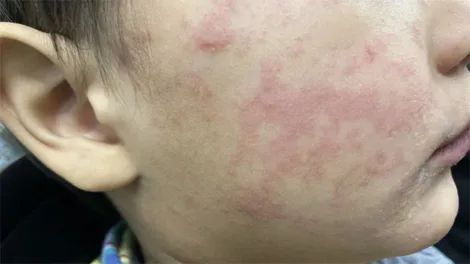
The highly contagious airborne disease's common symptoms are high fever, rash, cough and red eyes. The severity and danger, however, is more extreme than most other illnesses; 1 in 5 people who catch it end up hospitalized, according to the Centers for Disease Control and Prevention.
Complications range from effects as mild as an ear infection to as serious as blindness, encephalitis or death.
"(Measles) can make you severely ill and lead to life-threatening complications like brain inflammation and pneumonia. It can also make you more likely to get sick with other infections," according to Cleveland Clinic.
Before a vaccine was developed in 1963, almost every child in the United States contracted measles before the age of 15. An annual 4 million cases led to about 500 deaths and 48,000 hospitalizations every year in the U.S., reports the Infectious Diseases Society of America.
The measles vaccine was combined with the vaccines for mumps and rubella in 1971; since then, infections fell dramatically, and a two-dose series became common practice. The CDC declared measles eliminated from the United States in 2000 thanks to high coverage with the MMR shots.
However, with a noted drop in immunizations since 2019, the disease has been showing up more and more, with a massive surge this year.
Ten years ago, the U.S. recorded just 70 confirmed cases of measles in 2016. The country counted 285 in 2024, and then a whopping 2,289 in 2025. This year has seen more than 4,600 measles cases across the country. In comparison, the U.S. had 1,789 cases between the 2001 and 2015, a 14-year span.
One case can generate up to 18 secondary infections where immunity is low, according to World Health Organization estimates.
"Measles is highly contagious, which means it spreads easily from person to person. Experts estimate that if one person in a room of unvaccinated people has measles, nine out of 10 people in the room will catch it," according to Cleveland Clinic. "You're contagious about four days before you develop a rash until about four days after the rash starts."
The largest outbreaks in 2026 have been in Pennsylvania, with more than 1,300 confirmed cases.
The State of Pennsylvania lists five deaths from measles, but at the federal level only three deaths have been attributed to measles. As part of a directive from U.S. Health Secretary Robert F. Kennedy Jr., the CDC recently updated its policy to require that measles-related deaths be verified by the National Center for Health Statistics, based on formal death certificates.
While symptoms may be treated, measles does not have a cure. However, as prevention is far more likely with immunization than without, medical professionals advise that people who can get the vaccine do. About 70% of observed cases occur in unvaccinated patients.
The MMR vaccine is live-attenuated, meaning that it contains weakened versions of the viruses that cause measles, mumps and rubella. For most healthy people, two injections four weeks apart provide about 97% protection. Some people, however, cannot tolerate the vaccine; people who are pregnant and those with weakened immune systems are advised to avoid attenuated viruses.
There is another option: babies under 12 months, pregnant people and those with weak immune systems may be able to get a different treatment called immunoglobulin.
Primarily, though, those people's health relies on "herd immunity" -- a term for when a population doesn't see much sickness because a majority of individuals are protected and not spreading contagions.
Getting the MMR shot or IG within 72 hours of exposure may stop a person from getting sick.
With the measles virus known to be in the community, PHDM recommends some steps:
-- Check your vaccination status: "You can ask your doctor or contact the local health department," PHDM advises, but notes that people are likely protected if: (a) they have had at least one MMR vaccine, preferably two; (b) they have a record of immunity to measles, such as documented history of a past measles infection; or (c) were born before 1957.
Most insurance plans cover the vaccine. People may qualify for free or low-costs shots. Contact the local health department or a healthcare provider for more information. The Dickinson-Iron District Health Department is at 906-774-1868 in Dickinson County and 906-265-9913 in Iron County.
-- Watch for symptoms: Measles symptoms are high fever, which can reach higher than 104 degrees; cough; runny nose; red, watery eyes; tiny white spots in the mouth; a red, raised rash that starts on the face and spreads to the body. Symptoms generally show up one to two weeks after exposure but can take up to three weeks to present.